





Globalization in Question – Trade as Economic Warfare
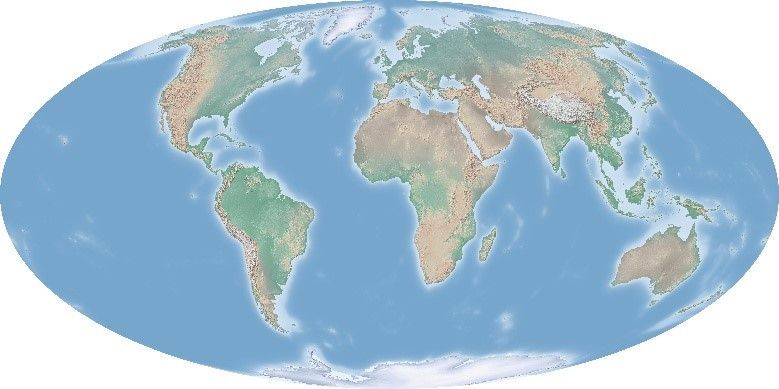
Like you, I am always trying to make sense of things, especially the deepest, most perplexing, confusing, or foreign things. As a much younger man, one of the most foreign things I’ve never really completely understood was how global trade magically and smoothly emeshes the distribution of natural resources and manufactured components for goods for the 166 World Trade Organization members.
Recently, I’ve re-learned that global trade is anything but smooth and simple. In fact, the experts taught me how to properly perceive the reality of the current world trade situation and its inevitable trajectory towards increasing chaos and uncertainty. So, here’s a curious outsider’s insights into a complex and politicized arena: international trade.

But, First, an Ancient History Lesson…
The earliest documented international commercial trade—thousands of years before modern nation-states—was driven by the unequal geographic distribution of critical geological raw materials, luxury commodities, and metal alloys. Hence, the business concept of comparative advantages.

The Obsidian Trade Networks (c. 12,000 – 6,000 BCE)
Before the development of metallurgy, volcanic glass (obsidian) was the most valuable technological commodity in the world due to its ability to be fractured into razor-sharp tools, scalpels, and weapons. Because obsidian forms only in specific volcanic regions, its presence at distant archeological sites provides the earliest definitive proof of long-distance, cross-border trade. Obsidian’s metaphysical attributes include psychic protection, which shields one from negative energy, and, when tied to the root chakra, emotional stability and reduced scattered thoughts.
The Mediterranean Network: Obsidian mined from the volcanic island of Melos (modern Greece) was traded across the Aegean Sea into mainland Europe and the Middle East as early as 11,000 BCE.
The Near East Network: High-quality obsidian from the volcanoes of Anatolia (modern Turkey) was systematically traded hundreds of miles south into the Levant (modern Israel, Jordan, and Syria) to supply early Neolithic agricultural settlements.

The Lapis Lazuli Route (c. 7,000 – 3,000 BCE)
Lapis lazuli—a deep-blue metamorphic rock prized by ancient elites for jewelry, amulets, and pigments—historically came from a single primary source: the remote mines of Badakhshan in northeastern Afghanistan.
By the 4th millennium BCE, a highly organized commercial trade route connected these isolated mountain mines to the world's earliest major urban civilizations. Afghan lapis lazuli was transported over 2,000 miles across rugged terrain, rivers, and deserts to be sold in the marketplaces of Mesopotamia (Sumerian city-states) and Pre-dynastic Egypt, where it was later buried in royal tombs. Its metaphysical attributes, being associated with the throat and third eye chakras, mean, respectively, clear communication and self-expression, and intuition and insight.

The Indus-Mesopotamia Maritime Trade (c. 2,500 – 1,900 BCE)
This represents the world's first documented intercontinental, state-level commercial trade network, connecting the Indus Valley Civilization (modern Pakistan/Northwest India) with Sumer (modern Iraq) via the Persian Gulf.
The Cargo: The Indus Valley (referred to in cuneiform tablets as Meluhha) exported luxury goods including carnelian beads, ivory, timber, pearls, and gold. In return, Mesopotamia exported textiles, wool, olive oil, and barley.
Carnelian’s metaphysical attributes are physical stamina, boosted metabolic energy, and overcoming lethargy or procrastination. It aligns primarily with the sacral chakra, the center of passion, creativity, and emotional expression, and also with the root chakra; i.e., grounding, stability, and survival instincts.
The Mechanics: This was a highly sophisticated commercial operation. Traders utilized standard weights and measures, contract clay tablets, and distinctive stone cylinder seals to label and secure cargo ships navigating the Arabian Sea coastlines.

The International Bronze Age Tin Trade (c. 2,000 – 1,200 BCE)
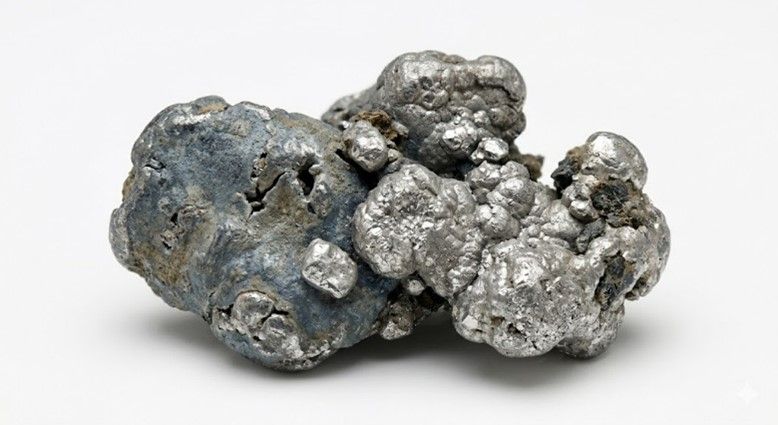
The transition from the Stone Age to the Bronze Age was entirely dependent on international trade. To manufacture bronze, metallurgists had to alloy 90% copper with 10% tin. While copper was relatively abundant in the Mediterranean (such as on Cyprus), tin was exceedingly rare and geologically localized.
The East-West Corridors: Middle Eastern civilizations secured tin via long-distance trade routes that stretched into Central Asia (modern Uzbekistan and Tajikistan).
The European Routes: Mediterranean empires, including the Mycenaean Greeks and Phoenicians, established maritime trade routes extending through the Straits of Gibraltar to the British Isles (Cornwall), which possessed the largest and richest tin deposits in western Europe. The need to secure this 10% tin component created the first continent-spanning economic dependencies.

The Oldest Known Prehistoric Exchange System in the Americas
Methinks it interesting that, for millennia, our species has found a way to survive, to establish habitats, to eat, and, most significantly in terms of changing society, to conduct international trade, starting with early Paleo-Indian tribal trade in relatively rare minerals, metals, and artifacts. This early global trade opened doors to intercultural connections and the eventual evolution of today’s complex network of international components manufacturing, parts, and products distribution.
Trade was originally about fair exchange, as with the early inland tribes of Peru who grew and harvested cotton to weave into clothing, blankets, baskets, and netting for the fishing tribes who lived farther down by the sea. The fishers brought seafood to inland farmers, who in turn provided fishing nets. Satisfying each other’s needs; it sounds like the beginning of a beautiful love story, doesn’t it?
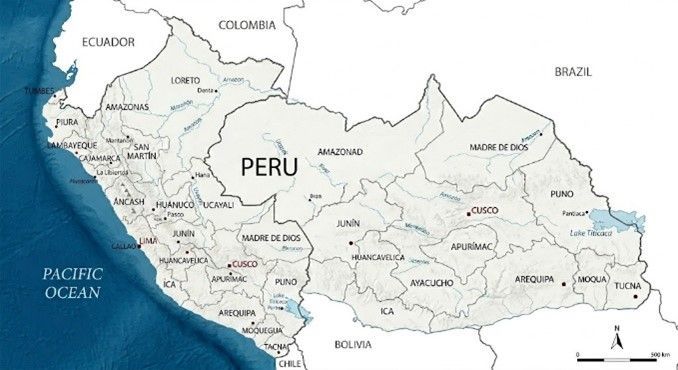
The definitive example of this mutually-respectful, harmonious prehistoric exchange system is the Norte Chico civilization (also known as the Caral-Supe civilization), which flourished on the north-central coast of Peru between 3500 BCE and 1800 BCE. It is the oldest known civilization in the Americas.
This society operated on a unique, symbiotic economic trade network based entirely on a cotton-for-seafood interdependence between two distinct ecological zones:
The Inland Agricultural Centers (The Cotton Producers)
Inland cities located along river valleys—most notably the sacred city of Caral—developed sophisticated canal irrigation systems. Instead of growing a staple food grain such as maize or wheat, they domesticated the primary industrial crop, cotton (Gossypium barbadense).
The inland populations utilized this cotton to manufacture massive quantities of high-tensile fishing nets and storage bags. However, because they lacked sufficient agricultural land for large-scale food crops, they relied on trade for sustenance.
The Coastal Settlements (The Seafood Providers)
Coastal fishing villages, such as Aspero and Bandurria, sat adjacent to the incredibly rich marine environment of the Humboldt Current. These coastal populations possessed an endless supply of protein—specifically anchovies, sardines, and shellfish—but lacked the materials to harvest them efficiently at scale.
The Exchange System
The two groups formed a highly organized, localized trade loop:
- The inland cities sent bulk shipments of processed cotton and woven fishing nets down the river valleys to the coast.
- The coastal fishermen used these superior nets to dramatically increase their catch yields, drying and salting the anchovies and sardines to preserve them.
- The preserved, protein-dense seafood was then transported back up into the interior valleys to feed the large labor forces building Caral’s massive stone pyramids and plazas.
This economic model underpins the
Maritime Foundation of Andean Civilization (MFAC) theory, which argues that the complex societal organization, monumental architecture, and urban governance of the Americas' first civilization were fueled by marine protein obtained through the industrialized textile trade rather than by agriculture.
Learning from the Source
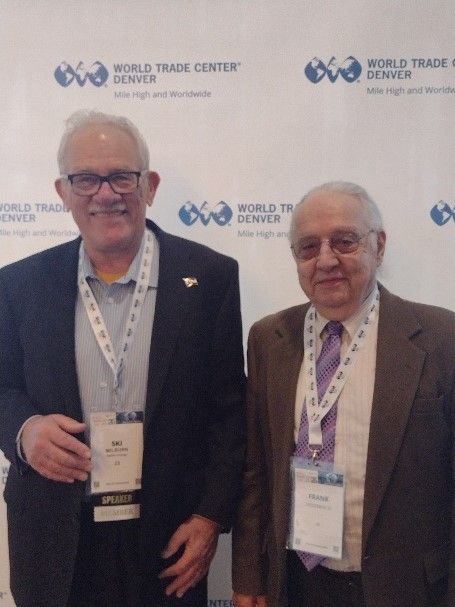
Several erudite speakers at a recent conference gave me perspective on what is happening to world trade, not just in the short term but in terms of long-term trend influences. On May 21st, 2026, I attended the 53rd annual World Trade Day Conference, hosted by the World Trade Center Denver, which brought together over 700 thought leaders, policymakers, and international trade professionals at the Hyatt Regency Downtown Denver. As the Rocky Mountain region’s premier international business event, the conference centered on structural shifts in global commerce under the theme: “A New Era in Trade: Globalization in Question.”
Methinks that title was probably convenient as a generalized one to use because there are so many questions about much that pertains to international trade, especially the impact of AI. One thing that seems to always be missing from these types of scientific and technical report-sharing sessions is the essential human element. Hence, I was glad to hear about how imperative that is from Ski Milburn.
Given my professional orientation, I was thrilled to hear his some down-to-earth, practical ideas for how U.S. manufacturers can improve communications and cooperation with trade partners, investors, design engineers, and others. He acknowledged that relationships with customs agents (who hold product tariff classification authority) can be significantly improved based on personal attitudes, intentions, and simple words…as with dealing with anyone, eh?
What have been the major trade changes?
Bear in mind, this is written from the perspective of a largely uninformed outsider, so I can bravely share my ideas in the hope that ‘expert’ readers will correct any misgivings or misunderstandings. As you who know me personally know, I always welcome evaluation. So, here goes…
Heavy tariff implementations – The public has heard enough now to know that the tariff wars have backfired in the worst ways, hurting farmers, manufacturers, and small businesses. However, an impactful takeaway for me is how 24/7-vigilant U.S. manufacturers must be in establishing real-time smart alert systems for changes in trade policies, rulings, and charges. How many U.S. smaller manufacturing exporters actually have AI-enabled information warning systems in place is an unanswered question.
Rapid technological infrastructure demands Predictably, the rapid technological infrastructure demands shaping global trade are driven almost entirely by the scale of the artificial intelligence (AI) buildout. This shift has shifted infrastructure priorities from localized, cost-efficient setups to a race for raw resource availability and access to specialized components.
Defensive supply chain reconfigurations - With the inception of the 2025 U.S. tariff campaign came a rapid redefinition of international trade from a “mutually beneficial practice based on comparative advantages of resources” to “economic leverage power through tariff warfare.”
Tariffs caused trade flows not to dissolve but to shift, as in China, which chose to redirect its intermediate manufacturing components to Southeast Asia, mainly Vietnam and Thailand, Taiwan, India, and Mexico. Underground alliances are being formed.
The U.S.’s previous ‘best’ trading partner, Canada, immediately responded to the tariff announcement with dollar-for-dollar tariffs. Once Washington formally verified that goods compliant with the Canada-United States-Mexico Agreement (CUSMA) were exempt from the broad International Emergency Economic Powers Act (IEEPA) blanket tariffs, Prime Minister Mark Carney’s government rolled back the majority of Canada’s broad counter-tariffs to de-escalate tensions and stabilize supply chains.
The IEEPA is a 1977 United States federal law that grants the President sweeping authority to regulate or block international commerce during a declared national emergency. Canada maintained 25% tariffs on over 300 specific U.S. items—primarily automotive, steel, and aluminum products—after the U.S. refused to offer reciprocal relief.

In brief, the World Trade Day agenda focused on how national policy, changing enforcement, and new technology affect businesses, offering strategies for navigating a fragmented global economy.
Keynote and policy focus discussions opened with a close look at the changing structure of international commerce. Experts analyzed the "New American Trade Policy," evaluating how shifting geopolitical priorities, national security mandates, and tariff structures change traditional supply chains.
The sessions explored the idea of "weaponized interdependence," examining how sovereign states increasingly use global financial networks, information pathways, and trade bottlenecks to achieve strategic goals. Speakers challenged attendees to look beyond traditional open-market assumptions and instead prepare for an era in which economic interconnectedness is often used for political leverage.
Compliance, Enforcement, and Operational Risks
A major operational focus of the conference centered on tighter regulatory conditions. Technical tracks addressed the modern realities of customs audits, compliance risk, and the rapid evolution of trade enforcement. Traders and supply chain professionals analyzed strict oversight measures, such as increased scrutiny on country-of-origin labeling and forced labor prevention.
Panels emphasized that as trade rules become more volatile, proactive compliance strategies, strong data tracking, and careful third-party auditing are necessary to reduce severe financial and legal penalties.
Technology and the "New Trade Underground"
The term "The New Trade Underground" generally refers to the rapidly growing network of informal, parallel, and decentralized economic channels emerging globally. Driven by shifting geopolitical alliances, trade restrictions, and technological shifts, this phenomenon operates alongside traditional global commerce. The World Trade Day event highlighted technological adaptation as a key factor for surviving market instability.
A dedicated track explored artificial intelligence as "the great equalizer" for small and mid-sized enterprises (SMEs) and the value of small language models (SLMs), particularly for trade secrets and IP protection reasons, as well as overall security in our insecure world. Take heed, small business owners.
| Feature | Small Language Models (SLMs) | Large Language Models (LLMs) |
|---|---|---|
| Typical Size | 1B to 15B parameters | 100B+ parameters |
| Hosting | Local hardware or private cloud | Third-party commercial cloud |
| Cost Structure | Fixed hardware/hosting costs | Variable, usage-based token fees |
| Data Privacy | Absolute (Data stays in-house) | Risk of data exposure via external APIs |
| Specialization | High (Easily fine-tuned for specific tasks) | Broad general knowledge, harder to customize |
Presenters demonstrated how local businesses can use AI-driven logistics, predictive analytics, and automated compliance tools to compete with multinational corporations.
Furthermore, sessions on the "New Trade Underground" provided practical methods for tariff mitigation, duty savings, and leveraging frameworks such as the United States-Mexico-Canada Agreement to build resilient, agile supply chains when standard international routes are disrupted.
Although each the highly-proficient speakers delivered unique gems of wisdom, the ‘Trade Trends Track’ was specifically covered by serial clean-tech entrepreneur Ski Muir Milburn, founder of Seditio Energy.

“In times of market turbulence and geopolitical uncertainty, businesses need a clear-eyed framework for navigating risk and a grounded, real-world perspective on how engagement with global markets can serve as an antidote to uncertainty.”
– Ski Muir Milburn
My Key Takeaways
Drawing on decades of experience leading companies through volatility, Milburn and other conference speakers offered these insights:
Prioritize the Business Model Over the Technology: When pitching to international investors or partners, a superior product is secondary to a clear, scalable business model. You must explicitly define who the customers are, how the local market is penetrated, and the exact capital requirements early in the process.
Resist the Temptation to Oversell Development: In global B2B contracting—especially within heavy industry or automotive tech—never claim your technology is further ahead than it is. Transparency about engineering readiness builds long-term institutional trust; overpromising permanently destroys international credibility.
Scale Nationally via Strategic Corporate Alliances: Small exporters hitting a growth ceiling should seek cross-border integration or acquisition with larger, established global system suppliers. Merging local innovation with a partner’s massive global engineering, regulatory, and manufacturing footprint accelerates market penetration beyond what organic scaling can achieve.
Leverage Local and Federal Export Grants: Capitalize heavily on regional infrastructure. Utilizing programs like the Colorado Advanced Industries grants and the Office of Economic Development and International Trade (OEDIT) Export Accelerator grants provides critical early-stage capital for technology compliance and international market entry.
Target Markets Based on Pressing Regional Problems: Tailor your export strategy to regions where macro-pressures demand your solution. For example, target markets like China or urban European centers, when their public policy heavily mandates solutions for local air quality, zero-emissions transit, or industrial fleet electrification.
Protect IP Through Embedded Component Complexity: Rather than relying solely on international legal frameworks to protect intellectual property, design technical complexity directly into the hardware. Manufacturing highly precise, patented, and difficult-to-replicate components makes reverse engineering cost-prohibitive for foreign competitors.
In addition to Ski Milburn, all of the speakers were excellent. Hearing from them calmed my nerves, knowing that although the seas of international trade are currently storming and quite unpredictable, those who are navigating their companies successfully are those who adhere somewhat to the counsel of Milburn, to develop a sincere curiosity about others, a quality most lack, to be a quick study of daily import/export customs policy adjustments, and always remember the human factor.
Summary comment:
By balancing broad economic ideas with concrete compliance tools and operational strategies, the 53rd World Trade Day provided a practical roadmap for Rocky Mountain businesses seeking to secure and optimize their operations within an increasingly defensive global trade ecosystem. Like me, I hope you are also trying to better understand this crazy world of trade.
Just remember Ski’s assertion that, “The world is how you find your way home.”
-Frank DeDominicis
NB: Given the seriousness of the issue, expect to hear more about trade in the July newsletter.
REFERENCES
REFERENCES
Recent Posts