





Creating a Culture of Safety: Combating Workplace Violence
This article in this series will be concise for two reasons: 1) It's a nasty subject that is already amply covered by many other researchers and writers; 2) My preference is to move beyond statistical reports and societal trends to defining root causes of violence, and to suggest some proactive strategies for mitigating workplace violence. As case studies abound, instead, I will share observations about the core reasons for workplace violence and some ideas for how to prepare for and prevent violence.
AI suggested providing statistics and case studies, which will be listed below in the reference area. I do not want to flood your mind here with evidence of man's inhumanity to man. You already know that mass shootings have transitioned decades ago from a rare occurrence to hundreds every year, so I won't bore you with bloody references. Overall, during the past few years, there has been a downward trend in violence in our cities' streets. To me, the real tragedy is that we have been conditioned to accept violence as commonplace and usual, when we should be outraged at the continual loss of lives and sanity. Alas, many seem too mesmerized by the latest bad news event to stop and focus on preventive measures. Enlightened leaders install workplace violence policies and protocols.
Violence in the Workplace
Violence in the workplace is common. In fact, some CEOs have discouraged workers from reporting harassment, fearing it would tarnish the corporate brand. Violence occurs on various levels, as well. Often, serious workplace violence is preceded by intimidation and bullying. It is important to confront and stop such behaviors before they escalate into more severe consequences. Managers spend about fourteen hours per month dealing with subordinate conflicts. hence, they are in a position to teach peace.

The Number of Mass Shootings Fell Significantly in 2024
We endure a constant flood of news about mass shootings. In 2024, there were 400 mass shootings, a decrease from 2023 of 24%. The Gun Violence Archive tracked fewer mass shootings in 2024 than in any year since 2019, according to the Bureau of Labor Statistics - National Census of Fatal Occupational Injuries in 2023 report. There were 5,283 fatal work injuries recorded in the United States in 2023, a 3.7 percent decrease from 5,486.
Despite the decrease, the numbers are still staggering. This year's mass shootings — defined as incidents in which at least four people were shot, excluding the shooter — killed 507 people and injured at least 2,169 others.
A Long-Term Decline, Followed by a Recent Uptick:
Homicides:
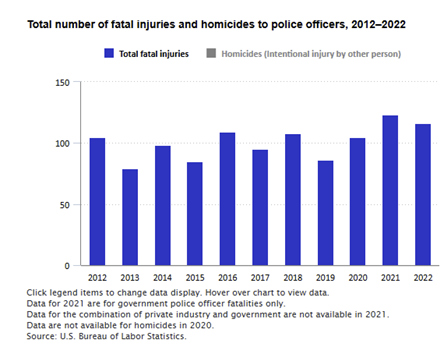
Workplace homicides in the US saw a significant decline from a peak in the mid-1990s through the 2010s. However, recent data from the Bureau of Labor Statistics (BLS) shows an increase. For example, workplace homicides in 2022 were the highest in more than a decade.
Nonfatal Violence:
The overall rate of nonfatal workplace violence also decreased substantially from the 1990s to the 2010s. However, data from sources like the National Crime Victimization Survey (NCVS) indicate an increase in nonfatal workplace violence from 2015 to 2019.
Professions Most likely to Experience violence

But they…

1. Healthcare and Social Assistance:
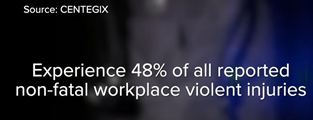
Workers in this sector account for a vast majority of nonfatal workplace injuries resulting from violence. They are five times more likely to experience violence-related injuries than workers in other industries. The risk is particularly high for nurses, psychiatric aides, and other healthcare support staff who have direct contact with patients. Violence from patients and clients is the most common type.
When I worked as a psychiatric aide on the adolescent ward of a state mental hospital, I remember being attacked by patient Larry Marinarro, a short, fifteen-year-old boy who the other kids were constantly harassing. When no one else was around, he asked me to join him in his bedroom to talk privately about a problem, so I obliged him. I sat on the edge of his bed and asked, "What's up?" to which he screamed, "Die!" as he attempted to stab me in the chest with a Bic pen. Fortunately, my reflexes were fast, so I grabbed his wrist, spun him into a restraint position, and escorted him to the isolation room where he could reflect on his behavior for a day. The head nurse asked if he needed sedation, and I suggested not, because the staff psychiatrist and I believed that drugs should be used only as a last resort to deal with violent behavior. Sobriety might assist his period of self-reflection.
Why did this boy, who was ordinarily relatively well-behaved although incarcerated in a pressure-cooker environment, turn on me, his counselor? This is a common observation about patients who attack caretakers.

Shock Reactions to Violence
Often, people react to mass violence with shock and disbelief. They say things like, "I just can't believe it", or "I would have never, ever thought..." Incongruity between a person's public image and their actions is common. Realize that anybody can crack. As cops learn, the least suspect may actually be the most suspect. It's helpful to mistrust your first impressions and dig deeper into getting to know others.
"He/she was so quiet." "They kept to themselves", or "I never saw it coming," meaning people interpreted others' quiet nature as harmless, not sinister. Beware. Still water runs deep.
Many studies and psychological profiles of killers, especially those who commit mass violence or serial murders, show a strong correlation with social isolation. It is a recurring pattern observed by criminologists and psychologists. This connection is found because socially-isolated individuals may lack social skills, empathy, and the ability to connect with others. Isolation can also be a breeding ground for nursing deep-seated, long-held resentments. This is evidenced in the manifestos of many killers who explain in writing the reasons for their behavior, often citing perceived injustices.
Profile of Attackers: "He Seemed So Nice."
Often, we hear, "He/she seemed like such a nice person," which speaks to the killer's ability to blend in as a 'normal' person. Several killers noted as reserved and unassuming were the following:
1) Jeffrey Dahmer: One neighbor said, "He seemed very shy... I didn't see him socializing with anybody." A high school acquaintance said, "He was a very quiet, shy kid."
2) The Unabomber, Ted Kaczynski: Instrumental in his capture was his brother, David Kaczynski, who said Ted was "very private and had little to no social life." Those who lived near him in his remote cabin described him as a quiet loner who kept to himself.
3) The Columbine Shooters, Eric Harris and Dylan Klebold: While the media focused on their anger and aggression, many who knew them casually described them as quiet and even shy. A fellow student said, "They were really just kind of quiet kids."
4) The Virginia Tech Shooter, Seung-Hui Cho: He rarely spoke. His former professor, Lucinda Roy, said, "He was the student that you don't notice. He was a very quiet person."
5)
Stephen Paddock, the Las Vegas Shooter: After the mass shooting, a neighbor said, "He was a very quiet man. We would see him at the store sometimes, but we never saw him with anyone else." His brother said, "He was a quiet guy, kept to himself, didn't drink, didn't smoke."

2. Protective Services and Law Enforcement:
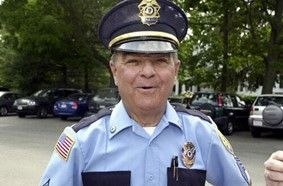
This group, which includes police officers, correctional officers, and security guards, has high rates of violence. Consider that they often must deal with mentally and/or morally broken people who objectify others, whose relationships are usually just transactional, not mutually respectful. Well-adjusted individuals develop coping skills for managing anger and frustration, such as seeking the counsel of others or distancing themselves from a dangerous person or environment.

William Obanhein (1924 - 1994)
Chief of Stockbridge, Massachusetts Police Department
3. Retail and Transportation:
Workers who handle money or valuables and have direct contact with the public are at a greater risk of violence, particularly homicide, often from robbery.
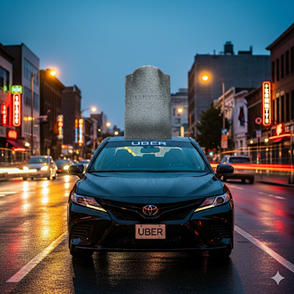
This includes taxi and rideshare drivers. Ironically, there are news stories of drivers misbehaving as much as they are abused. Former Uber driver Justin Dalton got a life sentence in a 2016 Michigan killing spree. In a surprise move and against the advice of his attorney, Dalton pleaded guilty to six counts of murder and two counts of attempted murder.
When he was arrested, he told police that an "evil figure" on his Uber app took control of his mind and body the day he committed the killings, while picking up passengers. Do you recall the son of Sam?

Those most likely to be attacked:
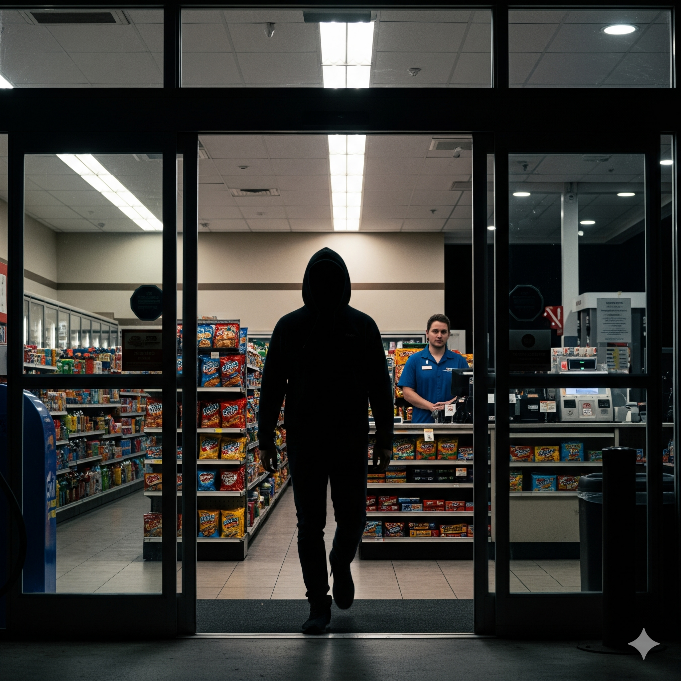
1.) Convenience store clerks – In 2022 in the US, there were approximately 30,850 convenience store robberies, about 13.8% of 233,511 total robberies for the year.
2.) Bartenders - A study from 2005-2009 by the Bureau of Justice Statistics found that bartenders had an extremely high average annual rate of workplace violence. This includes not just physical assault, but also threats and sexual harassment. The environment of alcohol, late hours, and direct public interaction creates a perfect storm for conflict.
Sexual Violence and Harassment: Several studies highlight an exceptionally high rate of sexual harassment and assault against bartenders, especially women. A 2016 study by the restaurant industry group ROC found that customers had harassed 78% of servers and bartenders surveyed. Women bartenders, consider practicing the martial arts. Martial arts training, particularly in disciplines like Krav Maga or Brazilian Jiu-Jitsu, emphasizes situational awareness and de-escalation. A person who is confident in their ability to defend themselves is often less likely to be a victim. That confidence is expressed in their body language and voice, which can deter a potential aggressor.

3.) Gas station attendants – While there are no exact figures for the number of assaults on gas station attendants, they are at a higher level of threat for assault because they are usually alone at night. They are the third largest group, after law enforcement and security guards, who deal with workplace violence.
According to data from the Bureau of Justice Statistics, violent crimes at gas stations are a serious issue. While specific numbers for assaults on attendants are not always separated from crimes against customers, a 2021 report from the FBI showed that there were nearly 12,000 violent crimes at gas stations in 2020. Another report from the FBI stated that in 2021, there were 22,000 robberies at gas stations and convenience stores, making them the third most common location for robberies. Newer statistics are not available at this time.

Education:
Teachers and other school staff, especially in technical or industrial schools, also face a significant risk of workplace violence. Teachers are vulnerable to attacks from students because they are usually alone in the classroom. The National Center for Education Statistics (NCES) reported that in the 2020-2021 school year, 4% of public school teachers were physically attacked by a student. This translates to a substantial number, although the exact total can be challenging to calculate due to variations in teacher employment numbers. The percentage was higher for elementary school teachers (7%) than for secondary school teachers (1%). Other studies have reported similar rates, with one from the American Psychological Association (APA) in 2017 finding that 6% of teachers had been physically attacked in the past year.
Factors Contributing to the Risk:
- Handling Money: Professions that involve exchanging money with the public (e.g., retail, transportation) are at increased risk of criminal-intent violence, such as robbery.
- Working with Volatile People: Workers in healthcare, social assistance, and protective services frequently interact with people who may be in distress, under the influence of substances, or have mental health issues, increasing the potential for violence.
- Working Alone or in Isolated Areas: This is a significant risk factor for professions such as taxi drivers, delivery drivers, and store clerks, who often work in isolated environments.
- Serving Alcohol: Bartenders and other workers in establishments where alcohol is served have a higher risk of violence from intoxicated patrons.
Underreporting: Many incidents go undocumented, including fear of retaliation or the perception that violence is "part of the job."

A Proactive Approach: Prevention and Intervention
Does your organization have a strategy for dealing with workplace violence? If not, consider reviewing the role of government agencies, such as the Occupational Safety and Health Administration (OSHA) and the Centers for Disease Control and Prevention (CDC), in developing guidelines and prevention programs.
Effective prevention methods may include the following:
- Developing a comprehensive workplace violence prevention program.
- Providing de-escalation training and other relevant training.
- Improving security measures.
- Creating a culture of safety where employees feel empowered to report incidents.
Explore how technology (e.g., motion detector sensors, panic buttons, and advanced surveillance) can assist in prevention and response.
Securing Our Workspaces
Creating effective strategies to deal with workplace violence is not just a practical business decision to prevent interference with usual business activities. It is a moral and ethical imperative to protect and preserve life. The current Pope of the only apostolic Christian church, Leo XIV, said, "If you want peace, preserve life."
-Frank DeDominicis
Current and Relevant Valid References
Statistical Resources
Bureau of Labor Statistics (BLS). The BLS is an invaluable source for data on workplace injuries, illnesses, and fatalities. Look for the "Census of Fatal Occupational Injuries (CFOI)" and "Survey of Occupational Injuries and Illnesses (SOII)."
Citation Example: US Bureau of Labor Statistics. (2024). Census of Fatal Occupational Injuries, 2023. Retrieved from [Official BLS link for the report]
National Institute for Occupational Safety and Health (NIOSH). A division of the CDC, NIOSH provides extensive research and resources on occupational safety and health, including workplace violence.
- Citation Example: Centers for Disease Control and Prevention (CDC), National Institute for Occupational Safety and Health (NIOSH). (2023). Workplace Violence Prevention Programs.
Occupational Safety and Health Administration (OSHA). OSHA provides guidance, regulations, and fact sheets on workplace violence, particularly for high-risk industries like healthcare.
- Citation Example: Occupational Safety and Health Administration (OSHA). (2024). Guidelines for Preventing Workplace Violence for Healthcare and Social Service Workers. Retrieved from [Official OSHA link]
Scholarly Articles & Journals (2023-2024)
Jones, C. B., Sousane, Z., & Mossburg, S. (2023). "Addressing Workplace Violence and Creating a Safer Workplace." PSNet, Agency for Healthcare Research and Quality.
Why it's relevant: This article provides a recent overview of the issue, particularly in healthcare, and discusses the importance of a systems approach to prevention.
Chen, T., Xiao, Y., & Wu, X. (2023). "It's time to protect nursing students from workplace violence." International Journal for Quality in Health Care, 35(4), mzad099.
- Why it's relevant: This article highlights a specific and often overlooked high-risk group (nursing students) and uses a qualitative systematic review to show unique risk factors.
Kim, S., Kitzmiller, R., Baernholdt, M., Lynn, M. R., & Jones, C. B. (2023). "Patient safety culture: the impact on workplace violence and health worker burnout." Workplace Health & Safety, 71(2), 78–88.
- Why it's relevant: This paper connects workplace violence to a broader organizational context, exploring its relationship with patient safety and employee burnout.
Reputable Organizations
The Joint Commission: This organization accredits healthcare organizations and has a set of standards that address workplace violence prevention.
Citation Example: The Joint Commission. (2024). Workforce Safety and Well-being: Workplace Violence Prevention. Retrieved from [Official Joint Commission link]
American Nurses Association (ANA): The ANA has a strong position on workplace violence and provides state-by-state information on laws and policies.
- Citation Example: American Nurses Association (ANA). (2024). Workplace Violence Prevention. Retrieved from [Official ANA link]
2025 Videos
Workplace Violence in Healthcare 2025
Workplace Violence: CEO Attacked On December 17, 2024
Labor citation reveals dangers faced by Maryland parole and probation staff.
Workplace Violence: Healthcare's Alarming Reality. Are You Safe?
https://www.youtube.com/watch?v=K6f2defWTOA
2024 Videos
9/6/24 - Workplace Violence in Healthcare: Current State, Best Practices, and Reducing Risk
Workplace Violence Prevention Training Clip—What is Workplace Violence in Healthcare
Workplace Violence Training Made Easy from SafetyVideos.com
Best Practices for Managing Agitation and Workplace Violence: Mastering Coordinated Responses
Workplace Violence Prevention | Protect Yourself and Others | Online Training Certificate
Workplace Violence Prevention Training Risk Factors and Warning Signs Promo 6 2024
WeResearch Webinar Series 2024 - Workplace Violence and Harassment – A novel strategy to...
Workplace Violence and Keeping Your Team Safe
Workplace Violence Series (contains a list of webinars and videos from 2024 and 2025)
Workplace Violence Prevention & Intervention (Playlist)
Student beats Teacher's Aide over Nitendo switch https://www.cnn.com/videos/us/2023/02/26/florida-school-attack-nintendo-switch-nr-rosales-vpx.cnn
One of the Deadliest Shootings:
https://www.youtube.com/watch?v=0A66yqP3ydk
South Bay judge keeps death sentence in place for mass shooter Richard Farley
https://www.youtube.com/watch?v=Lg_apZxzk6g&t=1s
Man suffering from mental illness turns to mass murder at former workplace
https://www.youtube.com/watch?v=kZuPdpu4bas&t=1s
Postal Worker with Imaginary Friend Murders Seven People | Jennifer San Marco Case
https://www.youtube.com/watch?v=SfKHpVRVkbE
The Fort Hood Shooter: Nidal Hasan
https://www.youtube.com/watch?v=bP1Z_i6qI7g&t=1s
Healthcare workers speak out after hospital shooting – April 2025 News
https://www.youtube.com/watch?v=de_7sd13u0Y
Not Just Physical: The Quiet Ways Workplace Violence Shows Up and Why It Matters https://www.youtube.com/watch?v=tDikW758d1Y
Former Uber driver Justin Dalton gets life sentence in 2016 Michigan killing spree https://abcnews.go.com/US/uber-driver-justin-dalton-life-sentence-2016-michigan/story?id=60851761.
Protecting Gas Station and Convenience Store Workers from Violence https://archive.cdc.gov/www_cdc_gov/niosh/newsroom/feature/protect-from-violence.html#:~:text=Learn%20what%20steps%20employers%20and,and%20workers%20may%20be%20alone.
Reducing Workplace Violence in Gasoline Stations and Convenience Stores https://www.cdc.gov/niosh/docs/wp-solutions/2023-121/
Gun Deaths in the US 2023: Key Statistics and Trends. https://www.lawyer-monthly.com/2025/03/gun-deaths-in-the-u-s-a-deep-dive-into-the-2023-data/
Workplace deaths decline – Etzler Lawhead Legal Group, PC. https://www.etzlerlawheadlegalgroup.com/workplace-deaths-decline/
Workplace fatalities fell in 2017
https://www.lpgasmagazine.com/workplace-fatalities-fall-in-2017/
Gun Violence by the Numbers in 2024. https://www.thetrace.org/2024/12/data-gun-violence-shooting-stats-america/
Former Uber driver went on 2016 killing spree sentenced to life in prison
https://sirgo.com/former-uber-driver-who-went-on-2016-killing-spree-sentenced-to-life-in-prison/
Building a Culture of Safety: Key Principles for Workplace Wellness - Littlegate Publishing. https://www.littlegatepublishing.com/2024/04/building-a-culture-of-safety-key-principles-for-workplace-wellness/
Ten Worst Workplace Homicides in U.S. History
https://www.thehigginsfirm.com/ten-worst-workplace-homicides-in-u-s-history.html
Recent Posts