
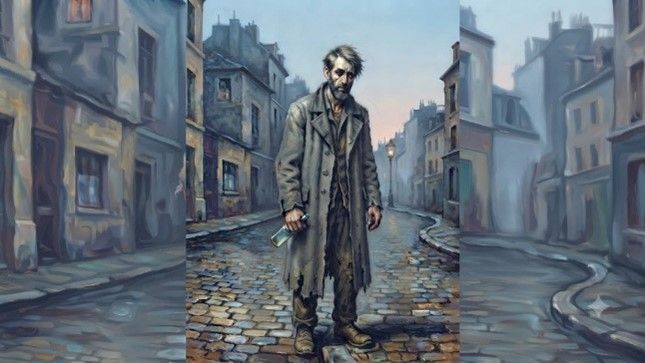
I will start with only one word. Not a headline, not a statistic, only a single word that followed me around a conference room in downtown Denver in May of 2026 as I mingled with Colorado’s largest manufacturing executives. I was participating in the 52nd World Trade Day Conference, the largest international gathering of international trade professionals, policymakers, and business leaders. This year’s theme was blunt: “A New Era in Trade: Globalization in Question.” The keynote wasn’t about growth strategy or market expansion. It was titled “Safeguarding Trade in a Weaponized World Economy.” Every speaker I listened to and every hallway conversation I eavesdropped on kept circling back to that same word. Not tariffs, not GDP, not affordability, but ‘uncertainty.’ The word ‘uncertainty’ isn’t just a trade-conference buzzword. It’s showing up everywhere. Meanwhile, economists who track something called the World Uncertainty Index — a measure built from language in global news coverage — clocked its highest reading in more than three decades of data earlier this year. The index’s newest national poll found that nearly half of adults say they’re more anxious than they were a year ago — and when researchers asked people what’s driving that anxiety, the economy topped the list, with roughly seven in ten adults reporting they feel anxious about it. And uncertainty is not confined to our minds and our markets. It’s in the terra firma beneath us. Geophysicists studying the San Andreas and San Jacinto faults in Southern California recently reported that the two faults are carrying more accumulated stress than at any point in the last thousand years. If they were to rupture together through the Cajon Pass, researchers estimate the resulting earthquake could reach magnitude 7.4 to 7.8 — enough to simultaneously disrupt highways, rail lines, and energy corridors across multiple cities.

The necessity of integrating the EverythingDiSC™ profile into vocational training for people with disabilities is rooted in its ability to facilitate deeply personalized and meaningful career planning, a crucial element for ensuring successful employment outcomes. It acknowledges that job success relies far more on behavioral competencies than on technical ones.
Arthur Schlesinger Schlesinger was born in Columbus, Ohio, the son of Elizabeth Harriet (nee Bancroft) and Arthur M. Schlesinger (!888-1965), an influential historian at Ohio State University. His paternal grandfather was a Prussian Jew who converted to Protestantism and married an Austrian Catholic. According to family tradition, his mother, a Mayflower descendant, was of German and New England ancestry and a relative of historian George Bancroft. Schlesinger practiced Unitarianism. As a writer, I am confronted with three problems: 1. Everyone reading this has unexamined biases. 2. Embedded biases can color how one perceives stories of religious intolerance. 3. Gross ignorance. I am figuring out how to please everybody who reads this; however, I welcome intelligent argument if you think I'm off. I do not proselytize for any religion but hope every individual will map their path of faith, even if it is a path of no faith. Just identify your spiritual horizon and head for it. Simple. What I know is all that I know, a finite library of cerebral knowledge. Outside that subjective reality lies a vast universe of ignorance, my reason for open-mindedness and humility. At my core, I'm a perma-skeptic who continually questions everything, especially long-embedded personal 'truths' and hidden biases. Notwithstanding actual apparitions, I tend not to believe abstract concepts unless they are carefully and logically derived through reason and are perceived by my senses. If I think I hear divine voices speaking to me, am I crazy? Or am I receiving the voice of God speaking to me through the megaphone of conscience, just like Joan d'Arc? I don't know. That's why I explore this subject with you. I'm blessed or cursed with being born with an extreme curiosity about everything and how everything indescribably connects to everything else. Please receive this report for awareness, not necessarily agreement with every point. I could make mistakes, so please don't crucify the piano player. Aware that this report will be read by everyone, from non-practicing or devout Christians to befuddled agnostics and confirmed atheists, I strive to communicate in a way that reports, educates, and contributes to understanding differences and their core reasons. Knowing how belief systems directly affect one's worldview and behavior is helpful as you may lead, manage, or interact with people. Are Catholics more hopeful because a scapular guarantees salvation? Are Protestants more negative because of a focus on our inherently sinful nature? Remember that I am not a theologian, so feel free to challenge whatever you disagree with or want to provide correction. I'm a teacher, not a preacher. On all matters, I take a Socratic approach, always searching for higher-quality questions, as in AI prompt engineering.

Historical Context and Ubiquity
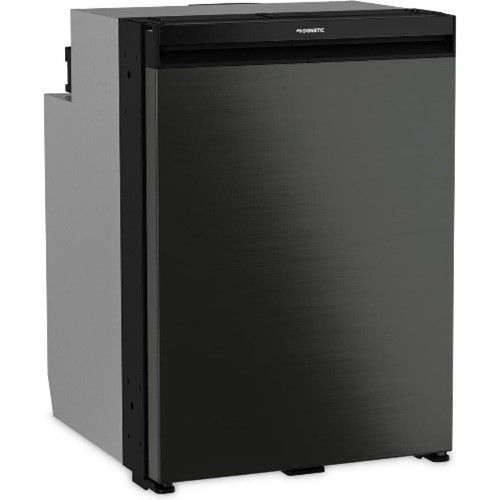
My Refrigerator as Metaphor for Tariff Stressors
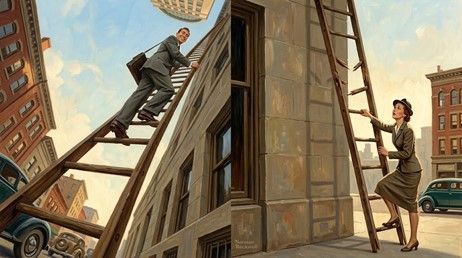
Men Being Harassed at Work by Women
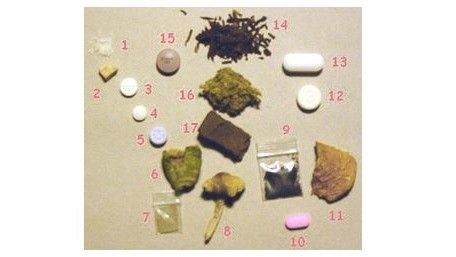
How many psychoactive drugs can you identify?
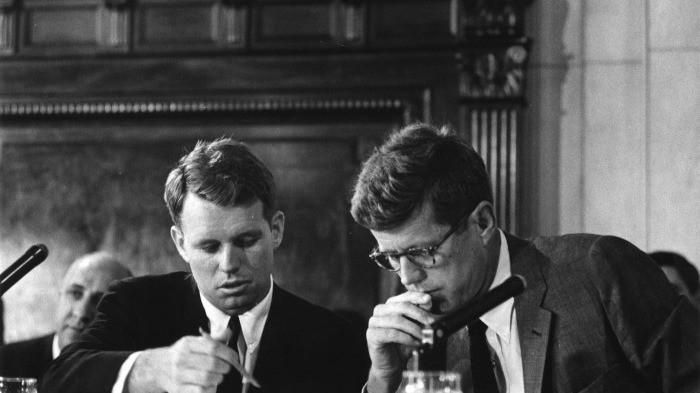
Explore the risks and potential benefits of nepotism through historical, political and workplace examples and what fair leadership requires.

Generally speaking, most adults consider play as something extra after the to-do list is completed, a reward for accomplishing a task, or a diversion from something serious and heavy. In actuality, it should be considered vital for mental health because, without it, we ignore the child in us who wants to explore, test, and play. Play is inherent in human and animal natures. Being in the early days of Act III of life and preparing for a good death, I am more serious about things and consciously scheduling play times. I assign play equal weight, if not greater, to other life priorities such as work, worship, friendship, and love. I've enjoyed many hobbies that provide great satisfaction, but with aging, I've pared them down to only a few. If I were to live as long as my centenarian mother, I have time to read only 1000 new books, so I'd better carefully choose what I put into my head. Likewise, protecting play time is essential to my mental health.