


Power Needs of Women & Men: Exploring Gender Disparity Yesterday and Today

Are Dr. David McClelland's seminal 80's women and power research findings valid today? I will attempt to determine this, given that sexism has been and is being addressed in the workplace. He is the author of Power - The Inner Experience.
Many of his process observations exist today but to a much lesser degree. You may or may not concur with McClelland's maxims, but either way, I hope to provoke your thinking about how far we've come in just a few decades, to offer a small but significant learning event here.
Small events can have an expansive and even global impact. For example, consider the bold investigative journalism of two courageous reporters who persuaded victimized women to come forward regarding the criminal misbehavior of Harvey Weinstein, now serving 16 years for sexual assault. A month after his conviction, eighty-two other women made similar claims of sexual abuse and rape by Mr. Weinstein. If you are a thought leader, remember that small, local events can significantly impact society overall.
Traits, Motivations, Expectations, and Needs – Observations
"Yes, there are some distinct differences physiologically, biologically, and psychologically."
The differences between men and women are categorized into three broad domains: physiological, biological, and psychological. It's important to note that these differences are not absolute and that there is considerable variation within each gender, determined by genitalia at birth.
Physiological Differences
Reproductive System
Men and women have distinct reproductive organs. Men typically have testes, which produce sperm, while women have ovaries, which produce eggs. Women also have a uterus for pregnancy.
Secondary Sexual Characteristics
These physical traits develop during puberty, differentiating males from females. This includes facial and body hair growth, a deeper voice, and increased muscle mass in males. In females, it involves the development of breasts, wider hips, and the onset of menstruation.
Hormones
Men and women have different hormone profiles. Men produce more testosterone, which influences the development of male characteristics, whereas women produce more estrogen and progesterone, which influence female characteristics and regulate the menstrual cycle.
Metabolism
Usually, men tend to have a higher basal metabolic rate and, on average, more lean muscle mass, while women may have a higher percentage of body fat. Although some say metabolism is not directly linked to a propensity for specific ailments and disorders, some say metabolism can result in differences in energy expenditure and body composition.
Biological Differences
Chromosomes
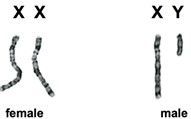
Most men have an X.Y. chromosome pattern, while most women have an XX chromosome pattern. However, some individuals may have other chromosomal variations, such as XXY or XYY.

Chromosomes
Genitalia
Infants are typically classified as male or female at birth based on their external genitalia. However, there can be variations in genital development, leading to intersex conditions.
Sexual Dimorphism
Men and women exhibit differences in skeletal structure, such as bone density, and in certain anatomical features, like the size of the pelvis and the presence of an Adam's apple in men.
Genetic Differences
There are subtle genetic differences, with some genes found more frequently in one gender than another. These genetic variations can influence susceptibility to certain diseases or conditions.
"New findings suggest that genetics may influence the reason more men or women develop certain diseases, including multiple sclerosis (M.S.), autism, type 1 diabetes. It is well known that more women than men develop M.S., while more men than women develop autism. Other diseases, such as heart disease, can present differently among the sexes, and patients are known to respond differently to treatments based on their gender. This has raised questions about how genetics influence the prevalence of diseases among the sexes. However, despite the importance of genetic differences between the sexes, there is still little understanding of how biology drives the differences." - https://www.pharmacytimes.com
Psychological Differences
Cognitive Differences
While there is considerable overlap, studies suggest that men and women may, on average, exhibit differences in cognitive abilities. For example, some research has indicated variations in spatial reasoning, verbal communication, and mathematical skills. The National Library of Medicine reports, "Cognitive attributes are different in males and females. Generally, females show advantages in verbal fluency, perceptual speed, accuracy, and fine motor skills, while males outperform females in spatial, working memory and mathematical abilities."
Personality and Behavior
Cultural and societal factors play significant roles in shaping personality and behavior, but some studies have reported differences in areas like risk-taking behavior, aggression, and empathy. These differences are averages and don't apply to everyone.
Gender Identity
Gender identity is an individual's internal sense of gender, which may or may not align with their biological sex. Some people identify with the gender they were assigned by nature at birth (cisgender). In contrast, others identify with a different gender (transgender), although their actual gender is biologically determined at birth. This is the underlying reason for disagreement about biological males' participation in competitive female sports.
Individual variations and the influence of culture and society should be considered when discussing the differences between men and women.
"Traditionally, women have been defined in terms of Adam's rib, Adam's temptress, Adam's helpmate, Adam's wife and mother of his children."

Reuben's Adam and Eve
"The Catholic view is that men and women are equal in the sight of God. In marriage, each is to sacrifice himself or herself for the other. They are to build a family together through cooperation with each other and mutual respect. There are differences in the roles they naturally play. Women are more natural caregivers for children, and men work outside the home more naturally. Yet women can and do work outside the home, and men do act as caregivers for children (changing diapers, feeding babies their bottles, burping them, walking with them when they are crying at night–men do all these things, just as women do)."
Primacy of Motherhood
The concept of primacy of motherhood can create challenges for women who seek to balance their roles as mothers and career professionals.
"Men are more assertive than women."
Although this statement may have been commonly accepted as true in the 80s, the claim that men are more assertive than women is a generalization and oversimplification of a complex topic. It's important to understand that behaviors and personality traits, including assertiveness, can vary widely among individuals and are influenced by many factors, including upbringing, culture, societal expectations, and traumatic events. A shift in personal values can motivate different behaviors.
While some studies have suggested that, on average, men may exhibit higher levels of assertiveness in specific contexts, it is crucial to emphasize that these are population-level trends and do not apply universally. All studies must be questioned because context, timing, and other factors may have influenced their data.
An exceptional example of demure, nonassertive women becoming super aggressive involves ancient military strategist Sun Tzu, a Chinese general in the Warring States period around 400 BC. At that time, Chinese local warlords waged war against one another, fighting for their shares of the remnants of the collapsed Chou Empire. A warlord challenged political science theorist Sun Tzu to apply his famous combat principles to train 180 women from the warlord's palace and to transform them into an orderly company of highly skilled fighters. Among the women, two were the warlord's most favored concubines.
Sun Tzu divided the women into two cohorts and then assigned each concubine in command of each. Sun Tzu then asked the women to do a simple drill and ensured they understood what to do. However, the women laughed when he ordered them to perform the drill. He tried again with the same result. Sun Tzu claimed that this failure of the troops to obey was the fault of the commanders. So, despite the warlord's pleas, he ordered his two favored concubines beheaded as an example for the rest of the company. After that lesson, the women did not utter a single sound. They performed the drill precisely as commanded and became competent at lethal combat.
Points to consider:
Variability
There is substantial variability in assertiveness among both men and women. Many assertive individuals of all genders exist. Some individuals are just passive and low verbal.
That describes me before 1981 when I was 30. Due to my reaction to a defection by my closest friend back then, my style now is mildly assertive/aggressive. That singular significant emotional event permanently shifted my personality. I was less trusting at first but later more discerning about the trust-building process. The point is that friendship defection motivated me to change from being a quiet, even shy person to becoming a good defensive fighter who also stands up for the rights of others.
Cultural and Social Factors
Cultural and societal norms significantly shape human behaviors. Different societies may have varying expectations and definitions of assertiveness for men and women. In some cultures, assertiveness may be encouraged in men but discouraged in women, while in others, these roles may be reversed.
Examples of Matriarchal or Matrilineal Cultures
Minangkabau (Indonesia): The Minangkabau people, who predominantly live in West Sumatra, Indonesia, follow a matrilineal system. Property and land are traditionally passed down through female lineage, and women often have a say in important family and community matters.
Mosuo (China): The Mosuo people, primarily residing around Lugu Lake in Yunnan and Sichuan provinces of China, are known for their matriarchal family structure. Women hold significant authority and property rights, and children are raised within their mother's extended family.
Khasi (India): The Khasi people, who live in the northeastern Indian state of Meghalaya, practice a matrilineal system. Lineage and property are passed down through the mother's side of the family, and women often hold key societal positions.
Akan (Ghana and Ivory Coast): In Akan societies in West Africa, women play an essential role in decision-making and the matrilineal inheritance of property. The queen mother, or Asantehemaa, is a prominent figure in Akan culture.
Nagovisi (Papua New Guinea): The Nagovisi people of Bougainville Island have a matrilineal system where inheritance is passed down through the female line, and women hold significant power and influence in the community.
Tuareg (North Africa): The Tuareg people, a Berber ethnic group in North and West Africa, have a matrilineal kinship system. Women traditionally have a degree of autonomy, and men may migrate to their wives' communities after marriage.
Hopi (USA): The Hopi Native American tribe in the southwestern United States has matrilineal cultural elements. Clan membership and property are often passed down through the mother's line.
Aka and Ngandu (Central Africa): Among the Aka and Ngandu peoples in Central Africa, women play important roles in decision-making, and the societies have matrilineal aspects in their kinship systems.
Context Matters
The level of assertiveness can vary based on the specific context or situation. For example, someone may be assertive in their professional life but less so in their personal life. The perceived appropriateness of assertiveness can also vary by context.
At a Leadership Institute where I taught DiSC™ theory, I was asked to profile Donald Trump, something I hate to do because DiSC is not based on definitive typology but on interpersonal relationship dynamics. Although hesitant to use DiSC like a crystal ball, I said that from what can be discerned on social media, he appears to have a consistently highly dominant style with only a few slight fluctuations, in which his S factor (Submission and Security) jumps in emotional reaction to criticism or any negative feedback. However, his style may be completely different in his bedroom with his wife at night. He may become totally passive, submissive, and even nonassertive based on Melania's interactions with him.
Socialization
Traditional gender roles and expectations can influence how individuals express assertiveness. Men may be socialized to be more dominant and self-assured, while women may be socialized to be more accommodating and nurturing. However, these norms are evolving and vary across different cultures.
Individual Differences
Personality, temperament, and life experiences substantially shape an individual's level of assertiveness. Not all men or women conform to traditional gender stereotypes. The variations can be quite significant.
Self-Perception
One's perception of assertiveness may also be influenced by self-confidence, self-esteem, and self-concept rather than just gender. Self-esteem is the feeling one gets from having a positive self-concept. A positive self-concept is holding a positive image of oneself.
While there may be statistical differences in assertiveness between men and women in specific contexts, these differences are not fixed or deterministic. It is essential to recognize that gender is only one factor influencing assertiveness.
People of any gender can develop assertiveness skills. It is more productive to encourage and support individuals in developing the traits and behaviors that align with their goals and values rather than making assumptions based on gender.
It's inaccurate to make a general statement that American women are more assertive than American men, as assertiveness varies widely among individuals and is influenced by various factors, including personality, culture, Context, and personal experiences. The level of assertiveness can differ from person to person, and it's not tied solely to one's gender.
In the United States, as in many other countries, gender roles and expectations have evolved. While traditional gender stereotypes often associate assertiveness with men and passivity with women, these stereotypes are increasingly being challenged, and individuals are encouraged to express themselves and pursue their goals in ways that align with their personalities and values rather than their gender.
Generalizations about assertiveness based on gender can be misleading and unfair. Men and women in the United States and elsewhere exhibit a wide range of assertiveness levels. These levels are more accurately attributed to each person's unique attributes and experiences, independent of gender.
In recent years, there has been a shift in many societies toward more inclusive and flexible views of motherhood, recognizing that women have a range of choices and can define their roles and priorities for themselves. It's essential and honorable to respect and support the choices and lifestyles of individuals and not impose rigid expectations based on traditional gender roles. Before the 80s, the primacy of motherhood argument played a role in divorce and custody hearings and decisions. It has since been downplayed; instead, we recognize men's equal and natural ability to love, nurture, and raise their children as single fathers.
In specific situations or fields, such as business or politics, assertiveness may be perceived differently. Cultural and societal factors play a role. However, even within these contexts, there is significant variation in assertiveness among individuals. Evaluating assertiveness individually rather than making broad gender-based comparisons is more meaningful.
"Women are more perceptive and adaptive to their environment."
In contrast to McClelland's studies, no definitive evidence supports the assertion that women are universally more perceptive and adaptive to their environment than men. Perceptiveness and adaptability to the environment are complex traits influenced by individual differences, genetics, upbringing, education, cultural expectations, and personal experiences.
To avoid making sweeping generalizations about gender differences in perceptiveness and adaptability, consider the following points:
Individual Variability
There is significant individual variability within both men and women. Some men may be highly perceptive and adaptive, while some women may have different strengths and weaknesses in these areas. These traits are distributed along a spectrum and can't be attributed solely to a specific gender. This is a long stretch from McClelland's predominantly sexist 80s when women still fought for equal pay.
Cultural and Social Factors
Cultural and societal expectations and norms can shape behaviors and perceptions that may vary across cultures and over time, influencing how people of different genders perceive and adapt to their environments.
Context Matters
Perceptiveness and adaptability can vary depending on the specific context. Some individuals may excel in one environment but struggle in another. Personality, education, and life experiences also play a significant role.
Socialization
Traditional gender roles and socialization can influence how individuals perceive and adapt to their environments. For example, women have historically been encouraged to be nurturing and empathetic, which may contribute to their ability to perceive and adapt to social and interpersonal dynamics. Men have been encouraged to be tough-minded, not to weep, to inhibit certain feelings from expression. For example, it is easier and more socially acceptable for a man to say he is angry than feeling hurt.
Biological Differences
There are subtle differences in brain structure and function between men and women. These differences are complex and not directly tied to perceptiveness and adaptability. Additionally, potential biological differences should be more concise and used to generalize broadly.
The relatively new concept of a "male brain" and a "female brain" has been a scientific inquiry and debate topic. Neuroscience research has shown structural and functional differences between the brains of individuals assigned male (AMAB) and those assigned female (AFAB). However, it is essential to understand these differences within a broader context.
Neuro-Plasticity
The human brain is highly adaptable and exhibits significant plasticity. It can change and adapt based on learning, experiences, and environmental factors. As a result, any differences observed in brain structure or function are not static and can be influenced by various factors. Nutrigenomics, the newest science has opened doors about personalized nutrition needs.
Individual Variation
Brain differences within and between genders are highly variable. There is considerable overlap in brain characteristics between individuals of different genders, and the range of brain variation is greater within each gender group than between them.
Social and Cultural Factors
Social and cultural factors influence brain development and cognitive functions. Gender roles and expectations can shape behaviors and cognitive patterns, potentially contributing to differences observed in brain imaging studies.
Hormonal and Genetic Influences
Hormonal and genetic factors play a role in brain development. Hormonal differences between sexes during fetal development and throughout life can contribute to some brain differences.
Complexity of Gender
Gender identity is a complex, multifaceted construct. It is not solely determined by biological sex, and there is a growing recognition of non-binary and gender-diverse identities despite the physical reality.
While there may be some differences in the brains of AMAB (assigned male at birth) and AFAB (assigned female at birth) individuals on average, these differences are not deterministic and do not determine one's capabilities, personality, or interests.
The "male brain" and "female brain" concept oversimplifies the complexity of human identity, behavior, and cognition. The study of gender and the brain remains an active area of research, and ongoing work is exploring the nuances and limitations of this research.
Rather than assuming gender-based differences in perceptiveness and adaptability, it is more accurate and fair to consider these traits as individual characteristics that many factors can influence. Encouraging and supporting individuals to develop their unique strengths and adaptability is more constructive than making gender-based assumptions.
"Women care more about relationships and are more highly trained in nurturance."
It is prejudicial and inaccurate to make a blanket statement that women universally care more about relationships or are more highly trained in nurturance. Like many personality traits and behaviors, individuals' capacity and inclination to care about relationships and exhibit nurturance are highly variable. Various factors, including culture, upbringing, personal experiences, and individual personality, can influence them. I have met some super-sensitive men and have known some cold-hearted women.
Important Considerations
Individual Variability
People of all genders vary in their degree of interest in and capacity for nurturing relationships. Some men may place a high value on relationships and demonstrate strong nurturing qualities, while some women may not prioritize these traits to the same degree.
Cultural and Societal Influences
Cultural and societal expectations and other norms play a significant role in shaping behaviors related to relationships and nurturance. These expectations may vary widely across cultures and can change over time.
Personal Experiences
Personal experiences and upbringing can shape an individual's approach to relationships and nurturing. Childhood experiences, family dynamics, and personal values influence an individual's attitudes and behaviors.
Personality and Temperament
Individual differences in personality and temperament, such as empathy, compassion, and social orientation, play a significant role in shaping one's capacity for nurturance and caring about relationships. These traits can be found in people of all genders.
Brain Size and Structure
Research suggests that there may be slight differences in brain size and structure between males and females. For example, some studies have reported that, on average, males tend to have slightly larger brain volumes, while females might have slightly more gray matter in certain regions. However, these differences are subtle and do not imply differences in cognitive abilities.
Connectivity
Research has shown that there may be differences in brain connectivity patterns between males and females. Some studies suggest that women may have stronger connections within the brain's hemispheres, while men may have stronger connections between hemispheres. Again, the functional significance of these differences is still a subject of ongoing research.
Hormonal Influences
Hormonal differences, such as the presence of estrogen and testosterone, may have some impact on brain development and function. These hormones can affect various aspects of cognition and behavior, but the relationship is complex and needs to be fully understood.
It's important to emphasize that the observed differences in brain structure and function do not imply any inherent superiority or inferiority of one gender over the other. These differences result from a complex interplay of genetics, hormones, and environmental factors. Moreover, individual differences within each gender far outweigh any average differences between the genders.
Societal and cultural factors shape behaviors and preferences, and they can be more influential than any potential neurological differences. Gender is a social construct, and biological and environmental factors influence behavior and cognitive abilities.
Because the scientific community continually researches this brain-differentiation topic, our understanding of the male and female brain may evolve as more studies are conducted. Therefore, staying informed on the latest research is good, and being cautious about drawing broad conclusions or generalizations based on limited findings is good.
Biological Factors
While some research suggests that there may be subtle differences in brain structure and function between men and women related to empathy and social cognition, these differences are complex and not deterministic. Potential biological differences should not be used to generalize individuals broadly.
"Women's organism seems more finely tuned to adjusting to stimulus changes in their environment."
The idea that women's organisms are more finely tuned to adjusting to environmental stimulus changes is a complex and much-debated topic. No universally accepted scientific consensus supports this notion. Individual responses to environmental stimuli can vary widely and depend on many factors.
Key Points to Consider
Individual Variability
Responses to environmental stimuli, adaptability, and sensitivity to changes can vary significantly among individuals, regardless of gender. People have diverse experiences and may respond differently to environmental changes based on their unique characteristics, including genetics, personality, and life experiences.
Cultural and Social Factors
Cultural and societal expectations and norms can influence how people perceive and respond to environmental stimuli. These factors can vary across cultures and change over time.
Biological and Hormonal Influences
While some evidence suggests that hormonal fluctuations (such as during the menstrual cycle) may influence some aspects of women's emotional and cognitive responses, the relationship between hormones and adaptability is complex and not fully understood.
Evolutionary Perspectives
Some evolutionary theories propose that women, as primary caregivers in many societies, may have developed particular sensitivities to environmental changes related to their offspring's safety and well-being. However, this does not imply that women are universally more finely tuned to all environmental changes.
Psychological Factors
Stress, psychological resilience, and cognitive strategies also affect how individuals respond to environmental changes. These factors can vary widely among both men and women. The assertion that women are inherently more finely tuned to making adjustments to stimulus changes is not supported by a clear and consistent body of scientific evidence.
"Women are more concerned than men with both sides of an interdependence."
In contrast to McClelland's findings, the idea that women are more concerned than men with both sides of an interdependence or more focused on maintaining harmonious relationships and connections is a generalization that doesn't hold true for everyone.
Human behavior and concerns in interdependent relationships are complex and can vary significantly based on many factors, including individual personality, cultural context, and personal experiences.
Points to Consider
Individual Variability
There is considerable individual variability in the degree to which people, regardless of gender, are concerned about both sides of interdependence. Some men may prioritize maintaining harmonious relationships, just as some women may strongly emphasize this aspect.
Cultural and Societal Influences
Cultural and societal norms and expectations can significantly impact how individuals approach interdependent relationships. Different cultures may place varying levels of emphasis on maintaining harmony and balance in relationships, and these norms can change over time.
Personal Experiences
Personal experiences, including family upbringing and past relationships, can vary widely and shape a person's approach to interdependence and their level of concern for both sides of the relationship.
Personality and Communication Styles
Individual differences in personality traits, communication and attachment styles significantly shape one's approach to interdependent relationships. Some people are naturally more concerned with harmony and balance, while others may prioritize other relationship aspects, such as autonomy or problem-solving.
Biological Factors While there is some research suggesting that women may, on average, exhibit greater empathy and social cognition, these differences are not deterministic and do not imply that all women are more concerned with maintaining interdependence.
Avoiding broad, gender-based assumptions about concerns in interdependent relationships is essential. While gender may play a role in shaping socialization and expectations, it is only one of many factors influencing an individual's approach to interdependence. People's concerns and behaviors in relationships are highly individual and influenced by many things. Encouraging open communication and understanding in relationships while respecting individual differences is a more constructive and respectful approach.
"Dependent on others, women are more subject to persuasion."
The notion that women are more subject to persuasion when dependent on others is a generalization that does not apply universally to all individuals. A complex interplay of individual characteristics, situational factors, and Context influences people's susceptibility to persuasion. Gender, while it may play a role in shaping socialization and experiences, is just one of many factors that can affect a person's vulnerability to persuasion.
Key Considerations
Individual Differences
There is substantial variability among individuals, regardless of gender, regarding their susceptibility to persuasion. Personal traits, such as self-confidence, critical thinking skills, and assertiveness, can significantly affect one's resistance to persuasion.
Situational Factors
The context in which persuasion occurs is important. Vulnerability to persuasion may depend on the specific situation, the nature of the persuasive message, and the individual's emotional state at the time.
Psychological Factors
Psychological factors, such as cognitive biases, prior beliefs, and social influence, can all play a role in susceptibility to persuasion. These factors can affect people of any gender.
Cultural and Societal Influences
Cultural and societal norms and expectations can influence how individuals respond to persuasion. Norms vary widely across different cultures and communities.
Dependence and Interdependence
The extent to which an individual is dependent on others is just one factor to consider. People may be dependent in various ways, such as financially, emotionally, or socially, and these dependencies may influence their responses to persuasion differently.
Various factors influence people's responses to persuasion, and individuals can vary significantly in their susceptibility. It is helpful to approach these topics with nuance and avoid making gender-based generalizations.
"Women are more apt to hermitage, solitary sadhu, or to take sannyasa."
The idea that women are more inclined to adopt a hermitage lifestyle, become solitary ascetics (Saddhu), or take sannyasa (renunciation) is not universally true. The choice to pursue a life of solitude, asceticism, or renunciation is highly individual. It can vary significantly based on personal beliefs, cultural and societal norms, and particular circumstances. It is not inherently tied to one's gender.
Points to Ponder
Individual Choice Whether someone chooses a life of solitude, asceticism, or renunciation is a profoundly personal decision. Men and women alike make this choice based on their spiritual or philosophical beliefs and individual circumstances.
Cultural and Religious Variability
The inclination toward solitary or ascetic lifestyles can vary by culture and religion. In some cultures, or religious traditions, such choices may be more common among men, while in others, women may equally participate.
Societal Norms
Societal norms and expectations can influence people's life choices. In some societies, traditional gender roles may limit women's access to specific paths of renunciation, while in others, women may have equal opportunities.
Historical context
Historical and traditional practices often shape the roles and opportunities available to individuals. Over time, these roles can evolve and change.
Spiritual and Philosophical Beliefs
The decision to adopt a life of renunciation is often driven by deep-seated spiritual or philosophical beliefs, which are not restricted by gender.
The inclination to pursue a hermitage, solitary asceticism, or sannyasa is a profoundly individual choice influenced by personal beliefs, cultural norms, societal expectations, and historical Context. It is not an inclination that can be attributed to one's gender but instead to one's convictions and circumstances. Women, like men, can and do make these choices based on their journeys and beliefs.
"Women disclose more of their secrets to others."
The idea that women disclose more of their secrets to others than men is a generalization and not universally true. The tendency to disclose personal secrets or information to others can vary widely among individuals and is influenced by personality, trust, socialization, and cultural norms.
Key Points to Consider
Individual Variability People, regardless of gender, exhibit various disclosure behaviors. Some men may be very open about sharing personal secrets and information, just as some women may be more reserved.
Personality and Communication Style
Personal traits and communication styles play a significant role in disclosure behavior. Introverted individuals, for example, may be less likely to disclose personal secrets to others, while extroverted individuals may be more open.
Trust and Relationship Dynamics
The level of trust and the quality of the relationship with the person being disclosed to, strongly influences what is shared. People are often more willing to share personal secrets with those they trust and feel close to.
Cultural and Societal Norms
Cultural and societal norms can shape expectations around disclosure. In some cultures, there may be an expectation of openness and sharing, while in others, privacy and discretion may be valued more.
Situational Factors
The context in which disclosure occurs is essential. People may be more likely to disclose personal secrets in intimate and private settings while being more guarded in public or formal situations.
Historical and Generational Differences
Norms around disclosure may evolve over time. Younger generations, for example, may have different attitudes toward sharing personal information compared to older generations. Generally speaking, the younger someone is, the more likely they are to share their life story on Facebook, including what they had for lunch. Elders are less prone to advertising their lives to the world. The tendency to disclose personal secrets is a highly individual behavior influenced by many factors.
"Men are more interested in things; women, in people."
While there are trends or tendencies in this direction in certain contexts, it is crucial to understand that interests, preferences, and motivations are highly variable and influenced by individual differences, culture, upbringing, and personal experiences.
Important Considerations
Individual Variability
People, regardless of their gender, exhibit a wide range of interests and motivations. Some men are strongly interested in people-oriented fields, such as social sciences, psychology, or healthcare. In contrast, some women are strongly interested in things-oriented fields, such as engineering, technology, or mechanics.
Cultural and Societal Influences
Cultural and societal norms and expectations can shape interests and preferences. These expectations may vary across cultures and evolve over time.
Education and Career Choices
Personal interests, opportunities, and societal encouragement influence individuals' choices regarding education and careers. Stereotypes and biases may play a role in shaping these choices.
Psychological Factors
Individual differences in personality traits can also influence interests. Someone strongly inclined toward empathy and social interaction may gravitate toward people-oriented fields. In contrast, someone with a strong interest in problem-solving and analytical thinking may be drawn to things-oriented fields.
Biological Factors
There is ongoing research into the potential influence of physical factors, such as hormonal differences, on interests and preferences. These factors are complex and not deterministic. Individuals have diverse interests shaped by personal choice, societal influences, and individual differences.
"Male style is analytical and manipulative."
It is inaccurate to generalize that the "American male style" is analytical and manipulative. People's styles, behaviors, and characteristics vary widely, and it is essential to avoid making broad, sweeping statements about any group based on gender, nationality, or other factors. Analytical and manipulative traits are not inherent to a particular gender or nationality. Analytical thinking can be a cognitive style that individuals of all genders and backgrounds may possess. It involves breaking down complex problems and making logical and systematic evaluations.
The phrase "manipulative" typically carries a negative connotation and refers to behaviors that seek to control or deceive others for personal gain. Such behavior is not exclusive to any gender or nationality and is influenced by individual personality traits, values, and experiences. People's behaviors and characteristics are shaped by their unique experiences, education, personality, and cultural background.
"Women are 'field-dependent' or 'passive acceptant' because their style is contextual, rather than analytical."
Cognitive and communication styles are highly personalized. They can vary widely among individuals, regardless of their gender or nationality.
The terms "field-dependent" and "passive acceptant" are descriptors often used in psychological and cognitive research to describe certain cognitive or learning styles. These terms refer to an individual's tendency to rely on Context or external cues when processing information. People of all genders exhibit a range of cognitive styles, including analytical, contextual, or a combination of both, depending on their unique characteristics, experiences, and preferences.
Cognitive styles are not fixed and can change in different contexts or situations. Individual differences, cultural and societal factors, and personal experiences influence them. Making sweeping generalizations can perpetuate stereotypes and oversimplify the complex and diverse ways people think, learn, and communicate.
"White American women tend to fear success. The reasons: Women suffer the
double-bind of needing to act like men in order to succeed. Society does not expect them to be assertive; it punishes them if they are; men avoid them; they're told they go crazy if they have no social life; ways are found to justify not promoting or
paying them the same as a man. Small wonder that, on average,
they learn to avoid being assertive!"
Such statements are oversimplified and do not accurately capture White American women's diverse experiences and perspectives in the 21st century. While some women may face challenges related to societal expectations, gender stereotypes, and workplace biases, these challenges are diminishing and are not universal. Progress has been made in addressing gender-based disparities and biases in many societies, including the United States. Various organizations and initiatives focus on promoting gender equality, diversity, and inclusion in the workplace.
A recent study published in the Harvard Business Review found that ladies in leadership positions are perceived as equal to gentlemen. The analysis of thousands of 360-degree assessments showed that women excelled in taking initiative, acting resiliently, practicing self-care, self-development, driving for results, and displaying high integrity and honesty.
Another study published in the Harvard Business Review found that women are better leaders during a crisis.6 One study discovered that outcomes related to COVID-19, such as the number of cases and deaths, were systematically better in countries led by women. An example is Dame Jacinda Kate Laurell Ardern (born 26 July 1980), a New Zealand former politician who served as the 40th prime minister of New Zealand and leader of the Labour Party from 2017 to 2023. She was a Labor member of Parliament (M.P.) as a list MP from 2008 to 2017 and for Mount Albert from 2017 to 2023. Under her leadership, COVID-19 was successfully contained and treated.

COVID-19
Another study of U.S. governors found that states with female leaders had lower fatality rates.
"There may be common learning experiences based on anatomical facts that help create some of the psychological reactions observed more often among women, i.e., their interest in interdependence, their idea that they must give up on something to get another, etc."
While it is true that there are some biological and hormonal differences between men and women, such as differences in their brain structure and function, it is not appropriate to directly link these differences to complex psychological reactions or behaviors.
The development of psychological traits and behaviors is influenced by biology, genetics, upbringing, cultural and societal norms, and individual experiences. Attributing specific psychological reactions solely to anatomical differences overlooks the complexity of human behavior and the interplay of multiple factors. Psychological traits cannot be simplistically attributed to gender or anatomical differences.
Scientific research generally recognizes that behavior and psychology are influenced by a combination of biological, genetic, environmental, and social factors. Researchers in psychology and neuroscience conduct extensive studies to understand these complex interactions better.
To further comprehend, one should refer to peer-reviewed scientific studies and research in psychology, neuroscience, and gender studies. It is important to approach these topics with nuance and respect for the diversity of human experiences and perspectives.
"Women tend to belong to more organizations and circles than men."
The tendency for women to belong to more organizations and circles than men can vary based on numerous factors, including individual preferences, cultural expectations, and life circumstances. There is no one-size-fits-all answer to this question, as women's and men's levels of involvement in organizations and social circles can vary widely.
Factors to Consider
Cultural and Societal Norms
Women may be encouraged or expected to participate in various community, family, or social organizations in some cultures and societies. These cultural norms can influence women's involvement in such groups.
Lifestyle and Life Stage
Life circumstances and lifestyle choices can impact participation in organizations and circles. Women may become more active in community organizations due to their roles as caregivers, including involvement in parent-teacher associations, neighborhood groups, or social clubs.
Work and Career
Career demands and work-related commitments can influence organizational participation. Some men and women may choose to be more or less involved in extracurricular activities based on their career demands and time constraints.
Individual Personality and Interests
Personal preferences and interests play a significant role. Some individuals, regardless of gender, are naturally inclined to be involved in multiple organizations and social circles, while others may prefer more limited involvement.
Availability and Access
The availability of organizations and circles in a particular community can also influence participation. In some areas, more opportunities for involvement in various groups may exist. Personal preferences and a complex interplay of societal, cultural, and individual factors influence the level of involvement in organizations and social circles.
"Women who exhibit high level III (inhibited) power styles like to travel alone in new places; in contrast to most women in general."
The assertion that women who exhibit high levels of ‘inhibited’ power styles prefer to travel alone in new places is a highly specific claim. Various factors influence people's travel preferences and behaviors, including personality traits, individual experiences, cultural norms, and personal interests.
Power styles, including ‘inhibited’ styles, may influence how individuals approach power dynamics and social interactions, but they do not necessarily dictate travel preferences. People, regardless of their gender, have diverse preferences when it comes to travel, including solo travel, group travel, or travel with a partner. These preferences are influenced by a sense of adventure, personal interests, safety considerations, and cultural norms.
Making assumptions or generalizations based on personality traits or power styles can oversimplify the complex and diverse ways people approach travel, which is a highly personal experience. People's choices are shaped by numerous factors beyond a single personality trait.
"Two ancient Greek mythology-inspired psychological themes about women:
Women are the source of life. Going without brings increase."
Women as the Source of Life
This theme is closely associated with the myth of Pandora from Greek mythology. In the story, the first woman, Pandora, is created by the gods and given a box (often called Pandora's Box) containing all the world's evils. She opens the box, releasing these evils, but at the bottom of the box is hope, symbolizing the idea that women, as the source of life, also bring hope into the world.

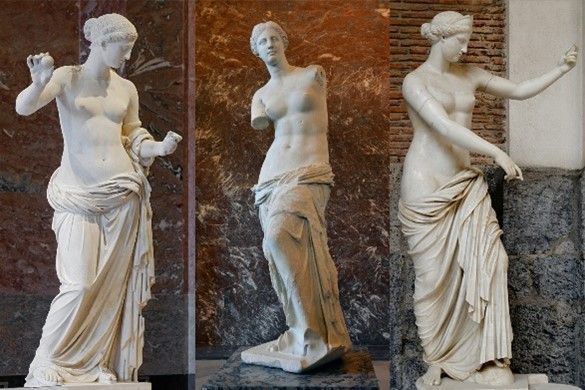
Venus de Milo statute by Alexandros of Antioch
The phrase "Going without brings increase" is less specific to one particular Greek myth but may reflect broader ideas in Greek mythology. The concept of sacrifice, often seen in Greek myths, could be related to this theme. In many myths, individuals, including women, make sacrifices to the gods in hopes of receiving divine blessings or favors in return.
These quoted themes from Greek mythology illustrate specific psychological ideas about women, their roles, and their significance in the Context of life and hope. However, it's essential to recognize that Greek mythology is a wonderful body of sometimes salacious stories. These themes are just a few examples of the many concepts and ideas in Greek mythological narratives.
"Women will give their will in submission in exchange for feeling secure and loved."
Once again, this statement is based on McClelland's study and does not accurately reflect today's reality. Women, like men, are diverse individuals with a wide range of desires, values, and life experiences. Personal choices and relationship dynamics vary widely and are not determined solely by gender.
Healthy relationships feature mutual respect, trust, and honest, open 'straight talk' communication. While some people may value security and love in their relationships, it is essential to recognize that submission or giving up one's will is not a healthy or necessary component of a loving and secure partnership. Healthy relationships typically emphasize equality, compromise, and the autonomy and agency of both partners.
"As giving is a major power modality for women, love becomes for the woman a belief in the other person's potential, a belief that people who love each other have and which helps each bring the other out."
To explore and understand perspectives on love, giving, and relationships, consult writings or research from psychology, sociology, or relationship studies. These fields provide various theories and insights into the dynamics of love and relationships. Personal experiences and beliefs about love and giving are highly subjective and can differ from person to person; hence, individuals all experience life differently.
Conclusion
We've come a long way since the 1980's. Women are reexamining their roles to take on more socially impactful work and assuming more powerful leadership positions. Men are more involved in traditionally female industries, such as nursing. Men are becoming accustomed to female bosses.
Everyone experiences a uniquely different subjective world. We're all on this learning and growing journey alone together.
-Frank DeDominicis
REFERENCES
Gregg Ward & Frank DeDominicis - DiSC Compatibility Factors & Pressure Limitations https://www.youtube.com/watch?v=hiPb8Uj0edI
Dysfunctional DiSC Patterns
https://www.linkedin.com/feed/update/urn:li:ugcPost:6992219077360451584/
Forget the Bat, Choose the Knee – Employee Conflict
https://www.barrywehmiller.com/post/blog/2020/03/05/forget-the-bat-choose-the-knee
The Impact of Well-Being in the Workplace
https://ekgpower.com/the-impact-of-well-being-in-the-workplace/
The ROI of Employee Engagement
https://www.successbusiness101.com/the-roi-of-employee-engagement/
Disrespect is the New Norm - Gregg Ward
Recent Posts