


High Stakes: Workplace Grinds and Self-Medicating Minds
Animal Nepotism
The practice of favoring relatives or friends for jobs or promotions involves several systemic and organizational disadvantages:
Managers may find it hard to be fair when supervising family members. This complicates reviews, discipline, and pay talks because personal feelings get involved.
Close personal relationships often involve a ‘shorthand’ communication style. This can lead to faster decision-making and a more unified vision at the executive level, as goals and perspectives often align.
What is Nepotism in the Workplace?
Favoritism, Nepotism, and Legacy Employees https://www.youtube.com/watch?v=O-6r_v-tVr0
How many psychoactive drugs can you identify?
Preface: Once again, whether you're a leader, a manager, a worker, or just another warm body, the effects of medications, whether prescribed pharmaceuticals or illegal analog drugs, know that they have saturated all of society, except maybe on Sentinel Island. I don't know where else. The numbers are shocking in terms of how much fentanyl and other dangerous drugs are distributed globally, not just in the USA. I won't bring you down, except to say that literally tons of bad stuff has been seized by authorities, enough to kill all of us many times over. This does not account for contraband products that pass through the detection filters and flow onto our streets. Some ask, "Is this revenge on the West for the Opium Wars?"
My primary concern is that because drugs are so prevalent in society, can we identify which ones are relatively safe, helpful medications and which ones are dangerous? Given that some natural botanicals can have adverse effects, where do we draw the line? Do psychedelics treat mental health
My late friend Teddy Shinn, a Grammy-award-winning musician, spoke to me in the fall of 2013 from his hospice bed. He had inhaled toxic fumes from the 2012 Whitewater-Baldy Complex Wildfire, the largest ever in New Mexico up until that time, and had developed pneumonia in the Spring of 2013. It burnt over 300,000 acres.
As you may know, it was in 1981 that I became positively addicted to my work after witnessing the spiritual healing of a young man 18 years of age named Ted who was referred to me by their employer for 'confidence-building.' He surprised me and the participants in a weekend seminar intensive by reporting that he was an alcoholic and heroin addict. Still, he realized that if he improved his self-image, the bad habits would disappear, which they did. He published several original music albums and won a Grammy for a production of Bob Dylan songs played by Colorado musicians.
After not seeing him for years, on a whim, I telephoned him to learn that he was on his deathbed and given a short time to live, perhaps a few weeks or, more likely, a few days.
He had inhaled nasty, toxic fumes, which I could relate to, having barely survived Colorado's most devastating fire, The Marshall Wildfire of 2022. He was on an easy-access morphine drip. Was that the proper use of medications? Could there have been a better treatment? I don't know. Perhaps if you are knowledgeable about such things, you can inform me. I would have preferred to make my last goodbye conversation with a clear-minded Teddy. However, he was clear enough to tell me about a dream experience involving 'music spirits' who welcomed him to the other side and made him feel good about leaving his music behind for us to enjoy. He told me that death was not scary and that he was not afraid. What a gift of peace he gave to me
How Many Americans Abuse Drugs?
A 2022 American Addiction Center report claims that 23.9 million (19.8%) American adults with full-time employment had past-year substance use disorder compared to 6.2 million (19.7%) part-time employees. 3.3 million (27.9%) of unemployed American adults had substance use disorder in 2023…a jump of over ten million people.
Perhaps because the volume of the global distribution of massive shipments of hard drugs is enough to kill us all many times over, one must wonder if the drug kingpins are tracking what percentage of their cargo survives detection filters and becomes a sale on the street.
With fentanyl now a mainstay of news media, more coverage, and public education means some direct service help is developing, as with Kensington's Savage Sisters and their allied volunteer organizations. Fentanyl addicts have added the DEA's "most dangerous drug," Xylazine, to their ride to extend the effect of fentanyl. After several years, Xylazine has traversed the entire nation and the world. Additionally, in Kensington, Philadelphia's street market, is a new analog drug, an animal tranquilizer named Medetomidine, that is 100x as potent as Xylazine. Info links are below.
As in my previous comments on illicit drug distribution, I believe that the problem will persist as long as money-motivated and perhaps extorted underground chemists continue to function as the vital link between the drug industry's big boys and traffickers. As we are just beginning to deal with Xylazine, here comes Medetomidine from the heartless ones without conscience. There's much more to the problem than can be covered here. Evil chemists are a significant target for law enforcement.
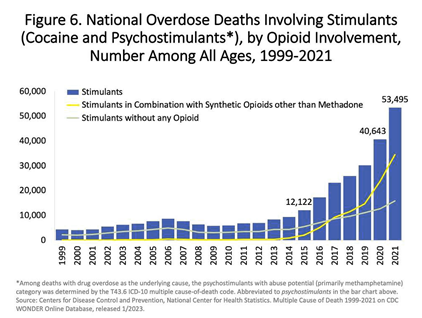
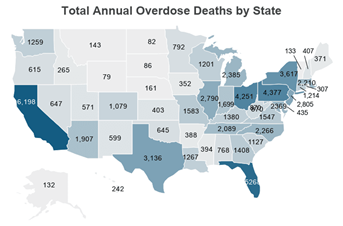
For the first time since 2018, the United States has seen a decrease in drug overdose deaths and poisonings, with the Centers for Disease Control and Prevention noting a 14.5 percent decrease in fatalities between June 2023 and June 2024. More than 107,000 people lost their lives to a drug overdose in 2023, with nearly 70 percent of those deaths attributed to opioids such as fentanyl. We can and should do better.
Top 10 Jobs with the Highest Rates of Drug Abuse
1. Mining, Quarrying, and Oil Workers – The highest rate of all professions, nearly twice the national average for full-time workers; the immense stress of the job leads to significant rates of alcoholism. 'Rostering' of workers may also contribute to the situation. To minimize staff changes, 'rostering' means miners typically work 12-hour shifts for 2-3 weeks, followed by one week off. Time away from loved ones is a usual complaint. Workers go home only to sleep hard and then back to the grind.
2. Construction Workers—Despite their apparent differences, construction and mining are usually considered one profession. However, there is a marked difference in the types of self-abuse in terms of illicit drug abuse. Construction workers consistently rank fifth most prevalent for illicit drugs, whereas miners are among the lowest, with about 5% illegal drug use.
3. Restaurant and Food Service Workers – The third largest industry. A 2015 national survey on drug use and health reported that nearly 12% of restaurant and food service workers report alcohol abuse. Illicit drug use came in at 19.1%.
4. Arts, Entertainment, and Recreational Fields – This industry suffers a rate much higher than the national average, coming in at 14% for illicit drug use and 12% for alcohol abuse. Perhaps association with other abusers, creative freedom, crazy working hours, constant stresses of travel, and disconnection with a sense of home are reasons for such numbers.
5. Doctors and Healthcare Professionals – Could it be the mere proximity to drugs that creates a temptation for abuse? Doctors face incredible responsibilities and pressures, being responsible for the well-being of others. Of all doctors, 14% are substance abusers. A Mayo Clinic study reported that nearly 50% of doctors in a physician health program abused alcohol, and 36%
abused opioids. It is thought that doctors suffer a higher-than-average substance abuse rate because of easy access to prescription drugs.
6. Information and Communications – This is another very active self-abuse group, with 12% of information and communications workers reportedly using an illegal substance in the past 30 days. SAMSHA, the Substance Abuse and Mental Health Services Administration, found nearly 19.3% of information and communications workers abused prescription painkillers in the past 30 days.
7. Sales Workers – Sales professionals experience a constant demand to be an advocate for both their boss and the needs of their customers. They are sometimes involved in conflict situations because of deadlines, missed promises, and faulty recollection about terms of the agreement (as with leasing a credit card processing machine with tricky, legalistic wording in dense paragraphs on the processing bank's agreement that discusses penalties and other essential terms). I have seen these terms printed in tiny point sizes and grey ink on a greyer background on the back of merchant credit card processing agreements.
8. Management – The big problem here is that if I am a manager needing help, I may be reluctant to seek help. Managers are the least likely to seek help because of job insecurity. About 12% of all managers report using an illicit substance. Managers, by definition, have a tough job of simultaneously managing things and people. Most managers are not experts at both skills, especially the people part. For all the decades of my career, I still witness a perennial problem: the emotional immaturity of managers, especially younger managers who don't know the difference between authority and power. For more information on the impact of interpersonal conflict on managers and its cost to corporate productivity, click the link below for an Under the Hood pdf.
9. Lawyers and Attorneys – One in five lawyers has a drinking problem. Historically, we've distrusted realtors and attorneys. Younger lawyers are more apt to self-abuse and have mental health issues. A Medical Economics survey lists the most dishonest professions, including attorneys, and guess who champions the top spot? It's not attorneys, although they are among the top ten. See the addendum below to learn more.
10. Emergency Responders – The problem is that these workers suffer extreme stress that bleeds over into home life, which creates other issues that lead to self-abuse. I get it. After college, I applied for a job as a Philadelphia policeman and was rejected for eyesight and height,
but my friend Bob was accepted. Lucky him. Over several years, I watched him decline. At one point, I asked him why he drank so much and cheated on his wife. His rationalization was that it was the job, especially witnessing bad cops abuse power and being told he was not to report on his brothers in blue. He eventually lost his job, health, wife, and sense of identity.
The United States Department of Justice reports that about 25% - 30% of street cops have an alcohol or drug problem. A SAMSHA report claims that 50% of male firefighters reported binge drinking. The national average for binge drinkers is about 15%. Only 9% of respondents who responded as females reported binge drinking. Well, of course! Consider what alcohol does to your skin's health.

Overdose deaths in the workplace have increased 536% since 2011
Workplace overdose deaths have surged 536% since 2011, with opioids being the primary cause, impacting all employers, employee demographics, industries, and occupations. Frequent workplace injuries like overexertion or slips can lead to opioid prescriptions, increasing the risk of opioid use disorder and overdose. Unintentional overdoses rose for the ninth consecutive year in 2021.
Employers Can Make a Difference
"Workplace overdose deaths have increased 536% since 2011, and overdoses are now the cause of nearly one in 11 worker deaths on the job. Opioids are the main cause of these deaths, and no employer is immune. All employee demographics, industries, and occupations are impacted. Additionally, some of the most frequent occupational injuries involving days away from work – overexertion, bodily reaction, slips, trips, and falls – can result in an opioid prescription. People who take opioids for too long or in large doses are more at risk of developing an opioid use disorder and more likely to die of an overdose." – Search Labs AI
The opioid epidemic impacts workplace safety and is the primary cause of workplace overdose deaths. How traumatic it would feel to lose a co-worker like that. What does this do to team culture? Who are the enablers? Ironically, workplace injuries can lead to prescribed opioid treatments, which can lead to overdoses and misuse, leading to more workplace accidents involving machinery. Notice I do not discuss the impact on the team culture.
The opioid epidemic can significantly affect workplaces, impacting safety, and employee health and wellness. Opioids can impair thinking, which can lead to serious errors when performing tasks that require focus, attention to detail, or the need to react quickly.
While employees in recovery often have lower turnover rates, are less likely to miss work days, less likely to be hospitalized, and have fewer doctor visits than their peers, employees with opioid use disorders often have increased absenteeism and reduced productivity, which has a significant impact on employers' bottom line. Costs are also associated with job turnover, re-training, employee dependents, etc.
While opioid use disorders can have profound effects on workers and the workplace, employer actions to address them can directly support the safety and well-being of their workforce and help the organization save on costs.

Younger Workers and Illegal Drug Use
Although a survey is just that, a set of questions asked of a group that may or may not represent their larger tribe. Even so, the results of a National Library of Medicine paper called "The longitudinal relationship between employment and substance use among at-risk adolescents" is telling. From that study:
"This study found that youth who worked greater hours were significantly more likely to spend time around teens who use marijuana. Understanding how this increased exposure may affect at-risk youth in the long term is important because it may have significant implications for how we develop future labor policies (e.g., limiting work hours, stricter drug testing laws), supervisor education (e.g., how to address marijuana use in the workplace), and clinical programs (e.g., screening youth in treatment for work hours, assessing risky work environments, developing treatment plans to limit work hours, and encouraging prosocial networks)."
With the legalization of marijuana, cannabis, and hallucinogenic use has been on a steady increase during the past decade. While defenders of THC usage cite its benefits, medicine admittedly has yet to catch up on how these substances may be cause-and-effect correlations for other behaviors, specifically work reliability and productivity.
The Covid pandemic significantly decreased drug usage among young people. Sober diversionary activities may have motivated some kids who felt the positive effects of sobriety and association with sober folks.
Diversion programs, on the whole, show that usage is associated with socializing rewards and that simply curtailing contact with users has a positive impact. I know that when I spend time with someone with a positive attitude and who is clearheaded, I usually come away with a nice, energized feeling, a natural high oxytocin and dopamine hit.

The Adolescent Brain on Drugs
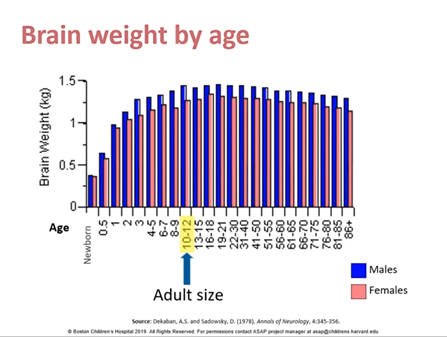
You'll be familiar with the following research outcomes if you know about synaptic brain pruning during Dr. Bradley's famous 'four years of hell' (for parents). First, let us consider that the brain fully develops by tween years.
As children learn basic motor skills such as walking, climbing, and running, their brains are primed for learning. They are creating appropriate neurological pathways to facilitate such
reinforced behaviors, especially with new parents proudly and exuberantly cheering on their every little functional mobility improvement.
A selective process of bio-electrical rewiring begins at about fourteen. Teens who are avid at certain habits such as sports, study, or social interactions and who continue practicing such habits will likely maintain those habits after their teenage years. I'm a perfect example of that.
When I was a teen, I loved writing. I discovered the art of poetry and continued writing nonstop, being published in my high school and college literary magazines. For the longest time, like Emily Dickinson reportedly did, I never left home with a piece of paper conveniently folded into quarters, like a little booklet, and a pencil to capture those magical insights and phrasing that arrive and then quickly evaporate into the ether.
That joyful habit was hardwired in my brain. I felt a natural high when inspired by good writing, as it has at least kept you present and attentive for now. Throughout my life, I have continued writing in various formats: news, fiction, technical, persuasive, grants, legal, humor, etc.
Oddly, I'm the kid in high school English class who, if and when the teacher arrived late, would start the class to warm up on homework. I received a blue and gold medal at high school graduation, recognizing me as the best writer in my graduating class. What if I was an undisciplined and lazy teen? Would I be where I am today as a writer if I was a slacker?
An Unheeded Warning to Would-Be Young Drug Users
I know young people are eager to rebel against norms, so I will probably turn them off here by saying that even if they were interested in drug experimentation, the better time for such risky and hopefully supervised behavior is after the brain matures, perhaps after the age of 25, when your impulsivity, judgment, and reasoning skills may naturally be better than a teen's. This is just
a helpful thought for tweens dealing with peer pressure demands. Just wait a few years, kids. Time flies by quickly.
The illustration below shows that the pleasure center of the brain, the nucleus accumbens, grows faster than the prefrontal cortex for adolescents. In other words, as your ability to control impulsivity and reason grows, the rate of functional development for the nucleus accumbens accelerates much faster for a while, hence the 'crazy' behavior of teens. Self-control is lacking for a while. With such a problematic brain development issue, why would you want to do anything that might further contribute to unreasonable behavior, such as ingesting psychoactive, habit-forming, or addictive substances, starting with the gateway drug nicotine?
Annually, SAMSHA surveys alcohol, tobacco, and drug usage. The most recent claims that after three hits on a cigarette, the brain is completely saturated.
Some businesses do not consider cigarettes as harmful. They maintain cigarette machines in the breakroom and allow workers to take cigarette breaks. How have we come to accept as legal an industry that should be outlawed for its intentionally adding addictive chemicals to the tobacco mix to the point where withdrawal is worse than withdrawing from cocaine or heroin? If you're a nonsmoker, please don't start.
Summary
So there you have it — the facts about workplace drug usage, with a special focus on our future workforce: young people. What do you think motivated me to write this article?
I know I'm not alone when I say I've lost some of my best, old friends, even my closest relations, whom I deeply loved, because they've died from addictions and accidents related to addiction, or
they're incarcerated because of past negative associations and incidental crimes. What can be done if we don't open the conversation on society's most serious problems?
In the US, we live in a culture where one in eight people have an alcohol problem, yet, because of shame and the stigma of not being perfect, one of the most beautiful people, we usually don't talk about it unless we must do so because of circumstances. The same applies to young people who are highly susceptible to bad decisions that may affect the rest of their lives. Indeed, my message may sound to young people like nagging, old-person nonsense, but I have confidence that someone may hear if even only one person listens, hears, and decides to be good to themselves, just one person.
- Frank DeDominicis
Addendum: The Top 10 Most Dishonest Professions
Here's a summary of the top ten professional experts in mendacity: According to this report, the winner (or loser) is…(drumroll, please)…
US Congressional members. About 64% of Americans rate honesty and ethical standards as low for politicians, with only 7% rated as ethical, good people. A previous US president reportedly told over 20,000 absolute lies duing his term in office. But who can you trust when most are perceived as fabrications or engaging in puffery? No wonder there exists a large segment of the US population that has 'politics fatigue' so bad that they don't even care to vote because of their fatalistic attitudes. Che sera sera.
Lobbyists—This group is similar to the above numbers for politicians, who are being cut from the same cloth. Their integrity scale hovers around 5 – 7%. I know from experience that if you lobby for anything, you're likely to be met with skepticism, especially if you tell the absolute truth and nothing but the truth. Because of this embedded prejudice, perhaps a good person
offering a good idea is perceived as a clever prostitute offering to buy you a cup of coffee at a nearby diner.
Car Salespeople – Yes, of course. How could we miss the guy with the worst sartorial tastes? They consistently rate as low as politicians, at only 5 – 9% on the honesty scale.
I remember buying a car from a private dealer. After a brief time of ownership, the motor seized from too much sludge in the system. I complained to the seller, who said, "Go away." I went to the DMV and researched the car's history. The salesperson bought this car from someone he had sold it to before. Why was this car bouncing back and forth between this guy and the buyers? This seemed weird to me. When I checked the previous car titles, I discovered that the odometer with the old drill trick had been spun back by many miles. Of course, this event imprinted in me a biased distrust for salespeople. Have you had a similar event?
Telemarketers—They are consistently rated as 8%. Unfortunately, there are double standards in this industry. Although we don't consider professional practitioners as telemarketers, their staff is usually trained in persuasive phone skills. We treat them with courtesy and respect as they help us set or change appointments and deal with billing issues, insurance processing, and purchase questions.
All other telemarketing calls that we are not expecting are screened. Do we know this person or their organization? Is this a sales call? Perhaps it is a disguised personal information theft call. The problem is that we may receive a perfectly legal, ethical, courteous sales call from a lowly worker with a valid offer who is just trying to pay the rent. We may unload misdirected anger and insult them instead of ending the call kindly. Professional telemarketers are trained to accept refusals calmly because they know rejections are in the mix of prospect responses and eventually lead to a yes.
Advertising Practitioners – The numbers fluctuate between 9 – 14%.
Stockbrokers are slowly crawling back from the pre-2008 crash from a high of 19% in 1998, 200, and 2001 to 12% honest.
Business Executives – They hover around 18% honest. Why is this when many good, integrity-based organizations exist with healthy cultures and warm bonds between workers and management? Probably because they are invisible except to locals and their customers. Consider
the small, privately-owned Midwest manufacturing organization as a good example of a company with a family-type culture. That executive is probably closer to his people than a person insulated by multi-level supervision, the corporate pyramid scheme.
Labor Union Leaders – Historical issues and the influence of racketeering organizations have given the profession a bad name. People are wary of a position that might easily be bought with money. While the honesty scale number isn't exact, it probably lingers below 20%, which is a generous and educated guess.
Lawyers – They bounce between 13 and 19%, indicating that some people trust some lawyers, but overall, they are largely mistrusted, sometimes in terms of honesty and competence.
Real Estate Agents—An early 1970s Harvard Business Review article cited Lawyers and Real estate agents as the most dishonest. That bias persists today.
REFERENCES:
National Institute of Health https://nida.nih.gov/
Medetomidine https://www.nbcnews.com/now/video/new-youtube-series-wants-to-get-teens-talking-about-mental-health-233820230002 and https://www.youtube.com/watch?v=5YzbG4BE65o
Fentanyl: A bill submitted by Colorado Representative Marc Snyder died in Congress. https://www.youtube.com/watch?v=5YzbG4BE65o
Estimation of the impacts of substance use on workplace performance - Addiction Center https://americanaddictioncenters.org/
National Safety Council nsc.org
Abuse and Mental Health Center Services Administration https://www.samhsa.gov/
The Ten Most Dishonest Professions
https://www.medicaleconomics.com/view/the-10-most-dishonest-professions
Overdose Deaths https://www.dea.gov/press-releases/2024/12/16/overdose-deaths-decline-fentanyl-threat-looms
Medetomidine https://www.nbcnews.com/now/video/new-street-drug-medetomidine-complicating-how-overdoses-are-treated-218161221879
DEA.gov https://www.dea.gov/engage/operation-engage-philadelphia
Injury Facts https://injuryfacts.nsc.org/work/safety-topics/overdose-deaths/
National Institute of Health https://nida.nih.gov/news-events/news-releases/2024/12/brain-structure-differences-are-associated-with-early-use-of-substances-among-adolescent
Overdose Deaths Decline, Fentanyl Threat Looms – KCSR / KBPY. https://chadronradio.com/overdose-deaths-decline-fentanyl-threat-looms/
Implications of Substance Use Disorders for Employers American Substance Abuse Professionals, Inc. https://go2asap.com/blog/implications_substance_use_disorders_employers/
Printer Friendly - ChemicalRecovery.Org.
https://www.chemicalrecovery.org/print.php?news.236
With The Highest Addiction Rates - Toxicomanie Aide. https://www.toxicomanie.org/jobs-with-the-highest-addiction-rates/
How to Calm Down - What's Under the Hood? https://drive.google.com/file/d/1mDWFY8Q2m0ekSsTSgGNhY33HtLJ0VKt9/view?usp=drive_link
Overdose Deaths Decline, Fentanyl Threat Looms – KCSR / KBPY. https://chadronradio.com/overdose-deaths-decline-fentanyl-threat-looms/
Unintentional overdoses rose for the ninth consecutive year in 2021: https://www.bls.gov/opub/ted/2023/unintentional-overdoses-rose-for-the-ninth-consecutive-year-in-2021.htm#:~:text=Unintentional%20overdoses%20rose%20for%20the%20ninth%20consecutive%20year%20in%202021,-August%2014%2C%202023&text=There%20were%20464%20workplace%20fatalities,the%20ninth%20consecutive%20annual%20increase.
The Economics Daily: U.S. Bureau of Labor Statistics. https://www.bls.gov/opub/ted/2023/unintentional-overdoses-rose-for-the-ninth-consecutive-year-in-2021.htm
Recent Posts