The Drunkard’s Walk: Living with Global Trade Uncertainty

September 25, 2026

Share this article

Animal Nepotism

The practice of favoring relatives or friends for jobs or promotions involves several systemic and organizational disadvantages:

Managers may find it hard to be fair when supervising family members. This complicates reviews, discipline, and pay talks because personal feelings get involved.

Close personal relationships often involve a ‘shorthand’ communication style. This can lead to faster decision-making and a more unified vision at the executive level, as goals and perspectives often align.

What is Nepotism in the Workplace?

Favoritism, Nepotism, and Legacy Employees https://www.youtube.com/watch?v=O-6r_v-tVr0

during shifts. The manager also posted a sexually explicit ‘scoreboard’ tracking staff members' private sex lives in the main office. When the employee complained, coworkers retaliated against him, and he was ultimately forced to resign. Chipotle settled with the EEOC for $95,000 paid directly to him. This is just one example of male sexual harassment cases that seldom make sensational news.

Uncertainty

I will start with only one word. Not a headline, not a statistic, only a single word that followed me around a conference room in downtown Denver in May of 2026 as I mingled with Colorado’s largest manufacturing executives. I was participating in the 52nd World Trade Day Conference, the largest international gathering of international trade professionals, policymakers, and business leaders.


This year’s theme was blunt: “A New Era in Trade: Globalization in Question.” The keynote wasn’t about growth strategy or market expansion. It was titled “Safeguarding Trade in a Weaponized World Economy.” Every speaker I listened to and every hallway conversation I eavesdropped on kept circling back to that same word. Not tariffs, not GDP, not affordability, but ‘uncertainty.’ The word ‘uncertainty’ isn’t just a trade-conference buzzword. It’s showing up everywhere.


Meanwhile, economists who track something called the World Uncertainty Index — a measure built from language in global news coverage — clocked its highest reading in more than three decades of data earlier this year. The index’s newest national poll found that nearly half of adults say they’re more anxious than they were a year ago — and when researchers asked people what’s driving that anxiety, the economy topped the list, with roughly seven in ten adults reporting they feel anxious about it.


And uncertainty is not confined to our minds and our markets. It’s in the terra firma beneath us. Geophysicists studying the San Andreas and San Jacinto faults in Southern California recently reported that the two faults are carrying more accumulated stress than at any point in the last thousand years. If they were to rupture together through the Cajon Pass, researchers estimate the resulting earthquake could reach magnitude 7.4 to 7.8 — enough to simultaneously disrupt highways, rail lines, and energy corridors across multiple cities.

Uncertainty Plagues Our Infrastructure

This summer, Dallas–Fort Worth has been baking under an extended stretch of triple-digit heat, with heat index values reaching 116F degrees. Telecom engineers have long known a quiet vulnerability in our networks: cell towers rely on small refrigerated equipment huts to keep their processors from overheating, and when the outside air gets hot enough for long enough, those systems strain — sometimes to the point of failure. In other words, our infrastructure was engineered for a climate that no longer exists.


The internet and cellular towers in Dallas haven’t gone permanently dark…yet. We are not, most of us, standing in the middle of the worst possible disaster. We are standing in the space before it — the waiting room, the not-knowing. If you’ve ever sat in an actual waiting room for medical results, you already understand something important: that waiting room space tension is often more exhausting than the answer itself, whatever the answer turns out to be.


We are concerned about the aforementioned domains of our existence. Still, the same underlying condition persists: we are living through an era where the things we used to count on — stable international trade rules, a predictable climate, solid ground beneath our feet — no longer feel guaranteed. Given how the Iran conflict has rocked petrol costs, it’s no wonder consumers feel insecure and some small businesses are hesitant about investing in imports. They are conserving resources, preparing for the future.


Chlorofluorocarbons universally banned

The 1987 Montreal Protocol 

Consider how panicked society was in 1987 because of the fear of the destruction of the Earth's ozone layer, which protects life from harmful ultraviolet radiation. During the late 20th century, scientists discovered that (CFCs)—chemicals commonly used in refrigeration, air conditioning, and aerosol sprays—were creating a massive "ozone hole" over Antarctica and thinning the ozone shield globally. This sparked widespread international anxiety about an impending surge in skin cancers, cataracts, and widespread ecological collapse.


In response to the growing environmental crisis, the international community united to sign the Montreal Protocol, a landmark global treaty designed to phase out the production and consumption of ozone-depleting substances. Governments and industries rapidly transitioned to safer chemical alternatives such as hydrofluorocarbons. Because of strict compliance and enforcement worldwide, the atmospheric concentrations of these harmful chemicals declined significantly.


NASA and international monitoring agencies have confirmed that the ozone layer is steadily healing and on track to recover to pre-1980 levels by the latter half of the 21st century, making it one of history's most successful environmental intervention stories. It seems that, despite nationalism, we cooperate when we must. Given an increasingly hotter planet, perhaps together we can also solve the problem of mega-fires.

Iran

Iran War Uncertainty 

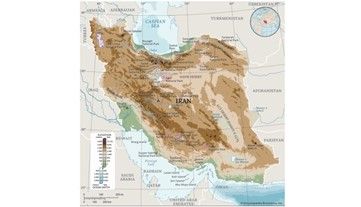
The Iran conflict has already rattled oil markets in 2026, and it’s climbing again, a reminder that a single geopolitical flashpoint can still upend fuel costs overnight.

A National Association for Business Economics survey this spring found that nearly half of business economists said the war had negatively impacted their operations, and 54% said they’d been hit by rising energy prices directly. For small businesses, especially the ones without Amazon’s or JetBlue’s ability to tack on a fuel surcharge — that’s translating into real behavior: stockpiling supplies before the next price jump, shortening inventory cycles, and thinking twice before placing a big import order.


The stockpiling detail is real and concrete — The Associated Press reported a Kansas City lawn care owner who stockpiled fertilizer at his supplier’s warehouse in anticipation of Iran-war-related price hikes.


The “can’t pass costs along” point is also sourced — Amazon and JetBlue added fuel surcharges when diesel and jet fuel prices surged, but for many small businesses across the U.S., that’s not a cost they can pass along the same way.


Associated Press - May 11, 2026, Key Findings:


Rising Energy and Material Costs - 54% of respondents cited higher energy prices, and over two-thirds faced steeper material expenses.


Impact on Operations - 48% stated the conflict in the Middle East harmed their business.

Cooling Plans - Nearly a quarter (24%) planned to scale back hiring and capital investment over the following six months.


Recession Anxieties - Half of the surveyed economists estimated a greater-than-25% chance of a U.S. recession within the coming year, up from 44% in January 2026.


Now I want to do two things. First, I want to unpack why so many economists and trend-watchers are using the word ‘uncertainty’ instead of ‘recession or ‘growth’ — and what that actually means for the small business owner on Main Street, not just the trader on Wall Street. Second, and more importantly, I want to explore what this does to us, personally — how uncertainty gets under our skin, why it can leave us feeling frozen instead of prepared, and what the psychological research says actually works to cope with wildly unpredictable circumstances.

Part One: Why ‘Uncertainty’ Became the Word of the Year in Global Trade

Let’s start with what economists actually mean when they say the world is “uncertain,” because it’s actually a more precise term than it sounds.


Uncertainty isn’t the same as bad news. Bad news is knowable — a tariff of a specific percentage, a specific interest rate hike. Uncertainty is not knowing what the rule will even be next quarter. By that definition, 2025 and 2026 have been extraordinary, thanks to Trump’s application of tariffs, which are often triggered by his emotional reactivity, not by careful assessments and an offer to enter into mutually constructive negotiations, based on comparative advantages.


This is why economists have started building entire indices to track the feeling of not-knowing, separate from the underlying economic data itself. The logic is clear: if you scan enough newspapers, earnings calls, and central bank statements for words like “uncertain,” “unclear,” and “unpredictable,” you can chart how much of the global conversation is dominated by not-knowing, independent of whether the actual news is good or bad. Do you think this is a good way to do research? Why or why not?


By the end of 2025, U.S. tariff rates had climbed to their highest level since World War II. Then, in February 2026, the U.S. Supreme Court struck down the legal basis for many of the tariffs that had been imposed the year before — and the administration responded by introducing new tariffs under different legal authorities. Businesses that had spent a year adjusting to one tariff regime had to start adjusting to another.


The World Trade Organization now estimates that the share of global trade conducted under standard, most-favored-nation terms has fallen to about 72 percent, a sign of just how much of the old rulebook has been set aside.

Nearly 1/4 of all US small businesses arestarted by immigrants

Economistsat the National Bureau of Economic Research have been studying something specific: notjust what tariffs do to prices, but what tariff uncertainty does to behavior.Researchers Şebnem Kalemli-Özcan, Can Soylu, and Muhammed Yildirim found thatwhen trade policy becomes unpredictable, it pushes businesses and investorstoward precautionary savings and higher risk premiums — behavior that shows upin currency markets almost immediately, even before any actual tariff takeseffect. To clarify: tariffs don’t spook the system. It’s the not knowing what’scoming next.McKinsey’s Global Institute,tracking the reshaping of global trade routes, has found that more than $165 billion in trade has alreadyshifted away from the U.S.–China corridor as companies route around theinstability. Auto exports from Canada, Germany, Japan, and South Korea to theUnited States have dropped by 10to 20 percent.


The International Monetary Fund, inits most recent outlook, pointed to reduced U.S. growth projections, citing‘policy uncertainty and trade tensions’ as central causes — alongside a notablyelevated probability of recession compared to a year earlier.

What matters the most

This isn’t just a Wall Street story. It’s a Main Street story. The  Federal Reserve Bank of New York’s Small Business Credit Survey found that a majority of small businesses in goods and retail sectors reported real financial strain from tariffs in 2025 — and firms that experienced the greatest tariff-related challenges are now measurably more pessimistic about their 2026 hiring and revenue prospects than firms that didn’t.


About eight in ten of those firms passed at least some of the added cost on to customers; roughly six in ten absorbed some of it themselves, eating into already thin margins.


The National Federation of Independent Business tracks something called the Uncertainty Index, which just posted its highest reading in more than thirty years of record-keeping, sitting well above its 52-year historical average. Not its worst economic reading, but the highest uncertainty reading yet. Those are different things, and the differentiation between them is exactly the point I want to make.


In 2026, small business optimism, overall, has fallen to its lowest point in more than a year. As one advocacy analysis put it, business owners today aren’t necessarily confused about whether conditions are good or bad right now — they’re confused about what the rules will even be next month, because the tariff calendar keeps shifting, making them feel as if they’re standing on sand. It’s hard to hit a moving target, so many are simply waiting out the storms, particularly consumers who are counting their pennies, while copper coins still exist.


A national poll from Small Business Majority, conducted earlier this year, quantified the ripple effects of small businesses directly affected by tariffs. More than half reported higher costs from suppliers. Roughly a quarter delayed importing goods altogether. About a quarter postponed expansion plans. One in five delayed hiring. About one in fourteen had to lay off workers or cut hours. One small business owner in Texas told researchers that tariffs were the reason she had to close her retail business entirely.


The forecast isn’t totally bleak. I think it’s worth being transparent about that too. A separate 2026 survey of small and midsize businesses found that the share reporting they feel more prepared than they did a year ago has climbed sharply, even as the financial burden of tariffs remains real for nearly half of them. In other words, Main Street hasn’t solved uncertainty. It’s adapted to operating within the confusion, building contingency plans and diversified suppliers the way you’d build an emergency fund. That distinction, between eliminating uncertainty and building the capacity to function inside it, will matter a great deal in the second part of what I will explore next.


Economists and trend analysts use the word‘uncertainty ' to point to the following:

-         A small manufacturer who can’t price a contract because she doesn’t know whather imported components will cost in three                months.


-         A retailer who has a shipment sitting on a dock with no clear idea what it willcost by the time it clears customs.


-         A family business owner delaying a hire he wanted to make in January, still waitingin August 2026.


Worthnoting is the fact that the data itself- GDP forecasts, tariff schedules, andglobal currency movements- is not what’s driving decisions right now. It’s thenot-knowing. It’s the same psychological mechanism, scaled up to the size ofthe shared and interdependent global economic community.


Cognitive overload reigns

Part Two: What Uncertainty Does to UsPersonally

Here’sa pattern I’ve noticed, because I think most of us have lived it without namingit. You get news that something in your life is uncertain — a job situation, ahealth question, a relationship, a financial decision, legal agreements, or apurchase decision. Instead of feeling relief that nothing bad has actuallyhappened yet, you feel worse than if you’d been told the bad news outright. Youstart over-preparing. You check your phone. You research obsessively. Or theopposite happens — you freeze. You can’t make the decision, can’t take the nextstep, can’t act at all.


This is common. If you’ve ever encountered a bully in the street who wants to fight,then you know that you will likely freeze up, not from fear, but from a sudden,shocking change in circumstances such as a knife near your gut or a gun in yourface. For a nano-second, your brain doesn’t know what to do with new, shockingstimuli, so you freeze instead of muscle memory serving you if you are trainedin self-defense. In that case, you’ll instinctively react not as a victim ofcircumstance, but of your own self-protective, reflexive choosing.


Psychologistshave created a name for the trait underneath unknowing anxiety: intolerance ofuncertainty. It’s the tendency to interpret an unknown situation as inherentlythreatening, to assume that because you can’t predict an outcome, the outcomemust be bad, and that you won’t be able to handle it if it is. People often getthis way anticipating the results of major elections.


Research from institutions like the BeckInstitute for Cognitive Behavior Therapy has found that intolerance of uncertaintycorrelates closely with both anxiety and depressive symptoms, and that itfunctions as what researchers call a “trans-diagnostic” factor — meaningit shows up underneath generalized anxiety disorder, obsessive-compulsivepatterns, panic, and social anxiety alike, not just one of them.

Here’sthe important reframe, though, which comes from clinicians who treat every day:the anxiety was probably never really about the specific bad outcome. It’sabout doubting your own capacity to cope with whatever happens. Thatdistinction changes everything about how you approach uncertainty anxiety. Thathas always been my major premise about problems, conflicts, disagreements, andarguments: that often the stated problem is merely a symptom of a deeper,unperceived or as yet undiscovered problem.


That’salso, I’d argue, why “freezing” is such a common response to uncertainty ratherthan the panic we usually picture. Panic is what happens when the threat isclear and immediate. Freezing is what happens when the brain can’t even locatethe threat well enough to know whether to fight it, run from it, or ignore it,so it does none of the three.


You see this at the individual level, in someone who can’t bring themselves toconfront their stack of bills due. You see it at the organizational level, inthe “wait and see” posture that a majority of small businesses openly admittedto in 2025, before slowly shifting toward proactive planning instead. Freezingfeels like caution. Actually, it’s often the most expensive option on thetable, because doing nothing forecloses on small, controllable, navigationaladjustment actions that could have made the eventual outcome more manageable.

Seven Ways to Cope with Uncertainty

1.      Name what you’reactually afraid right now. Thefirst step to disarm and dispel evil spirits via exorcisms is naming them.Vague dread is more paralyzing than a specific fear. When you notice yourselfspiraling out of control, ask yourself, “What, specifically, am I imaginingwill happen?” Writing it down, not just thinking it, engages a differentpart of your brain than free-floating anxiety does. This is usually the firststep in every therapeutic approach to uncertainty. Do you remember the personaldevelopment training industry’s maxim regarding written goals versus vaguewishes?


2.     Sort what’s controllable from what isn’t andact only on the controllable part. Do you remember the Serenity Prayer?Consciously change the things you can change, which can start with anexamination of your attitudes. Uncertainty tends to collapse everything intoone undifferentiated fog. Draw two columns. Draw one for what you can influencetoday, like updating a budget, diversifying a supplier, or having that hardconversation. Draw one for what you genuinely can’t, such as interest ratedecisions, a court ruling, the weather, or some stupid rule or regulation.Anxiety feeds on treating both columns exactly the same. Action starves it.


3.     Use the core CBTtechnique: test your prediction instead of justbelieving it. Think about your thinking. This is the heart of cognitivebehavioral therapy’s approach to intolerance of uncertainty. It’s simple enoughto use today. When you catch yourself thinking “this is going to go badly,”treat that as a hypothesis, not a fact. Instead ask, “What’s the actualevidence for and against it?” What happened the last several times I facedgenuine uncertainty? Did the catastrophe I predicted actually occur? Therapistssometimes call this a “behavioral experiment.” You’re not trying toconvince yourself everything will be fine. You’re testing if your mentalprediction machinery is as accurate as it feels.


4.     Build your tolerancein small doses, deliberately.Avoidance is the thing that keeps intolerance of uncertainty alive.Over-preparing, over-checking, and avoiding decisions all provide short-termrelief while quietly teaching your brain that uncertainty is dangerous.Clinicians who treat this recommend practicing small, low-stakes exposure tonot-knowing: leave one decision unresearched, send an email without rereadingit five times, let a minor question go unanswered for a day. It sounds trivial.It is, in fact, how the skill gets built. What can you tolerate?


5.     Reframe uncertain asopen, not just threatening. -Every uncertain situation contains the same two possibilities that most of usweed out under stress: that it turns out fine, or even that it turns out betterthan expected. Psychologists describe unhelpful thinking here as “probabilityoverestimation” — treating a low-likelihood negative outcome as though it’sthe most likely one. Deliberately generating two or three plausible neutral orpositive outcomes, not just the worst one, is a documented way to counteractthat bias. Your creative imagination is your friend.


6.     Anchor yourself inthe present, on purpose. -Anxiety about uncertainty is almost always future-tense — a mind rehearsing ascenario that hasn’t happened, and which may likely not happen, as is commonwith many fears people have. Grounding techniques (retention breathing, namingthree things you can currently see or hear, a short walk without a phone) workbecause they physically interrupt that future-projection loop and bring yournervous system back to the actual, current moment — which, statistically, isusually fine.


7.     Don’t do it alone. - Isolation intensifies intolerance ofuncertainty. Connection buffers it. Talk to someone, a colleague facingthe same market conditions, a friend, a therapist, a mate at the pub. Do thisnot to get reassurance that everything will be okay (that reassurance-seekingcan itself become a compulsive coping pattern), but because saying the fear outloud to another person is one of the most consistently supported ways to shrinkits size in your own mind.

Building a Comfort Reflex

Uncertaintyin global trade isn’t dissipating soon. Tariff regimes will keep shifting.Fault lines will keep building stress. Our increasingly hotter summers willkeep testing infrastructure that was built for a different, cooler climate.None of that is fully within our control. Pretending otherwise isn’t theanswer. We are always vulnerable to change.


Buthere’s what is within our control: how we relate to not-knowing. Whetherwe let it freeze us, or whether we build, deliberately, with the same rigor asmall business owner uses to hedge against a tariff swing, our own tolerancefor the space between “I don’t know” and “I’ll be okay either way.” Muchmental planning is a traditional success trait.


Thebusinesses that are weathering 2026 aren't the ones with perfect performanceand outcome forecasts. They're the ones that built flexibility into theirsupply chains before they needed it. The same is true for us, individually. Wecan't forecast the next headline, although it will likely spark our limbicsystem.  Comfort can be taken in knowing that we can build the realityreflex that lets us stay in motion despite circumstances.

The Drunkard’s Walk

Ifirmly believe that it's tempting to treat this moment that we’re in as auniquely uncertain moment — a strange convergence of fault lines, tariffs, heatwaves, and political circuses that will eventually pass, after which the worldwill go back to being “knowable” again. (Ha!)


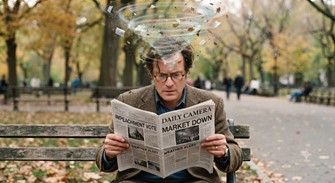
Butphysicist Leonard Mlodinow's book The Drunkard's Walk makes an argumentworth appreciating: randomness isn't a temporary intrusion into an otherwiseorderly world. It's our baseline condition that we're always operating in — wejust don't usually notice, because our minds are instinctively striving tounderstand and manufacture patterns out of noise, whether or not patterns arereally there.


Mlodinowtraces this tendency all the way back to the earliest mathematicians who triedto formalize chance itself, and shows how it still fools experts today. Forinstance, Hollywood executives get called visionaries when their films happento foreshadow future world events, as The Simpsons did with predictingimmigrant migration scapegoating.


Likewise, Hollywood executives are judged as incompetent when the same instincts happento miss, even though nothing about their underlying presentation actuallychanged. We just have no idea the size of the ignorance monster blocking usfrom opening doors of perception to unknown facts, absolute Truths, andalternative subjective realities.

Education Can Tranquilize Nerves

Here’s my point, friends. I’m a good student. I’m not just an ‘A’ student, but once,when a teacher showed up late, because I’m so over-studied, I filled in forthem. Honestly, in school, my core feelings of insecurity motivated me tocompulsively complete all the optional extra-credit work. I used available technology to pre-test my knowledge before classes. My hyper-study pattern is embedded in my DNA. Always, I’ve savored the intellectual wealth bank of our libraries that many people neglect. Education pacifies.


It is exactly this trait that calmed me around economic uncertainties: study and preparation. Knowledge is not just power, but it can calm nerves too.  I absolutely love reading books, realizing that at my age, three quarters of acentury, that I have time enough left before my demise to read only about athousand more books, so I’d better choose wisely, eh? Knowing me as you do, would you recommend a good book?


-         Frank DeDominicis

References

WorldUncertainty Index

https://worlduncertaintyindex.com/


AnnualMental Health Poll Finds Americans Anxious About Current Events, PersonalFinances and Emerging Technology

https://www.psychiatry.org/news-room/news-releases/2026-annual-mental-health-poll


SouthernCalifornia faults are at highest stress levels in 1,000 years https://www.kcra.com/article/scientists-warn-san-andreas-san-jacinto-faults-highest-stress-levels/71607567


InfrastructureBreaks Under Extreme Heat

https://www.bsr.org/en/merging-issues/infrastructure-breaks-under-extreme-heat


Businessesfacing rising costs during Iran war; economists expect more strains ahead https://finance.yahoo.com/economy/articles/businesses-facing-rising-costs-during-174243387.html


CBTfor Treatment of Intolerance of Uncertainty

https://beckinstitute.org/blog/cbt-for-treatment-of-intolerance-of-uncertainty/


FedSmall Business

https://www.fedsmallbusiness.org/reports/survey


SmallBusiness Majority

McKinseyGlobal Institute

https://www.mckinsey.com/


AmericansAnxious About Current Events, Personal Finances, Emerging Technology

https://www.psychiatry.org/news-room/news-releases/2026-annual-mental-health-poll


NationalAssociation for Business Economics

https://www.nabe.com/


TheWorld Trade Organization

https://www.wto.org/


NationalBureau of Economic Research

https://www.nber.org/


NationalFederation of Independent Businesses

https://www.nfib.com/


InternationalMonetary Fund

https://www.imf.org/

Recent Posts

September 25, 2026
The necessity of integrating the EverythingDiSC™ profile into vocational training for people with disabilities is rooted in its ability to facilitate deeply personalized and meaningful career planning, a crucial element for ensuring successful employment outcomes. It acknowledges that job success relies far more on behavioral competencies than on technical ones.
September 25, 2026
Arthur Schlesinger Schlesinger was born in Columbus, Ohio, the son of Elizabeth Harriet (nee Bancroft) and Arthur M. Schlesinger (!888-1965), an influential historian at Ohio State University. His paternal grandfather was a Prussian Jew who converted to Protestantism and married an Austrian Catholic. According to family tradition, his mother, a Mayflower descendant, was of German and New England ancestry and a relative of historian George Bancroft. Schlesinger practiced Unitarianism. As a writer, I am confronted with three problems: 1. Everyone reading this has unexamined biases. 2. Embedded biases can color how one perceives stories of religious intolerance. 3. Gross ignorance. I am figuring out how to please everybody who reads this; however, I welcome intelligent argument if you think I'm off. I do not proselytize for any religion but hope every individual will map their path of faith, even if it is a path of no faith. Just identify your spiritual horizon and head for it. Simple. What I know is all that I know, a finite library of cerebral knowledge. Outside that subjective reality lies a vast universe of ignorance, my reason for open-mindedness and humility. At my core, I'm a perma-skeptic who continually questions everything, especially long-embedded personal 'truths' and hidden biases. Notwithstanding actual apparitions, I tend not to believe abstract concepts unless they are carefully and logically derived through reason and are perceived by my senses. If I think I hear divine voices speaking to me, am I crazy? Or am I receiving the voice of God speaking to me through the megaphone of conscience, just like Joan d'Arc? I don't know. That's why I explore this subject with you. I'm blessed or cursed with being born with an extreme curiosity about everything and how everything indescribably connects to everything else. Please receive this report for awareness, not necessarily agreement with every point. I could make mistakes, so please don't crucify the piano player. Aware that this report will be read by everyone, from non-practicing or devout Christians to befuddled agnostics and confirmed atheists, I strive to communicate in a way that reports, educates, and contributes to understanding differences and their core reasons. Knowing how belief systems directly affect one's worldview and behavior is helpful as you may lead, manage, or interact with people. Are Catholics more hopeful because a scapular guarantees salvation? Are Protestants more negative because of a focus on our inherently sinful nature? Remember that I am not a theologian, so feel free to challenge whatever you disagree with or want to provide correction. I'm a teacher, not a preacher. On all matters, I take a Socratic approach, always searching for higher-quality questions, as in AI prompt engineering.
September 25, 2026
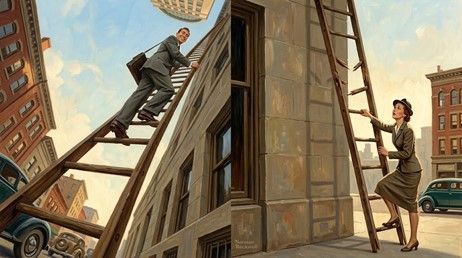
Historical Context and Ubiquity
September 25, 2026
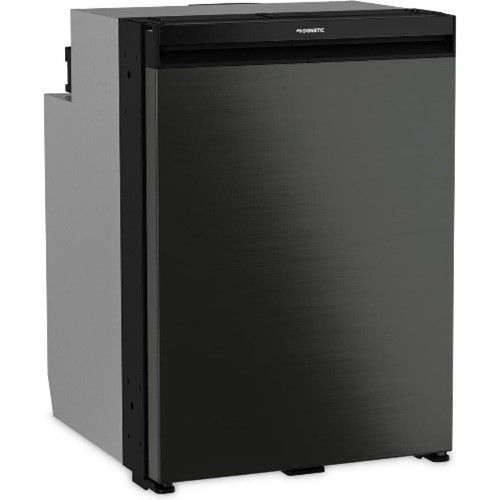
My Refrigerator as Metaphor for Tariff Stressors
September 24, 2026
Men Being Harassed at Work by Women
September 24, 2026
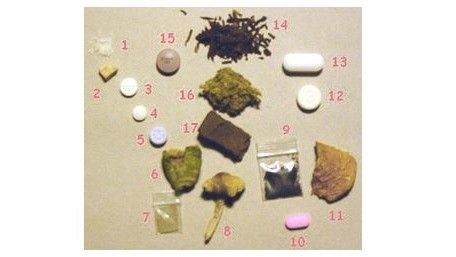
How many psychoactive drugs can you identify?
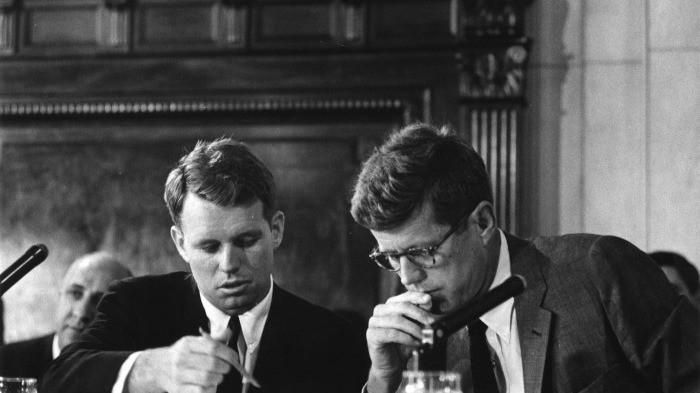
John F. Kennedy and Robert F. Kennedy at a congressional hearing, illustrating a discussion of nepotism in public office.
By Frank DeDominicis • September 22, 2026
Explore the risks and potential benefits of nepotism through historical, political and workplace examples and what fair leadership requires.
August 10, 2026
Generally speaking, most adults consider play as something extra after the to-do list is completed, a reward for accomplishing a task, or a diversion from something serious and heavy. In actuality, it should be considered vital for mental health because, without it, we ignore the child in us who wants to explore, test, and play. Play is inherent in human and animal natures.  Being in the early days of Act III of life and preparing for a good death, I am more serious about things and consciously scheduling play times. I assign play equal weight, if not greater, to other life priorities such as work, worship, friendship, and love. I've enjoyed many hobbies that provide great satisfaction, but with aging, I've pared them down to only a few. If I were to live as long as my centenarian mother, I have time to read only 1000 new books, so I'd better carefully choose what I put into my head. Likewise, protecting play time is essential to my mental health.
August 10, 2026
Lest you mistake this article for a Timothy Learyesque' drop-out' message, I'd like to be clear. While retreat is a common tactic in war, it is intended to help regain posture and consolidate power resources, rather than abandoning the battlefield. Thanks to the internet, many of us are bombarded daily with cognitive overload from useless information, if we allow such abuse. Unfortunately, constantly staring at screens has become the norm for many humans. It is estimated that approximately 70% of the world's population, or nearly 5.775 billion people as of July 2025, is online. Is this a good thing or a bad thing?  The answer is that it is both. The internet has dramatically shrunk and flattened our world of communication, which is excellent for collaborative ventures, but which also benefits malicious actions by begrudged individuals.
August 10, 2026
Given the current state of social devolution (a term used to describe the decline in social interactions and relationships,) I'm fortunate to have been rated on a managerial whole-brain profile as an ambivert. Like most people, I naturally feel a strong and continuing need for social connection; however, I can also be perfectly content with solitude and meditation for extended periods. Socializing is natural for me. I quickly and easily build rapport and trust. Thus, my social world acts as a reservoir of good energy to recharge and remind me of who I am whenever I need a confidence boost, as I likewise edify my friends and allies. Being cocooned and busy helping e-commerce businesses, I hardly noticed the lockdown. However, as a friend said, "the pandemic revealed the rocks in the bottom of the creek." One study claimed that 64% of the people surveyed said they find it difficult to talk with people of widely different religious or political views. Why is this so? Perhaps we are so invested in our point of view that we cannot, or do not suspend self-interest for a few minutes to assume a sincerely curious, journalistic attitude like Monica Guzman, author of I Never Thought of It That Way.' She claims, "The friction and heat in a conversation is good. The question is whether it's cooking something or burning something. Standing for what you believe in does not mean attacking people on the other side." Indeed, the lockdown exacerbated the tone of relationships. Those who were close sought to become even closer. Those who were distant increased their transactional tone of communications, a term used to describe interactions primarily focused on exchanging information or completing tasks rather than building relationships. The report reveals a steady downward trend in social connection and civility over the past four decades. This slippery slope trend is borne out in a pithy white paper by the U.S. Surgeon General entitled Given the extensive nature of the paper, I will comment on only a few striking excerpts, which I hope encourages you to read the entire report.
Show More