






Musings about Harmonious Productivity and Our Workplaces’ Auditory Context

September 25, 2026

Share this article

Animal Nepotism

The practice of favoring relatives or friends for jobs or promotions involves several systemic and organizational disadvantages:

Managers may find it hard to be fair when supervising family members. This complicates reviews, discipline, and pay talks because personal feelings get involved.

Close personal relationships often involve a ‘shorthand’ communication style. This can lead to faster decision-making and a more unified vision at the executive level, as goals and perspectives often align.

What is Nepotism in the Workplace?

Favoritism, Nepotism, and Legacy Employees https://www.youtube.com/watch?v=O-6r_v-tVr0

during shifts. The manager also posted a sexually explicit ‘scoreboard’ tracking staff members' private sex lives in the main office. When the employee complained, coworkers retaliated against him, and he was ultimately forced to resign. Chipotle settled with the EEOC for $95,000 paid directly to him. This is just one example of male sexual harassment cases that seldom make sensational news.

Historical Context and Ubiquity

Traditionally, music has been part of the professional environment, evolving from centralized control systems to highly personalized auditory treatments. Early applications, such as the BBC's Music While You Work radio program, which was broadcast daily to British factories from 1940 to 1967, viewed music primarily as an industrial tool intended to motivate employees and enhance their performance.


Auditory stimuli have been utilized as a motivational resource, but the modes of delivery have undergone drastic changes with advancements in technology. Traditionalists (if any are still alive) and Baby Boomers may recall simple music delivery systems of the last century. In the beginning, live performances were performed by real people and acoustic instruments. 

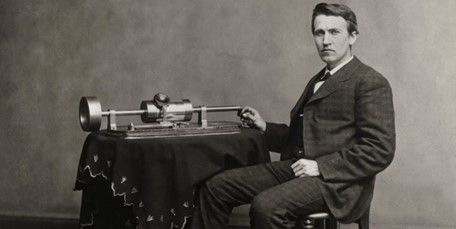
Edison’s Phonograph Cylinder Player


In 1877, Edison patented his tinfoil cylinder phonograph; then, a year later, Gramophone pressed the first flat disk records. In 1895, Marconi patented radio technology. Television was patented on September 7, 1927, by American inventor Philo T. Farnsworth, who successfully demonstrated the first fully electronic television system, which became the foundation for modern television technology. These systems delivered music, but things have dramatically changed. Nowadays, individualized listening is the trend, facilitated by personal devices and headphones and satellites.


In the modern workplace, depending on the industry, workers may be energized and motivated by listening to music that evokes positive emotions. Some research indicates a significant rise in this practice, with background music usage surging by 62% over the past decade in these sectors. For many contemporary workers, music has become a fixture of daily work life, used not only for motivation but also for cognitive control and emotional management. Review studies indicate that approximately 35% of research reports music enhances task performance, while a notable 28% suggest impairment. Outcomes seem to depend on the individual tastes and temperaments of the listeners regarding whether the background music enhances work productivity or inhibits it. 


I use multiplicative styles of music to influence my emotional state, focus, and concentration, especially while working. An exception is when I need inspiration, for which silent meditation works best for me.


My dentist's office sometimes plays music that, as I'm reclined in a treatment chair, I find quite discomforting. It's the pop music of a staff that is mostly energetic Gen X music. I’ve informed them that certain Baroque music produces an 'alert mind/relaxed body' effect. I'll expand on ‘Superlearning’ music research at the end of this article.

Foundational Theories of Music-Work Interaction

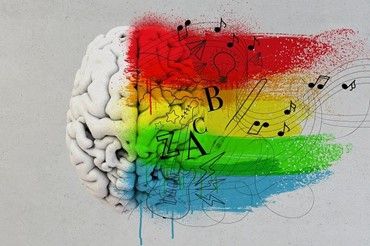
Findings about the effect of music vary and can be contradictory, although there is agreement on the three effects of music on our psyche. Primarily, music modifies the listener's affective state, physiological arousal, and perceptions of the environment.


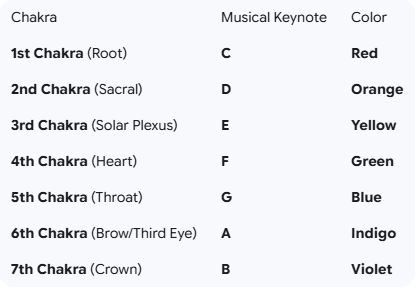
In the 1980s, nightclub owners knew that dancers could feel vibrations in their bodies, mainly because disco music often featured a heavy thump-thump-thump bass line in F, which resonates with the sternum, the human tuning fork vibration located at the heart. The human body, likened to a tuning fork, was a concept developed by Dr. Steven Halpern. Halpern's system correlates the major chakras with the notes of a musical octave (a C major scale, typically) and the seven colors of the rainbow, in an ascending order:

Three Dominant Psychological Frameworks

A. The Arousal-Mood (A-M) Hypothesis

The Arousal-Mood hypothesis suggests that music alters the listener's physiological energy and emotional state, potentially helping the listener approach a psychological state that benefits work task execution. Two significant advantages of playing your preferred music are 1) faster reaction times and 2) increased task focus. Hence, in a work environment, mental well-being can be positively affected.


Music that is perceived as expressing a pleasant mood, but which is low in subjective arousal, is often described as relaxing or sedative. It's like the soft music you might faintly hear in the background during your near-nap on your masseuse's table. This type of music is particularly effective in reducing tension and anxiety. Do you have a collection folder of your favorite music to relax or to energize yourself whenever you desire?


Conversely, changing music tempo significantly affects cognitive processes. Slower speeds correlate with slower processing speed, although faster tempos can risk impairing complex tasks by overstimulating brain chemistry.


The Cognitive Load/Capacity Hypothesis


In direct contrast to the A-M hypothesis, the Cognitive Load/Capacity framework posits that the human brain operates within a limited active processing system. Given that your attention to tasks is compromised by listening to music, even at low volume, work performance can be affected. It all depends on how much you control your focus and attention. If you’re a meditator, perhaps you can focus better than others. Does the sheet-rocker give too much attention to loud background music and thus give less attention to task details? What do you think?


As a strategy planner, total silence serves me best whenever I must synergize ideas, organize activity priorities, and engage the reasoning machinery in my head. That's me.

Physical work can be made more enjoyable with music, as landscapers and construction workers know. Remember that if the sheet rocker's cognitive capacity is dominated by loud background music, their performance on even simple tasks may be impaired. Also, safety may be compromised, especially if they’re walking on stilts.


The most critical application of this theory relates to linguistic interference. Research overwhelmingly indicates that music containing intelligible semantic information, such as lyrics, is detrimental to cognitive performance, particularly for tasks that require verbal working memory or linguistic processing (e.g., reading comprehension, arithmetic, or proofreading). This interference occurs because the brain's phonological loop, necessary for internal verbal rehearsal, must simultaneously process the lyrics, leading to competition for limited resources. Individuals often possess a metacognitive blind spot, believing that instrumental music is beneficial even when some data shows ambiguous or minor adverse effects.


C. The Masking Agent Theory

This is particularly relevant in noisy environments, such as shared workspaces, where side conversations or hallway chatter can distract and consume some of our limited cognitive capacity. In this case, consistent Brownian noise can mask or block out transient, highly distracting environmental sounds. What is Brownian noise? It's technically not really music but is a drone that can effectively replace unpredictable and distracting background sounds with a constant, non-linguistic sonic background, thereby reducing mind-wandering and enhancing task-focused attentional states.


Moderate background sounds, optimally around 50 dB(A), are thought to stimulate the brain sufficiently to maintain activity and focus without causing auditory fatigue. However, noise levels exceeding 60 dB(A) or falling below 40 dB(A) tend to result in adverse effects, either due to overstimulation or a lack of necessary stimulus. 


Here's a Brown music audio sample sans embedded subliminal positive affirmations: https://www.youtube.com/watch?v=RqzGzwTY-6w.


In the 1980s and early 1990s, department stores employed a quasi-brainwashing technique by playing music with lower volume and pitch messages that were masked affirmations stating, "I will not shoplift." Implanting auditory auto-suggestions was pioneered in the 40s by Silva Mind Control, recently rediscovered by MindValley.com.


The Silva Mind Control Method was developed by Jose Silva, an electronics repairman from Texas, beginning in the 1940s. Through decades of experimentation and research, he created a structured program that helped people to access deeper states of consciousness through auditory suggestion, which he thought enhanced mental, intuitive, and even physical capacities. This is somewhat borne out in the research on Olympic athletic and martial arts trainings that incorporate visualization practices.


Dick Sutphen, of Valley of the Sun Publishing, where you can ‘borrow’ books from an open online library. Sutphen assumed that when brain waves are reduced from beta to alpha levels and lower, it is more possible to more easily implant in the subconscious mind suggested affirmations when the brain is in a deeply relaxed state. In the 80s, a copyright-free audio tape was produced, encouraging others to copy and distribute it freely to help people recognize manipulative brainwashing techniques employed by salespersons, politicians, and promotional religious ministers. The link is provided below.

Music and Creativity (Divergent vs. Convergent Thinking)

Music's influence on creativity depends on the specific phase of creative cognition being measured: divergent thinking (idea generation) versus convergent thinking (finding a single, correct solution).


Positive, activating music facilitates divergent thinking, leading to a larger quantity of unconventional or novel ideas. This facilitation is theorized to stem from the positive mood induced by the music, which in turn promotes flexible and non-linear thinking. In design tasks, exposure to music environments has shown a significantly positive effect on idea novelty and overall design creativity. 


Conversely, the effects of background music on convergent thinking tasks—those requiring focused analytical reasoning to achieve a single correct answer—are less apparent and often non-significant. This distinction confirms that music is more suited to enhancing the expansive, exploratory phase of creative work rather than the constrained, evaluative phase. 


Autonomy, Willpower, and the Inverted U-Curve

The degree of control an employee has over their listening environment is the most significant moderator of music's positive impact. When individuals possess the autonomy to choose when and how they listen to music, they report lower stress, improved mood, and superior cognitive performance, particularly during high cognitive demands. Under the Job Demand–Resources theory, self-selected music is perceived as a critical resource that employees can leverage to manage stress and workload. 


However, this benefit is subject to duration effects, following an inverted U-shaped relationship. Research indicates that moderate music listening (approximately an hour longer than usual) improves performance. Still, extended periods of listening (e.g., three hours more than usual) lead to a decline in performance and diminished focus. This decline is partly attributed to the cognitive effort required to filter and process music, even preferred music, over long periods. 


A substantial factor influencing this duration effect is the individual's inherent belief about self-regulation resources, known as "willpower belief." The tendency for focus and performance to decline after extended listening is significantly more pronounced among individuals who believe their willpower is a limited resource that can be depleted. Have you explored your beliefs about your own willpower capacity?


Conversely, individuals who believe they possess abundant willpower are more resilient and maintain focus even after prolonged music exposure. This suggests that managing music exposure requires self-regulatory effort, and the capacity to sustain focus while listening is tied directly to the individual's perception of their own disciplinary limits. 

Acoustic Characteristics and Genre Preference

Traditional analyses of music in the workplace often focused on broad genres. More nuanced psychological models, such as the MUSIC model, categorize preferences based on listeners' affective reactions rather than rigid genre labels.


This model identifies five latent factors reflecting emotional/affective responses: 


  1. Mellow: Smooth and relaxing styles.
  2. Urban (or Contemporary): Rhythmic and percussive music (e.g., rap, acid jazz).
  3. Sophisticated: Classical, operatic, and jazz.
  4. Intense: Loud, forceful, and energetic music.
  5. Campestral (or Unpretentious): Direct, rootsy music (e.g., country, singer-songwriter). 


Preferences for these factors are influenced by both the auditory characteristics (e.g., rhythm, tempo) and the social context of the music. Tempo, in particular, has a measurable physiological effect, with fast rhythms increasing heart rate and arousal, which is beneficial for physical exertion tasks. Hence, public gymnasiums don’t play dreamy or sleep-inducing music.


A critical consideration in individual differences is the Expert Listener Problem. Individuals with formal musical training or extensive musical knowledge may find background music substantially more distracting than non-musicians. This distraction occurs because their cognitive system is automatically drawn to analyze musical complexities, such as chord progressions, drum fills, and modulations, preventing the music from being successfully relegated to ambient background noise.

Work Environment/Task/Ideal Music Genre Type/Key Benefit

Deep Concentration / Analytical Work (e.g., coding, writing, studying, complex problem-solving)


Classical/Baroque: (Especially compositions by Bach, Mozart, Vivaldi)


Ambient/Instrumental: (Minimalist, cinematic scores, light jazz)


Lo-fi Beats: (Instrumental hip-hop with a low-fidelity sound)


Music with a moderate tempo (50-80 BPM)                                                  

Reduces distraction, promotes focus, and can improve memory and spatial reasoning ("Mozart Effect"). The lack of lyrics prevents cognitive interference.


Repetitive / Monotonous Tasks (e.g., data entry, filing, assembly line work)


Upbeat Pop/Dance/Electronic: Familiar favorites (even with lyrics).


Music with a fast tempo (100-120 BPM)                                                       

Boosts energy, combats boredom and fatigue, and helps maintain a steady, efficient pace. Lyrics are less distracting when the task doesn't require complex verbal processing.


Creative Brainstorming / Design / Ideation Lo-fi Beats: Ambient/Nature Sounds; Calming Instrumental Music: Cinematic Music (for inspiration).

Encourages a calm, relaxed mental state (alpha brain waves), reduces stress, and allows the mind to wander creatively without losing focus.         


High-Stress Environments / Deadline Pressure - Nature Sounds 

(rain, ocean waves, flowing water)


Ambient Music Calm Instrumental/Jazz

Reduces cortisol (stress hormone) levels, lowers blood pressure, and promotes a sense of calm to maintain composure and clarity.


Open-Plan Office / Shared Workspace - White Noise / Pink Noise, Coffee               

Shop Ambience                                                                                                                                  (light chatter/music)


Ambient or Lo-fi with headphones                                                           

Drowns out distracting conversations and harsh office noises, creating a personal "bubble" for focus without being overly engaging.

Key Principle: The Role of Lyrics

The most important distinction is usually lyrics vs. instrumentals:

  • Avoid lyrics for tasks that involve verbal processing (writing, reading, editing, or learning a new language). Lyrics compete for the same cognitive resources needed for these tasks, leading to distraction and reduced performance.
  • Lyrics are fine for tasks that are repetitive, physical, or do not require high-level verbal thought. Here, the music's mood-boosting and energizing effects are more beneficial.

Brain Waves

Music can influence and synchronize brain wave patterns, a phenomenon called entrainment. Different frequencies of brain waves are associated with various mental states:

  • Alpha Waves (8–12 Hz)
  •      Often promoted by calming music (like classical), these waves are linked to a relaxed but alert state, creativity, and reduced stress.
  • Beta Waves (12–30 Hz)                                                                                           
  • …are associated with active thinking, focused attention, and problem-solving. Faster-paced music can enhance this activity, potentially improving alertness.
  • Theta Waves (4–8 Hz)                                                                                                     
  • are linked to deep relaxation, meditation, and light sleep. They are also sometimes associated with feelings of deep emotion or "chills" while listening to music.
  • Gamma Waves (30–100 Hz)                                                                                             
  • The fastest waves, linked to high-level information processing, concentration, and peak mental performance. Certain "focus music" is designed to enhance activity in the beta and gamma ranges.
  • Synchronization                                                                                                                    Enjoyable music can cause a synchronization of brain waves (like Theta and Gamma) between the auditory cortex and the brain's reward system, which correlates with pleasure and a positive impact on mood.


Tasks that require total silence and no music typically demand absolute, uninterrupted concentration to prevent errors in high-stakes, detailed, or complex analytical environments.


The need for Silence arises because extraneous noise, even music, can engage the same cognitive resources needed for deep focus, leading to a decrease in accuracy and speed.

In Silenzio!

Here are some types of work where total silence is often required or strongly preferred:


High-Stakes Critical Professions (Life-or-Death)

In these fields, a momentary lapse in concentration can have severe or fatal consequences.

  • Surgery

     During complex operations, the surgeon and their team require complete focus. Communication is essential, but it       must be precise and related only to the task.

  • Air Traffic Control

     Controllers must process complex, rapidly changing spatial data and communicate clearly. Distractions are strictly       prohibited.

  • Piloting/Navigation                                                                                                   

     Especially during critical phases of flight (takeoff and landing), pilots rely on sharp focus and clear auditory cues.

  • Bomb Disposal (EOD)

     This work requires meticulous attention to detail, where an error is immediately catastrophic.


Deep Analytical and Logical Tasks

These jobs require continuous, error-free processing of complex information, where music's changing rhythm or lyrics can become a distraction.


Accounting/Auditing                                                                                                           High-level tasks involving complex spreadsheets, balancing books, or forensic

accounting, where a small numerical error can have substantial financial implications.


Legal Work                                                                                                                            Such work requires thoughtful and clear critical thinking skills, which require concentration and focus without any distractions, even if music is at a low volume.


(Reviewing/Drafting)                                                                              

Tasks like drafting precise legal documents, reviewing massive amounts of discovery, or analyzing legal precedents require linguistic and logical clarity that can be disrupted by music.


Advanced Programming/Debugging: Working on complex algorithms, finding minute errors in code (debugging), or architecting systems often requires a "flow state" that can be easily disrupted by external stimuli.

Highly Detail-Oriented/Meticulous Work

These tasks involve extreme precision with physical or visual details:

  • Proofreading/Copyediting

     A person's focus must be entirely on the subtle details of language, grammar, and typography. Music, especially         with lyrics, can interfere with the brain's language-processing centers.


  • Archiving and Restoration

  Meticulous work on fragile, unique historical documents, art, or artifacts where absolute steadiness and

      concentration are paramount.


  • Scientific Lab Work (Certain Procedures)                                                 

     Some delicate procedures in molecular biology or chemistry require stillness and focus to avoid contamination or       error that could invalidate an entire experiment.

Creative Production (Highly Subjective)

While many creative professionals prefer music, some highly internal, language-based creative tasks often demand Silence to access the deepest level of thought:


  • Literary Writing (Novelists, Journalists)                                      

     Many writers find that silence is necessary for accessing their inner voice, maintaining narrative consistency, and

     ensuring the flow of original language without the intrusion of sung words or musical rhythms.


  • Composing/Arranging (Musicians)                                          

     Ironically, when a composer or arranger is in the process of generating new melodic, harmonic, or rhythmic ideas,       they often require silence to hear the music in their head without external influence.


Physiological and Affective Outcomes in the Work Environment

The benefits of music extend beyond raw task output, influencing critical factors such as employee well-being, physiological stress responses, and interpersonal dynamics. Writers can induce certain moods by playing selected music, although total silence may be best for developing brainstorming and creative processes.

Stress Alleviation and Emotional Resonance

Music is a potent modulator of emotional states. It engages a diverse network of brain regions associated with sensory-motor processing, cognition, memory, and emotion, facilitating neuroplastic changes. As an adaptive coping strategy, music profoundly impacts emotional states, offering therapeutic benefits that alleviate stress, anxiety, and depression.


Specifically, music that is calming, soothing, or sedative—characterized by high valence (pleasantness) and low arousal—is the most effective in reducing tension and anxiety. In certain organizational applications, music therapy interventions have been documented to stimulate creative inspiration, reduce employee fatigue and pain perception, and enhance an employee's sense of corporate identity.

Physiological Responses and Physical Work

Music affects the Autonomic Nervous System, triggering measurable physiological responses. Loud and fast music can induce a significant increase in heart rate. This physiological and psychological stimulation makes music an effective ergogenic aid during physical labor or resistance exercise. By providing a form of positive distraction, music decreases the Rating of Perceived Exertion and cardiovascular responses, leading to an increase in work output and greater physical performance gains.


In a sedentary or clinical work context, the relationship between music and physiology is often mediated by stress management. While fast music generally increases heart rate in healthy individuals during exertion, in patient groups (e.g., those with heart disease), music can reduce anxiety, which secondarily results in lower heart rate and blood pressure. This distinction suggests that for most office-based workers, music's physiological benefits are mainly derived from its psychological capacity to manage stress and perceived mental exertion rather than direct physical stimulation.

Contextual Performance and Cooperation

The influence of music also shapes the broader organizational environment, impacting what is often termed "contextual performance"—behaviors that support the work environment rather than the production process directly. Research focusing on group dynamics has found that "happy music" significantly and positively influences cooperative behavior within decision-making groups. The rhythmic and synchronous activity induced by music can function as a "social lubricant," supporting a theory that affect plays a vital role in fostering group cohesion. Conversely, beware of playing sad music such as funeral dirges.


Furthermore, the positive effect generated by apropos music has been shown to improve job satisfaction, which subsequently correlates with better performance. By promoting a more pleasant working environment, music can indirectly contribute to overall organizational effectiveness and positive employee attitudes.

Contingency Matrix of Music Characteristics and Task Performance

Task Type Music Feature Impact on Performance Primary Mechanism/Goal
Complex Cognitive (e.g., Reading, Analysis) Music with Lyrics Strongly Detrimental Cognitive Load (Linguistic interference)
Complex Cognitive Instrumental Music (Ambient, Lo-fi) Minor/Neutral/Ambiguous Preference enhancement; distraction mitigation
Monotonous/Vigilance (Low Load) Preferred Instrumental Positive Enhancement Arousal/Mood regulation; anti-boredom
Creativity (Divergent Thinking) Positive Valence/Moderate Arousal Positive Enhancement Mood induction; flexible thinking facilitation
Physical/Exertion Tasks Fast Tempo/High Arousal Positive Enhancement Ergogenic aid; decreased perceived exertion

Accelerate Your Learning Retention with Baroque Music

Dr. Georgi Lozanov - 22 July 1926 – 06 May 2012

Superlearning - Dr. Losanov’s Revolutionary Learning Method

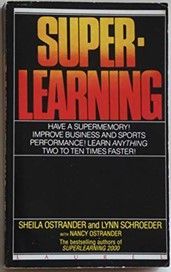
Dr. Lozanov is a Bulgarian neuropsychiatrist who developed a highly successful method for increasing learning retention. In the 80s, when I first read about him and his work in Sheila Ostrander’s book Superlearning, I was impressed by how it accelerated my own learning retention and began using it in my seminars and workshops, turning the volume down so that it was just barely audible but could be heard by the subconscious mind, which records everything. The list of suggested baroque music selections is included in the book’s bibliography.


Basically, he believed that relaxation with music could help unlock mental reserve capacities for learning. He was right. In 1978, a UNESCO commission evaluated his concept of ‘suggestopedia’ and recognized it as a superior learning method, recommending its worldwide application. I recommend you try this method, and please inform me of your successes.

My Closing Comments

I hope this information has been helpful to you. I welcome all comments, critiques, and suggestions. What you have learned will help you to understand how background music is used in most movies and news broadcasts to elicit specific emotional states within you. It will also help you choose the right kind of music for your environment.


In an online world filled with non-stop commentaries on commentaries and volumes of distracting, unnecessary, and useless information, the most beautiful music of all is total silence.


-Frank DeDominicis

REFERENCES

Deep Theta – Dr. Steven Halpern

https://www.youtube.com/watch?v=Z0rbWt-rXWY


Halpern Sound Healing

https://www.youtube.com/watch?v=eU2Vcqwktjs


BBC’s Music While You Work radio programme

https://www.youtube.com/watch?v=RMEpjDFHN50


Dick Sutphen – Valley of the Sun Publishing – Open Library                https://openlibrary.org/publishers/Valley_of_the_Sun_Publishing


Dick Sutphen – The Battle for Your Mind (public domain copy)

https://www.youtube.com/watch?v=wBDZu8icKrg


Suggestopedia – Dr. Lozanov

https://www.youtube.com/watch?v=UsR3XJhXIoE


Suggestopedia: The Extraordinary Learning Method of Dr. Lozanov - Part 1

https://www.youtube.com/watch?v=YGFo82_wuXw


Suggestopedia - a hidden gem

https://epale.ec.europa.eu/en/content/suggestopedia-hidden-gem


Music as Torture

https://www.sibetrans.com/trans/articulo/152/music-as-torture-music-as-weapon


The Impact of Background Music on Flow, Work Engagement, and Task Performance                                              pmc.ncbi.nlm.nih.gov


The Bad Effects of Music Disliked

https://www.sciencedaily.com/releases/2025/04/250407114226.htm


The mechanism of music for reducing psychological stress: Music preference as a mediator https://www.researchgate.net/publication/296914533_The_mechanism_of_music_for_reducing_psychological_stress_Music_preference_as_a_mediator


The role of mood and arousal in the effect of background music on attentional state and performance during a sustained attention task


https://www.researchgate.net/publication/380102166_The_role_of_mood_and_arousal_in_the_effect_of_background_music_on_attentional_state_and_performance_during_a_sustained_attention_task

Recent Posts

September 25, 2026
I will start with only one word. Not a headline, not a statistic, only a single word that followed me around a conference room in downtown Denver in May of 2026 as I mingled with Colorado’s largest manufacturing executives. I was participating in the 52nd World Trade Day Conference, the largest international gathering of international trade professionals, policymakers, and business leaders. This year’s theme was blunt: “A New Era in Trade: Globalization in Question.” The keynote wasn’t about growth strategy or market expansion. It was titled “Safeguarding Trade in a Weaponized World Economy.” Every speaker I listened to and every hallway conversation I eavesdropped on kept circling back to that same word. Not tariffs, not GDP, not affordability, but ‘uncertainty.’ The word ‘uncertainty’ isn’t just a trade-conference buzzword. It’s showing up everywhere. Meanwhile, economists who track something called the World Uncertainty Index — a measure built from language in global news coverage — clocked its highest reading in more than three decades of data earlier this year. The index’s newest national poll found that nearly half of adults say they’re more anxious than they were a year ago — and when researchers asked people what’s driving that anxiety, the economy topped the list, with roughly seven in ten adults reporting they feel anxious about it. And uncertainty is not confined to our minds and our markets. It’s in the terra firma beneath us. Geophysicists studying the San Andreas and San Jacinto faults in Southern California recently reported that the two faults are carrying more accumulated stress than at any point in the last thousand years. If they were to rupture together through the Cajon Pass, researchers estimate the resulting earthquake could reach magnitude 7.4 to 7.8 — enough to simultaneously disrupt highways, rail lines, and energy corridors across multiple cities.

September 25, 2026
The necessity of integrating the EverythingDiSC™ profile into vocational training for people with disabilities is rooted in its ability to facilitate deeply personalized and meaningful career planning, a crucial element for ensuring successful employment outcomes. It acknowledges that job success relies far more on behavioral competencies than on technical ones.

September 25, 2026
Arthur Schlesinger Schlesinger was born in Columbus, Ohio, the son of Elizabeth Harriet (nee Bancroft) and Arthur M. Schlesinger (!888-1965), an influential historian at Ohio State University. His paternal grandfather was a Prussian Jew who converted to Protestantism and married an Austrian Catholic. According to family tradition, his mother, a Mayflower descendant, was of German and New England ancestry and a relative of historian George Bancroft. Schlesinger practiced Unitarianism. As a writer, I am confronted with three problems: 1. Everyone reading this has unexamined biases. 2. Embedded biases can color how one perceives stories of religious intolerance. 3. Gross ignorance. I am figuring out how to please everybody who reads this; however, I welcome intelligent argument if you think I'm off. I do not proselytize for any religion but hope every individual will map their path of faith, even if it is a path of no faith. Just identify your spiritual horizon and head for it. Simple. What I know is all that I know, a finite library of cerebral knowledge. Outside that subjective reality lies a vast universe of ignorance, my reason for open-mindedness and humility. At my core, I'm a perma-skeptic who continually questions everything, especially long-embedded personal 'truths' and hidden biases. Notwithstanding actual apparitions, I tend not to believe abstract concepts unless they are carefully and logically derived through reason and are perceived by my senses. If I think I hear divine voices speaking to me, am I crazy? Or am I receiving the voice of God speaking to me through the megaphone of conscience, just like Joan d'Arc? I don't know. That's why I explore this subject with you. I'm blessed or cursed with being born with an extreme curiosity about everything and how everything indescribably connects to everything else. Please receive this report for awareness, not necessarily agreement with every point. I could make mistakes, so please don't crucify the piano player. Aware that this report will be read by everyone, from non-practicing or devout Christians to befuddled agnostics and confirmed atheists, I strive to communicate in a way that reports, educates, and contributes to understanding differences and their core reasons. Knowing how belief systems directly affect one's worldview and behavior is helpful as you may lead, manage, or interact with people. Are Catholics more hopeful because a scapular guarantees salvation? Are Protestants more negative because of a focus on our inherently sinful nature? Remember that I am not a theologian, so feel free to challenge whatever you disagree with or want to provide correction. I'm a teacher, not a preacher. On all matters, I take a Socratic approach, always searching for higher-quality questions, as in AI prompt engineering.
September 25, 2026
My Refrigerator as Metaphor for Tariff Stressors

September 24, 2026
Men Being Harassed at Work by Women
September 24, 2026
How many psychoactive drugs can you identify?
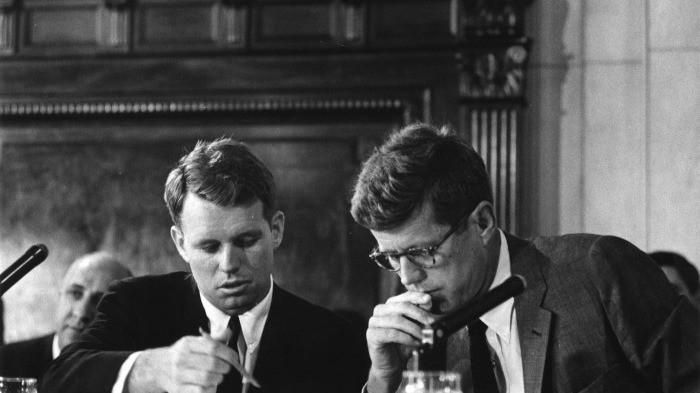
John F. Kennedy and Robert F. Kennedy at a congressional hearing, illustrating a discussion of nepotism in public office.
By Frank DeDominicis • September 22, 2026
Explore the risks and potential benefits of nepotism through historical, political and workplace examples and what fair leadership requires.

August 10, 2026
Generally speaking, most adults consider play as something extra after the to-do list is completed, a reward for accomplishing a task, or a diversion from something serious and heavy. In actuality, it should be considered vital for mental health because, without it, we ignore the child in us who wants to explore, test, and play. Play is inherent in human and animal natures.  Being in the early days of Act III of life and preparing for a good death, I am more serious about things and consciously scheduling play times. I assign play equal weight, if not greater, to other life priorities such as work, worship, friendship, and love. I've enjoyed many hobbies that provide great satisfaction, but with aging, I've pared them down to only a few. If I were to live as long as my centenarian mother, I have time to read only 1000 new books, so I'd better carefully choose what I put into my head. Likewise, protecting play time is essential to my mental health.

August 10, 2026
Lest you mistake this article for a Timothy Learyesque' drop-out' message, I'd like to be clear. While retreat is a common tactic in war, it is intended to help regain posture and consolidate power resources, rather than abandoning the battlefield. Thanks to the internet, many of us are bombarded daily with cognitive overload from useless information, if we allow such abuse. Unfortunately, constantly staring at screens has become the norm for many humans. It is estimated that approximately 70% of the world's population, or nearly 5.775 billion people as of July 2025, is online. Is this a good thing or a bad thing?  The answer is that it is both. The internet has dramatically shrunk and flattened our world of communication, which is excellent for collaborative ventures, but which also benefits malicious actions by begrudged individuals.

August 10, 2026
Given the current state of social devolution (a term used to describe the decline in social interactions and relationships,) I'm fortunate to have been rated on a managerial whole-brain profile as an ambivert. Like most people, I naturally feel a strong and continuing need for social connection; however, I can also be perfectly content with solitude and meditation for extended periods. Socializing is natural for me. I quickly and easily build rapport and trust. Thus, my social world acts as a reservoir of good energy to recharge and remind me of who I am whenever I need a confidence boost, as I likewise edify my friends and allies. Being cocooned and busy helping e-commerce businesses, I hardly noticed the lockdown. However, as a friend said, "the pandemic revealed the rocks in the bottom of the creek." One study claimed that 64% of the people surveyed said they find it difficult to talk with people of widely different religious or political views. Why is this so? Perhaps we are so invested in our point of view that we cannot, or do not suspend self-interest for a few minutes to assume a sincerely curious, journalistic attitude like Monica Guzman, author of I Never Thought of It That Way.' She claims, "The friction and heat in a conversation is good. The question is whether it's cooking something or burning something. Standing for what you believe in does not mean attacking people on the other side." Indeed, the lockdown exacerbated the tone of relationships. Those who were close sought to become even closer. Those who were distant increased their transactional tone of communications, a term used to describe interactions primarily focused on exchanging information or completing tasks rather than building relationships. The report reveals a steady downward trend in social connection and civility over the past four decades. This slippery slope trend is borne out in a pithy white paper by the U.S. Surgeon General entitled Given the extensive nature of the paper, I will comment on only a few striking excerpts, which I hope encourages you to read the entire report.
Show More