
App-solutely Addicted to Digital Dependency: Resolving Internet and Phone Addiction

The notion that women are more subject to persuasion when dependent on others is a generalization that does not apply universally to all individuals. A complex interplay of individual characteristics, situational factors, and Context influences people's susceptibility to persuasion. Gender, while it may play a role in shaping socialization and experiences, is just one of many factors that can affect a person's vulnerability to persuasion.
Key Considerations
Individual Differences
There is substantial variability among individuals, regardless of gender, regarding their susceptibility to persuasion. Personal traits, such as self-confidence, critical thinking skills, and assertiveness, can significantly affect one's resistance to persuasion.
Situational Factors
The context in which persuasion occurs is important. Vulnerability to persuasion may depend on the specific situation, the nature of the persuasive message, and the individual's emotional state at the time.
Psychological Factors
Psychological factors, such as cognitive biases, prior beliefs, and social influence, can all play a role in susceptibility to persuasion. These factors can affect people of any gender.
Cultural and Societal Influences
Cultural and societal norms and expectations can influence how individuals respond to persuasion. Norms vary widely across different cultures and communities.
Dependence and Interdependence
The extent to which an individual is dependent on others is just one factor to consider. People may be dependent in various ways, such as financially, emotionally, or socially, and these dependencies may influence their responses to persuasion differently.
Various factors influence people's responses to persuasion, and individuals can vary significantly in their susceptibility. It is helpful to approach these topics with nuance and avoid making gender-based generalizations.
"Male style is analytical and manipulative."
Another study of U.S. governors found that states with female leaders had lower fatality rates.
"There may be common learning experiences based on anatomical facts that help create some of the psychological reactions observed more often among women, i.e., their interest in interdependence, their idea that they must give up on something to get another, etc."
While it is true that there are some biological and hormonal differences between men and women, such as differences in their brain structure and function, it is not appropriate to directly link these differences to complex psychological reactions or behaviors.
The development of psychological traits and behaviors is influenced by biology, genetics, upbringing, cultural and societal norms, and individual experiences. Attributing specific psychological reactions solely to anatomical differences overlooks the complexity of human behavior and the interplay of multiple factors. Psychological traits cannot be simplistically attributed to gender or anatomical differences.
Scientific research generally recognizes that behavior and psychology are influenced by a combination of biological, genetic, environmental, and social factors. Researchers in psychology and neuroscience conduct extensive studies to understand these complex interactions better.
To further comprehend, one should refer to peer-reviewed scientific studies and research in psychology, neuroscience, and gender studies. It is important to approach these topics with nuance and respect for the diversity of human experiences and perspectives.
The tendency for women to belong to more organizations and circles than men can vary based on numerous factors, including individual preferences, cultural expectations, and life circumstances. There is no one-size-fits-all answer to this question, as women's and men's levels of involvement in organizations and social circles can vary widely.
Factors to Consider
Cultural and Societal Norms
Women may be encouraged or expected to participate in various community, family, or social organizations in some cultures and societies. These cultural norms can influence women's involvement in such groups.
Lifestyle and Life Stage
Life circumstances and lifestyle choices can impact participation in organizations and circles. Women may become more active in community organizations due to their roles as caregivers, including involvement in parent-teacher associations, neighborhood groups, or social clubs.
Work and Career
Career demands and work-related commitments can influence organizational participation. Some men and women may choose to be more or less involved in extracurricular activities based on their career demands and time constraints.
Individual Personality and Interests
Personal preferences and interests play a significant role. Some individuals, regardless of gender, are naturally inclined to be involved in multiple organizations and social circles, while others may prefer more limited involvement.
Availability and Access
The availability of organizations and circles in a particular community can also influence participation. In some areas, more opportunities for involvement in various groups may exist. Personal preferences and a complex interplay of societal, cultural, and individual factors influence the level of involvement in organizations and social circles.
"Women will give their will in submission in exchange for feeling secure and loved."

Choking on Hypocrisy
Before I launch into an exposé on the dangers and costs of cognitive overload, allow me to share one of my favorite hobbies: confronting my own hypocrisy. Although we live in a world of instant critiques of others’ behavior, both online and within our families, how often do you look in the mirror and ask how to deal with your own shortcomings, bad habits, and character defects? I’ll bet that the answer is ‘never’ for most people.
Long ago, I learned how taking inventory of the sins of others is merely a distraction from my own path of self-improvement and growth, thanks to the wise counsel of my mother, who reminded me that, at any one time, our field of ignorance is immeasurably and infinitely larger than our finite body of knowledge.
So, with a bit of humility and an attitude of community service, I now share with you how modern, wonderful electronic communications inventions have dramatically impacted public moods, attitudes, and beliefs. Please argue against me if you strongly disagree.
I firmly believe that it is hard to find others who, rather than surfing the internet, prefer to rely on high-quality offline research to uncover reliable facts and develop a more objective point of view. That is hardly possible amid all the highly biased online noise that the hoi polloi have accepted as ‘normal.’ By offline research, I mean books, journals, educational courses and seminars, and actual conversations with intelligent experts.

In 1977, I first learned about cellular communications because a Motorola agent contacted me when I was working as part of the Governor’s Office of Emergency Preparedness for the Commonwealth of Pennsylvania, my crews and I dealing with the aftermath of a natural disaster: the notorious, second Johnston flood, caused by a dam break.
Motorola donated several satellite communication devices to me to help the Red Cross and other relief agencies communicate and coordinate in Johnstown, Pennsylvania, where the major damage occurred. My work teams were tasked with digging mud out of basements to recover corpses. As traumatic as that recovery work was, the cellular devices helped to coordinate the various agencies’ action strategies, making things a bit easier and less chaotic, despite the deep pathos.
During the heavy rainfall of July 19–20, 1977, six dams failed in the Conemaugh Valley. The Laurel Run Dam on Laurel Run was an old earthen dam originally owned by The Bethlehem Steel Company and later sold to the Johnstown Water Company. This dam had a 42+1⁄2-foot-high (13.0 m) spillway, and when it failed, about 101 million US gallons (380,000 m3) of water were released. The water then proceeded downstream, overflowing six more dams. As with the 2026 Washington, D.C., monument reflection pool project, the full story is an exposé of bad contracting.
Laurel Run Dam – The Deadliest U.S. Dam Failure
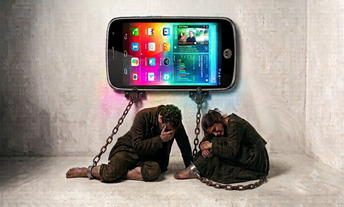
Who has time to meet people, connect, and relate tete-a-tete when we are addicted to the ‘smartphone’? That sounds like so much work, when we can just connect virtually with a click, and just as easily block and delete others from our lives, for some of us, after having the last self-righteous word.
Oddly, the smartphone has become the most intimate object in modern life — closer to one’s hand than our keys or wallets, and checked before one’s eyes are fully open, and often (for phone sleepers) the last thing touched before sleep.
What began as a communication tool has evolved into a constant companion woven into work, relationships, entertainment, and even our own self-image. For most people, this connectivity is convenient. For a growing number, it has become compulsive. Researchers, clinicians, and public health bodies now describe ‘problematic internet use,’ ‘smartphone addiction,’ and ‘internet gaming disorder’ as behavioral patterns that mirror substance addictions: loss of control, preoccupation, withdrawal-like distress, and continued use despite harm, just like fentanyl - xylazine addicts.
Now let’s examine the scope of internet and phone addiction, its distinct effects on young people and seniors, and the treatments currently showing the most promise.
How Big Is the Problem?
Estimates vary by methodology and country, but the overall picture is consistent: dependency on digital devices is widespread and rising. Global surveys suggest that roughly a third of internet users exhibit problematic use ranging from moderate to severe, and smartphone-specific studies estimate that over a billion people worldwide may exhibit some form of behavioral dependence on their phones. In the United States, self-report surveys commonly find that around half of adults consider themselves at least somewhat addicted to their smartphones, with average daily use now several hours per person.
Adolescents show even higher rates. Cross-sectional studies using validated screening tools such as the Smartphone Addiction Scale have found that 38.1% of Austrian adolescents and young adults surveyed scored above the clinical cut-off for problematic smartphone use, and a large Brazilian study of high schoolers found smartphone addiction prevalence near 55%, using the Smartphone Addiction Inventory. Regional and national variation is significant, but the direction of the trend — upward — is not in dispute.
It's worth noting that many of the most frequently cited ‘addiction statistics’ circulating online come from marketing or advocacy sites rather than peer-reviewed sources, and figures should be read with appropriate caution. The more rigorous, peer-reviewed literature converges on a narrower but still concerning conclusion: problematic use affects a meaningful minority to near-majority of users, depending on age group and measurement tool, and it correlates consistently with
poorer mental health outcomes.

What Addiction to a Screen Actually Looks Like
Behavioral addiction to the internet or phone is not simply ‘using it a lot.’ Clinically oriented definitions focus on a cluster of features: an inability to control use despite intending to cut back; anxiety or irritability when separated from the device; use that displaces sleep, work, or relationships, and continued engagement despite awareness of the harm it causes.
Neuroscience research points to the same reward circuitry implicated in substance and gambling addictions — variable, unpredictable rewards (a like, a notification, a new post) trigger dopamine release in ways that are strikingly similar to a slot machine. App design itself plays a role: infinite scroll, auto-play, and push notifications are engineered specifically to maximize engagement, a fact increasingly acknowledged by former technology executives and documented by researchers studying ‘persuasive design.’ Notice how AI apps won't let you have the last word, even if you say goodbye. Can you guess why? Think.

Effects on Young People
Adolescents and young adults are considered the highest-risk group for developmental reasons. The adolescent brain has heightened sensitivity to social reward and reduced impulse control relative to adults, making the intermittent-reward structure of social media especially compelling.
Consequences across Several Domains
Sleep
Nighttime phone use delays melatonin release and shortens sleep duration, and poor sleep in turn worsens mood regulation and academic performance, creating a feedback loop.
Mental health
Multiple studies link problematic smartphone use in teens to elevated depression, anxiety, and disordered eating. One Austrian study found problematic use was associated with substantially higher odds of depressive symptoms, anxiety symptoms, and disordered eating even after adjusting for other factors.
A large South Korean study of over 54,000 adolescents found that those with high-risk smartphone use had meaningfully elevated odds of both suicidal ideation and suicide attempts compared with general users.
Social comparison and self-image
Constant exposure to curated, idealized content contributes to appearance-related anxiety and pressure to maintain a polished online persona, a dynamic that professional psychological bodies have flagged as a specific risk for adolescent identity development.
Academic and physical effects
Excessive use is associated with reduced physical activity, disrupted attention and study habits, and, in some studies, poorer diet quality linked to sedentary screen time.

Effects on Seniors
Older adults are a relatively new and understudied population in this research, but a growing body of work shows they are not immune — and, in some ways, face distinct risks. Smartphone ownership among adults aged 65 and older has climbed dramatically over the past decade, and with it, rates of problematic use have risen.
Unlike teens, older adults' compulsive use is less often driven by peer pressure or social comparison and more often tied to loneliness, boredom, and a search for connection. Research from China found that subjective cognitive decline and family relationship conflict increase smartphone addiction in older adults through a heightened sense of alienation.
Paradoxically, heavier device use meant to combat loneliness is often associated with worse outcomes: higher smartphone dependence in seniors correlates with increased depressive and anxiety symptoms, poorer sleep quality, and, in some cases, greater loneliness, as virtual interaction fails to substitute for face-to-face contact. How paradoxical! Just remember that social media is not social but is antisocial.
Physical consequences matter too — one 2025 study found smartphone addiction was associated with reduced physical activity and lower functioning in daily living activities among elderly participants, though not with balance specifically. (Link in References below.)
Seniors also face a layered vulnerability: many entered the smartphone era later in life with less digital literacy, which some research suggests actually heightens susceptibility to problematic use, since lower familiarity with settings, social boundaries, and platform mechanics can make disengagement harder rather than easier. Again, remember that all social media is basically antisocial.

Treatment and Paths to Healthier Use
The good news is that problematic digital use responds to intervention, and the evidence base of treatment has matured considerably in the past few years.
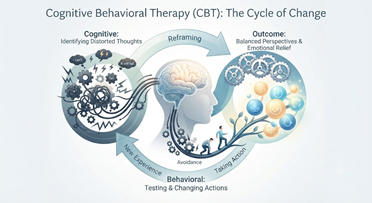
Cognitive behavioral therapy (CBT) is the most extensively studied and consistently effective approach. A 2025 umbrella review of meta-analyses evaluating interventions for digital addiction found CBT among the interventions with strong supporting evidence, alongside group counseling and structured self-control training. Structured CBT programs delivered over 8 to 12 weeks have shown measurable reductions in addiction severity, along with decreases in accompanying depression and anxiety symptoms.
German randomized clinical trials of 143 men (Jäger et al., published in JAMA Psychiatry, 2019) found strong remission rates for internet and computer game addiction using CBT, with a subset that maintained improvement at six-month follow-up. Link: https://pmc.ncbi.nlm.nih.gov/articles/PMC6624826/
Physical activity and behavioral substitution
Exercise-based interventions appear repeatedly in systematic reviews as an effective adjunct, likely because they provide an alternative source of dopaminergic reward and directly counteract the sedentary patterns associated with heavy screen use. If I’m chained to my desk all day, I set a timer to get up every hour to stretch, walk, do breath work exercises, and sometimes grab a nutritious snack.
Family and relational interventions, particularly for adolescents, focus on communication and reducing household conflict, since family tension has been identified as a contributing driver of compulsive use in both teens and older adults. The internet becomes an escape from family tensions.
Digital detox and structural changes
Scheduled device-free periods, grayscale screens, app timers, and notification reduction are widely recommended, though systematic reviews caution that digital detox alone, without an accompanying behavioral or therapeutic framework, tends to produce only short-term benefit. Perhaps, as in the highly successful 12-step programs, you need an internet-sober ally to encourage and support you on your path of personal growth sans electronic devices.
Pharmacological treatment remains secondary and is generally reserved for cases with significant co-occurring psychiatric conditions, such as major depression or ADHD, where medications like SSRIs or bupropion may be used alongside therapy rather than in place of it.
Seniors
For seniors specifically, interventions that pair digital literacy education with structured opportunities for in-person social contact appear promising, since much of their compulsive use is compensatory rather than reward-driven, as adolescent use often is.
For teens, combining individual or group CBT with family-based communication strategies and school-level policy (such as phone-free class time) shows the strongest combined evidence.
For elders and those who support and advocate for the positive aging movement, an example of quality online social connection is the monthly ‘Wisdom of Age Presents’ virtual collaboration sessions hosted by Jeff Rubin. (https://www.linkedin.com/in/jeffrubin1/)
Conclusion
Internet and phone addiction is not a moral failing or a simple matter of willpower — it is a predictable outcome of powerful reward-driven technology interacting with vulnerable developmental stages and life circumstances, whether that's an adolescent brain still building impulse control or an older adult coping with loneliness and cognitive change.
The research is increasingly detailed that this pattern of use carries real costs to sleep, mental health, relationships, and, in the most severe cases, safety. But it is also treatable. Cognitive behavioral therapy, mindfulness training, physical activity, family-based support, and thoughtfully structured digital detox all have evidence behind them, and outcomes improve substantially when these approaches are combined rather than used in isolation. As digital life becomes more, not less, embedded in daily routines, building these skills — for teenagers, seniors, and everyone in between — is likely to matter more, not less, in the years ahead.
In closing, let me say that I hope that you have not had the same experience as I have, that of literally losing friends to the internet, although it may be highly likely. For some strange reason, some acquaintances feel compelled to echo the news to me, even before a warm greeting. It’s as if they don’t have an original, creative idea. (You know who you are.) I have a relation like that, an angerholic who is never at peace, so the ‘news’ serves as continuous fuel for their hate, fear, and vengeance. Seeing them is like seeing a drug addict who went over the line into psychosis.
So, carefully and thoughtfully shape your plans for future internet and phone use accordingly. I do. Master your environment, friend. Don’t be enslaved by it. Turn off, tune in to yourself, and drop slightly away for a while.
- Frank DeDominicis
References
What is Technology Addiction? | APA
https://www.youtube.com/watch?v=k2QFvjiZoCU
Internet addiction is changing teen brains: Study
https://www.youtube.com/watch?v=7aGJBlEY8UM
Smartphone Addiction Scale – Short Form
https://drive.google.com/file/d/1ymaJEBdUNjjNCyav_vCf91EqNVO6eeRo/view?usp=drive_link
Smartphone addiction among elderly individuals: its relationship with physical activity, activities of daily living, and balance levels https://drive.google.com/file/d/1Nx4PjATDy5c6lxrDFfR7KNmBo0odXYWw/view?usp=sharing
Efficacy of Short-term Treatment of Internet and Computer Game Addiction
Note: Some widely circulated "phone addiction statistics" online originate from marketing or advocacy websites rather than peer-reviewed research; figures in this essay prioritize peer-reviewed and institutional sources where possible, with appropriate caveats where estimates vary widely across studies.
Selected Resources
Radtke, T., Apel, T., Schenkel, K., Keller, J., & von Lindern, E. (2021). Digital detox: An effective solution in the smartphone era? A systematic review. Mobile Media & Communication
Winkler, A., Dorsing, B., Rief, W., Shen, Y., & Glombiewski, J. A. (2013). Treatment of internet addiction: A meta-analysis. Clinical Psychology Review, 33(2), 317–329. Lu, P., Qiu, J., Huang, S., et al. (2025). Interventions for Digital Addiction: Umbrella Review of Meta-Analyses. Journal of Medical Internet Research, 27, e59656
Kil, N., Kim, J., McDaniel, J. T., Kim, J., & Kensinger, K. (2021). Examining associations between smartphone use, smartphone addiction, and mental health outcomes. Health Promotion Perspectives, 11(1), 36–44
Han, D. H., et al. — cited in Patel et al. (2025). A Narrative Review of Digital Addiction and Health: A New Challenge for Modern Medicine. Cureus, 17(12), e100491
Study on Austrian adolescents and young adults: The Association between Problematic Smartphone Use and Mental Health. International Journal of Environmental Research and Public Health (PMC10970667).
Association between Smartphone Addiction and Suicide among Korean adolescents (PMC9517102).
Understanding older adults' smartphone addiction in the digital age: empirical evidence from China. Frontiers in Public Health (2023)
Smartphone addiction among elderly individuals: its relationship with physical activity, activities of daily living, and balance levels. BMC Public Health (2025)
Lopes, L. A., et al. (2025). Smartphone addiction among adolescents: associations with mental health, physical inactivity, daytime sleepiness, and consumption of ultra-processed foods.
Recent Posts