
The Solitude Surge: Unveiling the Hidden Epidemic of Loneliness

The notion that women are more subject to persuasion when dependent on others is a generalization that does not apply universally to all individuals. A complex interplay of individual characteristics, situational factors, and Context influences people's susceptibility to persuasion. Gender, while it may play a role in shaping socialization and experiences, is just one of many factors that can affect a person's vulnerability to persuasion.
Key Considerations
Individual Differences
There is substantial variability among individuals, regardless of gender, regarding their susceptibility to persuasion. Personal traits, such as self-confidence, critical thinking skills, and assertiveness, can significantly affect one's resistance to persuasion.
Situational Factors
The context in which persuasion occurs is important. Vulnerability to persuasion may depend on the specific situation, the nature of the persuasive message, and the individual's emotional state at the time.
Psychological Factors
Psychological factors, such as cognitive biases, prior beliefs, and social influence, can all play a role in susceptibility to persuasion. These factors can affect people of any gender.
Cultural and Societal Influences
Cultural and societal norms and expectations can influence how individuals respond to persuasion. Norms vary widely across different cultures and communities.
Dependence and Interdependence
The extent to which an individual is dependent on others is just one factor to consider. People may be dependent in various ways, such as financially, emotionally, or socially, and these dependencies may influence their responses to persuasion differently.
Various factors influence people's responses to persuasion, and individuals can vary significantly in their susceptibility. It is helpful to approach these topics with nuance and avoid making gender-based generalizations.
"Male style is analytical and manipulative."
Another study of U.S. governors found that states with female leaders had lower fatality rates.
"There may be common learning experiences based on anatomical facts that help create some of the psychological reactions observed more often among women, i.e., their interest in interdependence, their idea that they must give up on something to get another, etc."
While it is true that there are some biological and hormonal differences between men and women, such as differences in their brain structure and function, it is not appropriate to directly link these differences to complex psychological reactions or behaviors.
The development of psychological traits and behaviors is influenced by biology, genetics, upbringing, cultural and societal norms, and individual experiences. Attributing specific psychological reactions solely to anatomical differences overlooks the complexity of human behavior and the interplay of multiple factors. Psychological traits cannot be simplistically attributed to gender or anatomical differences.
Scientific research generally recognizes that behavior and psychology are influenced by a combination of biological, genetic, environmental, and social factors. Researchers in psychology and neuroscience conduct extensive studies to understand these complex interactions better.
To further comprehend, one should refer to peer-reviewed scientific studies and research in psychology, neuroscience, and gender studies. It is important to approach these topics with nuance and respect for the diversity of human experiences and perspectives.
The tendency for women to belong to more organizations and circles than men can vary based on numerous factors, including individual preferences, cultural expectations, and life circumstances. There is no one-size-fits-all answer to this question, as women's and men's levels of involvement in organizations and social circles can vary widely.
Factors to Consider
Cultural and Societal Norms
Women may be encouraged or expected to participate in various community, family, or social organizations in some cultures and societies. These cultural norms can influence women's involvement in such groups.
Lifestyle and Life Stage
Life circumstances and lifestyle choices can impact participation in organizations and circles. Women may become more active in community organizations due to their roles as caregivers, including involvement in parent-teacher associations, neighborhood groups, or social clubs.
Work and Career
Career demands and work-related commitments can influence organizational participation. Some men and women may choose to be more or less involved in extracurricular activities based on their career demands and time constraints.
Individual Personality and Interests
Personal preferences and interests play a significant role. Some individuals, regardless of gender, are naturally inclined to be involved in multiple organizations and social circles, while others may prefer more limited involvement.
Availability and Access
The availability of organizations and circles in a particular community can also influence participation. In some areas, more opportunities for involvement in various groups may exist. Personal preferences and a complex interplay of societal, cultural, and individual factors influence the level of involvement in organizations and social circles.
"Women will give their will in submission in exchange for feeling secure and loved."
Role Definition, Domains, and Performance Expectations
The first thing to do is to acknowledge that growing a business is challenging and demands a special temperament. One of the first things I learned from my entrepreneurial parents was that to deal with many people; i.e., customers, one needs a heart of forgiveness and patience.
Before you even look at your business growth strategic plan, first assess individual strengths and weaknesses and define roles and responsibilities in writing. What is each person’s operational territory and what outcomes are expected?
Based on the over 70 million profiles in the Wiley database, you are just as likely to encounter any of the four styles in society. Some copycat 'DISC' companies report the spread differently based on their database. One organization with only 24,000 profiles claims the majority are high "S's," a prejudicial error.
Despite claims by some DiSC novices, we do not have two personalities. Our primary personality style is observable when we are at emotional equilibrium. However, the "Productive Conflict" DiSC profile may reveal a completely different personality style.
Premarital Counseling
Clerics have extensively used DiSC for premarital counseling. Hence, the participants benefit from getting a glimpse past the rose-colored glasses of romantic love and being forewarned about possible stress behaviors and how we instinctively behave when triggered.
Selected Resources
Power Dynamics Issues
How will you handle inevitable conflicts? This can be a sticky point unless you have prepared a co-authored problem-solving process that clearly defines the specific problem in writing. Ideal outcomes from successfully solving the problem should be identified and listed. Paths toward resolution should be brainstormed, then tested in theory until optimal results are realized. If there is an impasse and you just cannot resolve the issue, table it for another time. This allows for reflection time and the potential for workable compromise.
“Not even girls want to be girls so long as our feminine archetype lacks force, strength, and power. Not wanting to be girls, they don't want to be tender, submissive, peace-loving as good women are. Women's strong qualities have become despised because of their weaknesses. The obvious remedy is to create a feminine character with all the strength of Superman plus all the allure of a good and beautiful woman." – William Marston
What nights do you protect to nurture your relationship and to specifically avoid discussing anything that has to do with business. Naturally, there are exceptions, as with emergencies or the need to communicate with someone who lives in a distant time zone. Unless coupled business owners remain vigilant, they may forget to prioritize the health of their relationship and suffer negative consequences of neglect later. Protect your fun dates and enjoy several during the week, with strict adherence to the no business talk rule.
Marston said, “She’s as lovely as Aphrodite, as wise as Athena, with the speed of Mercury and the strength of Hercules, but she is known only as Wonder Woman. From a psychological angle, it seemed to me that comics' first offense was their blood-curdling masculinity.”
Marston's Biases
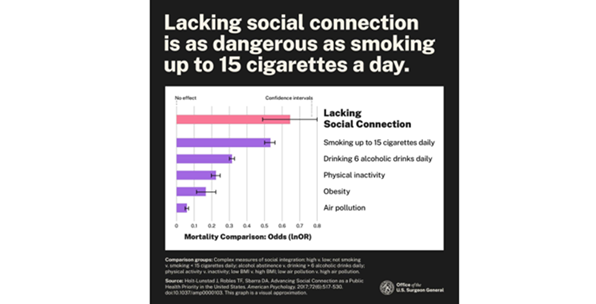
Given the current state of social devolution (a term used to describe the decline in social interactions and relationships,) I'm fortunate to have been rated on a managerial whole-brain profile as an ambivert. Like most people, I naturally feel a strong and continuing need for social connection; however, I can also be perfectly content with solitude and meditation for extended periods. Socializing is natural for me. I quickly and easily build rapport and trust. Thus, my social world acts as a reservoir of good energy to recharge and remind me of who I am whenever I need a confidence boost, as I likewise edify my friends and allies.
Being cocooned and busy helping e-commerce businesses, I hardly noticed the lockdown. However, as a friend said, "the pandemic revealed the rocks in the bottom of the creek." One study claimed that 64% of the people surveyed said they find it difficult to talk with people of widely different religious or political views. Why is this so? Perhaps we are so invested in our point of view that we cannot, or do not suspend self-interest for a few minutes to assume a sincerely curious, journalistic attitude like Monica Guzman, author of I Never Thought of It That Way.'
She claims, "The friction and heat in a conversation is good. The question is whether it's cooking something or burning something. Standing for what you believe in does not mean attacking people on the other side."
Indeed, the lockdown exacerbated the tone of relationships. Those who were close sought to become even closer. Those who were distant increased their transactional tone of communications, a term used to describe interactions primarily focused on exchanging information or completing tasks rather than building relationships. The report reveals a steady downward trend in social connection and civility over the past four decades.
This slippery slope trend is borne out in a pithy white paper by the U.S. Surgeon General entitled Given the extensive nature of the paper, I will comment on only a few striking excerpts, which I hope encourages you to read the entire report.
From the Report:
"Loneliness and social isolation increase the risk for premature death by 26% and 29%, respectively. More broadly, lacking social connection can increase the risk of premature death as much as smoking up to 15 cigarettes a day. In addition, poor or insufficient social connection is associated with an increased risk of disease, including a 29% increased risk of heart disease and a 32% increased risk of stroke. Furthermore, it is associated with an increased risk for anxiety, depression, and dementia. The lack of social connection may also increase susceptibility to viruses and respiratory illness. There is a correlation between hypertension, high blood pressure, and heart disease and being both socially isolated and lonely.
The lack of social connection can have significant economic costs to individuals, communities, and society. Social isolation among older adults alone accounts for an estimated $6.7 billion in excess Medicare spending annually, largely due to increased hospital and nursing facility spending. Moreover, beyond direct health care spending, loneliness and isolation are associated with lower academic achievement and diminished work performance.
Although all social interaction statistics have steadily declined, the decline is starkest for young people ages 15 to 24. For this age group, time spent in person with friends has reduced by nearly 70% over almost two decades, from roughly 150 minutes per day in 2003 to 40 minutes per day in 2020."
This highlights the urgent need to foster social intergenerational connections and among youth.
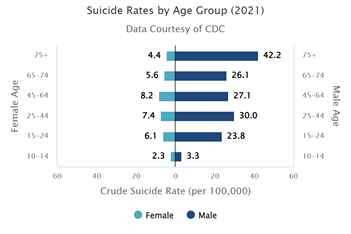
Suicide Trends
The highest rates of suicide are for those 85 and older. The next highest suicide rate is for those 75 to 84. Why are our elders dying by suicide?
Reasons for Suicides by Seniors
Chronic Illness and Pain
Many seniors suffer from chronic health conditions such as arthritis, heart disease, and diabetes, which can result in persistent pain and discomfort. These ongoing health issues significantly impact their quality of life, leading to feelings of hopelessness and despair. The constant struggle with pain and the inability to engage in previously enjoyed activities can contribute to a diminished will to live.
Mental Health Issues
Depression and other mental health disorders are prevalent among seniors but are often underdiagnosed and undertreated. Seniors might not recognize their symptoms as those of depression, or they may be reluctant to seek help due to the stigma surrounding mental health. Furthermore, healthcare providers may focus more on physical health issues, overlooking the mental health needs of their older patients.
Isolation and Loneliness
As people age, they may experience increased social isolation due to losing friends and family, retirement, and decreased mobility. This isolation can lead to intense feelings of loneliness and depression. Without regular social interaction, seniors may feel disconnected, contributing to a sense of purposelessness and despair.
Financial Stress
Seniors often face financial difficulties due to retirement, medical expenses, or insufficient savings, which can lead to anxiety and depression. The fear of outliving savings and becoming a financial burden on others can contribute to suicidal thoughts.
Loss of Independence
Losing physical abilities and independence can be a significant psychological burden for seniors. The inability to perform daily tasks without assistance can lead to feelings of helplessness and being a burden on others. This loss of autonomy can severely impact their self-esteem and mental well-being.
Bereavement
The loss of a spouse, close friend, or family member is a common experience for seniors and can lead to intense grief. Grief can result in feelings of loneliness and a lack of purpose. The cumulative effect of multiple losses over time can exacerbate these feelings, increasing the risk of suicide.
Access to Means
Seniors often have access to medications and other means that are used for suicide. Easy access to drugs increases the risk of suicide attempts being successful.
Stigma Around Mental Health
There is often a stigma associated with seeking help for mental health issues, particularly among our elders. This stigma can prevent seniors from reaching out for support. Older adults are likely to acknowledge mental health struggles.
Cognitive Decline
Conditions like dementia and Alzheimer's disease can cause significant emotional distress and confusion. The frustration and fear associated with cognitive decline can lead to depression and suicidal thoughts. The sense of losing one's identity and abilities can be overwhelming, contributing to a desire to escape the situation.
Addressing these factors requires a comprehensive approach, including better mental health care, social support systems, and community engagement to help seniors feel valued and connected. Enhanced screening for mental health issues, increased social interaction opportunities, and providing accessible mental health services can help mitigate the risk of suicide among seniors.
Young People and Social Media
The advisory report covers interesting statistics regarding young people and their mental health.
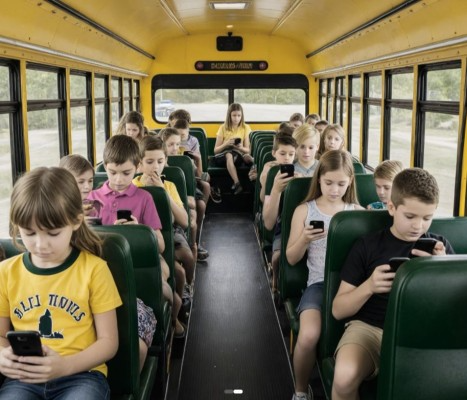
"The percentage of teens ages 13 to 17 who say they are online 'almost constantly' has doubled since 2015. The percentage of U.S. adults 18 and over who reported using social media increased from 5% in 2005 to roughly 80% in 2019. Among teens ages 13 to 17, 95% report using social media as of 2022, with more than half reporting it would be hard to give up social media."
The Kids Off Social Media Act updates legislation Sen. Schatz introduced would set a minimum age of 13 to use social media platforms and prevent social media companies from feeding algorithmically-based content to users under 17. The Act strives to limit social media use in schools. Some schools are prohibiting cell phones.
The essence of the Act is to…
- Prohibit children under the age of 13 from creating or maintaining social media accounts, consistent with the current stated policies of major social media companies;
- Prohibit social media companies from pushing targeted content using algorithms to users under the age of 17;
- Provide the FTC and state attorneys general authority to enforce the provisions of the bill; and
- Follow existing Children's Internet Protection Act (CIPA) framework to require schools to block and filter social media on federally funded networks and devices.
Senator Schatz claims, "Young Americans are facing an unprecedented mental health crisis. A Centers for Disease Control and Prevention survey found that 57% of high school girls and 29% of high school boys felt persistently sad or hopeless in 2021. It also found that 22% of all high school students – and nearly a third of high school girls – reported they had seriously considered attempting suicide in the preceding year. Big Tech knows it's complicit – but refuses to do anything about it. Though most social media platforms have a minimum age of 13, nearly 40% of children ages 8–12 still use them. Social media is a leading driver of poor youth mental health."
This highlights the urgent need to foster intergenerational social connections and among youth.
Social Division Solutions
The Surgeon General's advisory provides a 'National Strategy to Advance Social Connection' with two valuable sections: 'The Six Pillars of Social Connection' and the comprehensive plan, which includes the roles of organizations and individuals.
The Six Pillars of Social Connection
Pillar One
Strengthen Social Infrastructure in Local Communities
Design the built environment to promote social connection. Establish and scale community connection programs. Invest in local institutions that bring people together.
Pillar Two
Enact Pro-Connection Public Policies
Adopt a "Connection-In-All-Policies" approach. Advance policies that minimize harm from disconnection. Establish cross-departmental leadership at all levels of government.
Pillar Three
Mobilize the Health Sector
Train health care providers. Assess and support patients. Expand public health surveillance and intervention.
Pillar Four
Reform Digital Environments
Require data transparency. Establish and implement safety standards. Support the development of pro-connection technologies.
Pillar Five:
Deepen Our Knowledge
Develop and coordinate a national research agenda. Accelerate research funding. Increase public awareness.
Pillar Six
Cultivate a Culture of Connection
Cultivate values of kindness, respect, service, and commitment to one another. Model connection values in positions of leadership and influence. Expand conversations on social connection in schools, workplaces, and communities.
What We Can Do Collectively
In the complete advisory, you can read about what we can do under these headings:
- What National, Territory, State, Local, and Tribal Governments Can Do
- What Health Workers, Health Care Systems, and Insurers Can Do
- What Public Health Professionals and Public Health Departments Can Do
- What Researchers and Research Institutions Can Do
- What Philanthropy Can Do
- What Schools and Education Departments Can Do
- What Workplaces Can Do
- What Community-Based Organizations Can Do
- What Technology Companies Can Do
- What Media and Entertainment Industries Can Do
- What Parents and Caregivers Can Do
- What Individuals Can Do
If this article piqued your curiosity about solutions, read the report, especially Patricia Morgan's ebook, Understanding Loneliness, linked below.
Social Change
Social change starts with awareness, and long-term social connectivity begins with youth education. Let’s not be hypocritical about unnecessary or extensive screen time. Especially while they are young, let's teach our children to value eyeball-to-eyeball and belly-to-belly communication by practicing it with them sans alternate voices presented via social media methodologies.
- Frank DeDominicis
REFERENCES
Monica Guzman – I Never Thought of it That Way
https://www.youtube.com/watch?v=z04ooRrWhqg&t=2s
Kids Off Social Media Act
https://www.schatz.senate.gov/kosma
Suicide Rates
Youth Risk Behavior Survey
https://www.cdc.gov/healthyyouth/data/yrbs/pdf/YRBS_Data-Summary-Trends_Report2023_508.pdf
Count on Mothers
https://www.youtube.com/watch?v=6EMYHVrmNeA&t=1s
Children's Internet Protection Act (CIPA)
https://www.fcc.gov/consumers/guides/childrens-internet-protection-act
Kids Off Social Media Regulation Update
https://bit.ly/Keep-Kids-Safe-AM-Act-Update-May-24
2023 State of America's Children Report
Patricia Morgan – Understanding Loneliness (PDF)
https://bit.ly/Understanding-Loneliness
Dr. Vivek - Together
Friesen, C. (2023). Friendly lonely Manitoba? Winnipeg Free Press, (), A7
https://www.winnipegfreepress.com/arts-and-life/life/2023/10/02/friends-in-need-2
Our Mission Villagebuilder
https://www.village.builders/the-problem
An Epidemic of Loneliness and Implications for Physical Therapists - PTs on Mission
https://www.ptsonmission.com/blog/an-epidemic-of-loneliness-and-implications-for-physical-therapists
How do we make friends? | Cumorah Academy
https://www.cumorahacademy.org/blog/educational/how-do-we-make-friends/
Suicide Rates are On the Rise (2024)
What Accounts for the Rise in Suicide Rates?
https://www.nber.org/bh/20232/what-accounts-rise-suicide-rates-us
Foundation for Social Connection – Action Guide for Building Socially Connected Communities
https://www.socihttps://www.social-connection.org/al-connection.org/
Recent Posts