
HR Ageist Hiring Policies Exposed - How Ageism is Self-Defeating Economically

August 4, 2026

Share this article

The notion that women are more subject to persuasion when dependent on others is a generalization that does not apply universally to all individuals. A complex interplay of individual characteristics, situational factors, and Context influences people's susceptibility to persuasion. Gender, while it may play a role in shaping socialization and experiences, is just one of many factors that can affect a person's vulnerability to persuasion.


Key Considerations


Individual Differences

There is substantial variability among individuals, regardless of gender, regarding their susceptibility to persuasion. Personal traits, such as self-confidence, critical thinking skills, and assertiveness, can significantly affect one's resistance to persuasion.

Situational Factors

The context in which persuasion occurs is important. Vulnerability to persuasion may depend on the specific situation, the nature of the persuasive message, and the individual's emotional state at the time.


Psychological Factors

Psychological factors, such as cognitive biases, prior beliefs, and social influence, can all play a role in susceptibility to persuasion. These factors can affect people of any gender.

Cultural and Societal Influences

Cultural and societal norms and expectations can influence how individuals respond to persuasion. Norms vary widely across different cultures and communities.


Dependence and Interdependence

The extent to which an individual is dependent on others is just one factor to consider. People may be dependent in various ways, such as financially, emotionally, or socially, and these dependencies may influence their responses to persuasion differently.

Various factors influence people's responses to persuasion, and individuals can vary significantly in their susceptibility. It is helpful to approach these topics with nuance and avoid making gender-based generalizations.

"Male style is analytical and manipulative."

Another study of U.S. governors found that states with female leaders had lower fatality rates.

"There may be common learning experiences based on anatomical facts that help create some of the psychological reactions observed more often among women, i.e., their interest in interdependence, their idea that they must give up on something to get another, etc."

While it is true that there are some biological and hormonal differences between men and women, such as differences in their brain structure and function, it is not appropriate to directly link these differences to complex psychological reactions or behaviors.


The development of psychological traits and behaviors is influenced by biology, genetics, upbringing, cultural and societal norms, and individual experiences. Attributing specific psychological reactions solely to anatomical differences overlooks the complexity of human behavior and the interplay of multiple factors. Psychological traits cannot be simplistically attributed to gender or anatomical differences.


Scientific research generally recognizes that behavior and psychology are influenced by a combination of biological, genetic, environmental, and social factors. Researchers in psychology and neuroscience conduct extensive studies to understand these complex interactions better.

To further comprehend, one should refer to peer-reviewed scientific studies and research in psychology, neuroscience, and gender studies. It is important to approach these topics with nuance and respect for the diversity of human experiences and perspectives.

The tendency for women to belong to more organizations and circles than men can vary based on numerous factors, including individual preferences, cultural expectations, and life circumstances. There is no one-size-fits-all answer to this question, as women's and men's levels of involvement in organizations and social circles can vary widely.


Factors to Consider


Cultural and Societal Norms

Women may be encouraged or expected to participate in various community, family, or social organizations in some cultures and societies. These cultural norms can influence women's involvement in such groups.


Lifestyle and Life Stage                                                                                                                         

Life circumstances and lifestyle choices can impact participation in organizations and circles. Women may become more active in community organizations due to their roles as caregivers, including involvement in parent-teacher associations, neighborhood groups, or social clubs.


Work and Career

Career demands and work-related commitments can influence organizational participation. Some men and women may choose to be more or less involved in extracurricular activities based on their career demands and time constraints.

Individual Personality and Interests


Personal preferences and interests play a significant role. Some individuals, regardless of gender, are naturally inclined to be involved in multiple organizations and social circles, while others may prefer more limited involvement.


Availability and Access

The availability of organizations and circles in a particular community can also influence participation. In some areas, more opportunities for involvement in various groups may exist. Personal preferences and a complex interplay of societal, cultural, and individual factors influence the level of involvement in organizations and social circles.


"Women will give their will in submission in exchange for feeling secure and loved."
When I began my research for this article, I reached out to thought-leaders in the ageism field for their input on how ageism is not only a globally rampant prejudice but it is also negatively affecting commerce, particularly in human resource hiring and retention practices. Ageism affects job applicants who are over forty years of age. Some companies have even developed prejudicial job applicant screening and hiring practices as showcased in their controversial ‘rebranding programs.’


To begin, let’s expand our thinking about what ‘age’ is for the majority of us who usually refer to it as a number, our chronological age. In fact, there are four other types of age to consider as author Helen Hirsh Spencer explains in her March 5th, 2026 LinkedIn newsletter article, How Do You Define Old Age?


She says, “When you’re asked about your age, where is the first place you go? I bet it’s to the number of years since your birth. In other words, you consider your Chronological age. But there are so many other types of age to consider, such as:


Biological age refers to your physical well-being and how your body compares to the average person of the same chronological age as you.


Functional age is based on your ability to perform a task, job, or activity determined by an assessment. Examples include hearing, seeing, and memory.


Psychological age involves learning and memory.


Social age refers to your emotional maturity, ability to self-regulate and depends significantly on societal expectations.


The US hit an age cliff in 2025 with the number of 18-year-old youths now in decline Fertility rates, and immigration are also on the decline which means there is a need to retain, retrain or engage older workers. Unfortunately, ageism clouds reason.”


Something else to consider about intersecting socio-dynamic trends and their combined impact is that although the future is not predictable, the current hiring trends' trajectory path of hiring youth and firing elders, will become a catalyst for change in a shrinking labor market. 

Companies Busted for Ageism

Now, let’s shame those organizations who work against their own best bottom-line interests in instituting age-prejudicial job applicant screening and hiring protocols, in addition to other ageist injustices. Here’s a list of some of ageist culture companies:


IBM                                                                                                                                 

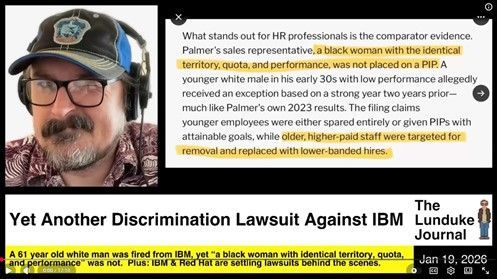
Ongoing/Settled (2024-25): Systemic effort to replace with millennials.


Workday

Ongoing (March 2026): Federal collective action over AI screening that rejects 40+ applicants.


Google

Settled ($11M): Systematic rejection of older software engineering applicants.


Eli Lilly

Settled ($2.4M): "Early Career" hiring program that excluded older sales reps.


Mastercard 

Settled ($26M, Jan 2025): Discrimination and wrongful termination involving older professionals.


PriceWaterhouseCoopers

Settled ($11.6M): Recruitment restricted to campus-only, barring older "Associate" hires.


Texas Roadhouse

Settled ($12M): Refused to hire 40+ applicants for customer-facing roles to stay "young."


General Motors

Charged (2025): EEOC suit alleging disability/age bias in short-term benefit caps.


Raytheon

Ongoing (2024-26): Class action for favoring younger workers in aerospace engineering roles.


Twitter (X)

Ongoing (2024-26): Allegations that 2022 layoffs and new policies targeted older workers.


Starbucks 

Ongoing (2025): Class action alleging race/age goals displaced experienced staff.


Amazon

Charged (2024-25): Lawsuits regarding warehouse and management hiring age bias.


Meta (Facebook)

Settled: Previously sued for allowing age-targeted job ads to hide listings from 40+.


Boeing - Settled ($36M)

Workforce reduction plans that disproportionately affected older employees.


Hewlett-Packard (HP)

Ongoing: Multiple suits over "Workforce Reduction Plans" targeting older ages.


Intel

Investigation/Suits: Repeated claims that "Project Midpoint" was used to thin older ranks.


iTutorGroup

Settled ($365k): First EEOC AI suit; software auto-rejected women 55+ and men 60+.


Enterprise Leasing

Settled ($1.8M, 2025): Management trainee program biased against older applicants.


Meathead Movers

Settled ($2M, 2025): Recruitment marketing and hiring excluded individuals over 40.


Henry Ford Health

Ongoing (2024-26): Mandatory cognition screening for 70+ staff regardless of performance.

Key Statistics (2024–2026)

Recent studies from AARP and Diversity.com highlight a significant gap between corporate policy and job-seeker reality. Ageism in hiring is not just a social concern—it is a significant economic liability impeding productivity and growth. This is the main thrust of author, activist, and positive aging speaker Jeff Rubin's mission.


Productivity Gap

By 2050, the cost of age discrimination is projected to rise to $4 trillion if participation rates for older workers do not improve.


The "Experience Paradox"

While 99% of legal and tech leaders report difficulty finding "skilled talent," 59% of workers over 50 say their age hinders their ability to be hired for those same roles (National Association of Legal Assistants, 2025).


Tech Sector Specifics

Of the total economic loss, roughly $44 billion is attributed specifically to the tech sector's preference for ‘younger, cheaper’ talent over experienced architects.

Colorado’s Workforce Progress via Legislation

Colorado HB26-1010 would modify the state’s workforce policy to ensure older Coloradans have a seat at the table regarding workforce support and resources. This bill prioritizes representation by placing a worker aged 55 or older on several commissions to ensure their perspectives and needs are considered in the workforce.


HB26-1010 also requires the Colorado Workforce Development Council, Commission on Aging, and others to work collaboratively to support workforce development and examine issues related to employment access, training, support, and services for older adults. 

An Innovative Solution to the Problem of Ageist Hiring Practices

We are living longer but commerce does not value elder workers. What is the best way to handle this lifespan problem?


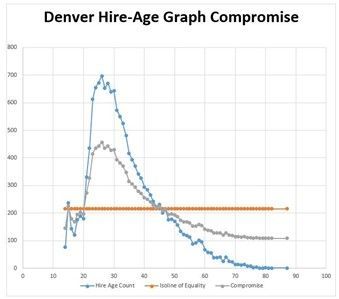
If we are facing an inevitable labor shortage (currently accelerated by Trump's deportation campaign) and ageist hiring practices, with boomers dying off, and fewer college graduates, what will become the long-term solution? Is it to extend retirement age? Hiring 20 year olds and firing 50 year olds is the current pattern, particularly in government jobs. Is this the labor ratio we really want? Let's check our labor blend numbers.


As the problem of prejudicial hiring practices is exacerbated by resume-scanning technology, perhaps the solution lies in the ethical, right use of technology. Perhaps we should ask ourselves, “what are the new age KPIs that human resource AI could monitor?” If such a system was installed, AI could notify human resources when the labor pool needed to hire more elders with advanced cognitive abilities.


Yes, this could be an effective solution, but mark my words and the date of this article to see how long it takes for commerce to really wake up to this solution. Prejudice is not easily dissolved, but a significant unexpected consequence of our inaction will impact the US economy on an ongoing basis much more than the hopefully temporary, global economic destabilization that has been created by Trump's new, illicit Iran war.


-Frank DeDominicis 

Quotes

"Addressing talent shortages without addressing ageism is a losing strategy. Rethinking hiring, advancement, and retention practices to build age-diverse teams that strengthen productivity and resilience is necessary for a strong economy."

– Helen Hirsch Spence


"Older workers face age discrimination and are often overlooked for jobs they are qualified for, even though they bring expertise, maturity, and perspective. This should not be the case. Employers need talent, and it makes great business sense to hire experienced workers."        — Carly Roszkowski, VP of Financial Resilience, AARP (2025)


REFERENCES

Words & Images Frame the Aging Conversation - Helen Hirsh Spence / Top 60 Over 60 Newsletter – Please subscribe and share.

https://www.linkedin.com/newsletters/age-sense-7377782746225582080/


The Age Cliff                                                                                     

https://www.npr.org/2025/01/08/nx-s1-5246200/demographic-cliff-fewer-college-students-mean-fewer-graduates


The IBM ‘Dinobabies’ Scandal                               

https://www.youtube.com/watch?v=e681QNbHloE


How IBM quietly pushed out 20,000 older workers

https://www.youtube.com/watch?v=e681QNbHloE


IBM Sued for Discrimination. Again. (March 2026)

https://www.youtube.com/watch?v=GiBeFB_JndU


Business Unusual: The hidden age bias inside AI hiring systems

https://www.youtube.com/watch?v=lh988inoUnY


House Passes Bill to Support Older Coloradans in the Workforce

https://www.cohousedems.com/news/house-passes-bill-to-support-older-coloradans-in-the-workforce-


Job Applicant Sues Aerospace Company Raytheon over Alleged Age Discrimination

https://www.classaction.org/news/job-applicant-sues-aerospace-company-raytheon-over-alleged-age-discrimination


IBM exec, 60, sues for age discrimination claims board fired him because he isn’t a millennial https://www.thisismoney.co.uk/money/markets/article-5922511/IBM-exec-60-sues-age-discrimination-claiming-board-fired-not-millennial.html


IBM Accused of Ageism: Older Workers Are ‘Dinobabies’ Who Should Be Made An ‘Extinct Species’ https://www.forbes.com/sites/jackkelly/2022/02/12/ibm-accused-of-ageism-older-workers-are-dinobabies-who-should-be-made-an-extinct-species/


Lilly to Pay $2.4 Million to Settle Nationwide EEOC Age Discrimination Lawsuit

https://www.eeoc.gov/newsroom/lilly-pay-24-million-settle-nationwide-eeoc-age-discrimination-lawsuit


US economy unexpectedly loses 92,000 jobs; unemployment rate rises - M

https://www.youtube.com/watch?v=cJ2FQ27cFH8


Samantha Dzabic (TEDxBurleigh Heads, 2024): "How Workplace Ageism Hurts Everyone—and the Bottom Line." This talk breaks down the "Silicon Valley myth" and how dismissing older ideas hinders innovation.

https://www.youtube.com/watch?v=s5HabROvzyk


Piyachart Phiromswad (TED, 2023/24): "The Tech We Need to Fight Workplace Ageism." Explores how AI and robotics can empower an aging workforce rather than replace it.

https://www.youtube.com/watch?v=B8dBA3klR0o


MARCH 2026 - US economy unexpectedly loses 92,000 jobs; unemployment rate rises

https://www.youtube.com/watch?v=cJ2FQ27cFH


Colorado bill seeks to boost job opportunities for older adults

https://www.youtube.com/watch?v=mAB0len80LQ

CORPORATE AGEISM SHAME LIST

The IBM Rebranding Strategy- How IBM quietly pushed out 20,000 older workers:

https://www.youtube.com/watch?v=e681QNbHloE


IBM Accused of Labor Discrimination in HR Filings of Dino-babies:

https://www.youtube.com/watch?v=Gn3QEQJDJZA


IBM Sued for Age Discrimination After Thousands Fired

https://www.youtube.com/watch?v=5sNxb78cTxA


IBM fired me because I'm not a millennial, says axed cloud sales star in age discrimination court row. Ex-Bluemix global program director, 60, sues Big Blue

https://www.theregister.com/2018/07/03/ibm_langley_age_discrimination/


IBM Ageism: Older Workers Are ‘Dinobabies’ Who Should Be Made An ‘Extinct Species’ https://www.forbes.com/sites/jackkelly/2022/02/12/ibm-accused-of-ageism-older-workers-are-dinobabies-who-should-be-made-an-extinct-species/


Lilly Pays $2.4 Million: National EEOC “Early Career” Age Discrimination Lawsuit

https://www.eeoc.gov/newsroom/lilly-pay-24-million-settle-nationwide-eeoc-age-discrimination-lawsuit


Twitter ‘Forced Out’ Female, Older Employees after Musk’s 2022 Acquisition

https://www.classaction.org/news/twitter-forced-out-female-older-employees-after-musks-2022-acquisition-class-action-alleges


$3M Washington Nationals Settlement Class Action Lawsuit over Alleged Age

Discrimination in Ticket Sales

https://www.classaction.org/news/3m-washington-nationals-settlement-resolves-class-action-lawsuit-over-alleged-age-discrimination-in-ticket-sales


Eli Lilly Facing Another Class Action over Age Discrimination

https://www.classaction.org/news/eli-lilly-facing-another-class-action-over-alleged-age-discrimination


Job Applicant Sues Aerospace Company Raytheon over Age Discrimination

https://www.classaction.org/news/job-applicant-sues-aerospace-company-raytheon-over-alleged-age-discrimination


Meathead Movers

Settled ($2M, 2025): Recruitment marketing and hiring excluded individuals over 40.

https://www.eeoc.gov/newsroom/meathead-movers-settles-eeoc-discrimination-case

Recent Posts

August 10, 2026
Generally speaking, most adults consider play as something extra after the to-do list is completed, a reward for accomplishing a task, or a diversion from something serious and heavy. In actuality, it should be considered vital for mental health because, without it, we ignore the child in us who wants to explore, test, and play. Play is inherent in human and animal natures.  Being in the early days of Act III of life and preparing for a good death, I am more serious about things and consciously scheduling play times. I assign play equal weight, if not greater, to other life priorities such as work, worship, friendship, and love. I've enjoyed many hobbies that provide great satisfaction, but with aging, I've pared them down to only a few. If I were to live as long as my centenarian mother, I have time to read only 1000 new books, so I'd better carefully choose what I put into my head. Likewise, protecting play time is essential to my mental health.
August 10, 2026
Lest you mistake this article for a Timothy Learyesque' drop-out' message, I'd like to be clear. While retreat is a common tactic in war, it is intended to help regain posture and consolidate power resources, rather than abandoning the battlefield. Thanks to the internet, many of us are bombarded daily with cognitive overload from useless information, if we allow such abuse. Unfortunately, constantly staring at screens has become the norm for many humans. It is estimated that approximately 70% of the world's population, or nearly 5.775 billion people as of July 2025, is online. Is this a good thing or a bad thing?  The answer is that it is both. The internet has dramatically shrunk and flattened our world of communication, which is excellent for collaborative ventures, but which also benefits malicious actions by begrudged individuals.
August 10, 2026
Given the current state of social devolution (a term used to describe the decline in social interactions and relationships,) I'm fortunate to have been rated on a managerial whole-brain profile as an ambivert. Like most people, I naturally feel a strong and continuing need for social connection; however, I can also be perfectly content with solitude and meditation for extended periods. Socializing is natural for me. I quickly and easily build rapport and trust. Thus, my social world acts as a reservoir of good energy to recharge and remind me of who I am whenever I need a confidence boost, as I likewise edify my friends and allies. Being cocooned and busy helping e-commerce businesses, I hardly noticed the lockdown. However, as a friend said, "the pandemic revealed the rocks in the bottom of the creek." One study claimed that 64% of the people surveyed said they find it difficult to talk with people of widely different religious or political views. Why is this so? Perhaps we are so invested in our point of view that we cannot, or do not suspend self-interest for a few minutes to assume a sincerely curious, journalistic attitude like Monica Guzman, author of I Never Thought of It That Way.' She claims, "The friction and heat in a conversation is good. The question is whether it's cooking something or burning something. Standing for what you believe in does not mean attacking people on the other side." Indeed, the lockdown exacerbated the tone of relationships. Those who were close sought to become even closer. Those who were distant increased their transactional tone of communications, a term used to describe interactions primarily focused on exchanging information or completing tasks rather than building relationships. The report reveals a steady downward trend in social connection and civility over the past four decades. This slippery slope trend is borne out in a pithy white paper by the U.S. Surgeon General entitled Given the extensive nature of the paper, I will comment on only a few striking excerpts, which I hope encourages you to read the entire report.
August 7, 2026
The EverythingDiSC™ model reveals that it is natural for individuals to have different levels of various needs. When there is a great disparity in individual needs for dominance and control, interpersonal patterns of pressure and automatic compliance can evolve. This can work wonderfully if the more dominant personality always makes the best decisions, but that is unrealistic.  What if both parties are aggressive drivers who like to win? This can be a serious problem whenever a situation demands that push comes to shove. What do I recommend? Involve a disinterested third party to moderate discussions and to ensure that both parties practice active listening. Agree to effort toward workable compromises, as in peace negotiations.
August 7, 2026
Education: PhD in Psychology from Harvard University in 1929 Director : Public Service: Universal Studios, 1929 Personal Adviser to Carl Laemmle, founder of Universal Studios Lecturer : University of Southern California (circa 1929-1930) Professor : Psychology, Long Island University, 1931-1933 Vice-President of Hampton , Weeks, and Marston advertising agency, 1932. Lecturer : New School of Social Science (New York, 1933-1934) and Rand School of Social Science (New York, 1933-1934) Gillette Ads: He appeared in a 1938 Gillette Blade advertisement in nationwide magazines promoting his "lie detector" and Gillette razor blades.
August 6, 2026
Understanding where you stand within the context of public mood cycles may help you consider the background of others' behaviors. Yes, we're worried, and the biggest worry is uncertainty, so here are facts to help ease your fears. We will touch on only some problematic matters. Drop me a line for any issues I've missed and for which you'd like more information.
August 6, 2026
Chapter I: Understanding Elder Abuse
August 5, 2026
How to Reduce Defensiveness
Show More